A standby generator can sit quietly for months, then become the most important equipment on your property when the grid goes down. That is why generator repair costs should be viewed as more than a line item after a breakdown. The real question is whether a repair restores dependable backup power before your family, tenants, customers, inventory, or critical systems are left exposed.
The price of a generator repair varies widely because the system is more than an engine. It includes automatic transfer equipment, batteries, fuel supply, wiring, sensors, controls, and safety devices that all have to work together. A qualified technician does not simply replace a part and hope for the best. They identify why the failure happened, correct it safely, and test the full system under the conditions it is expected to handle during an outage.
What Generator Repair Costs Usually Include
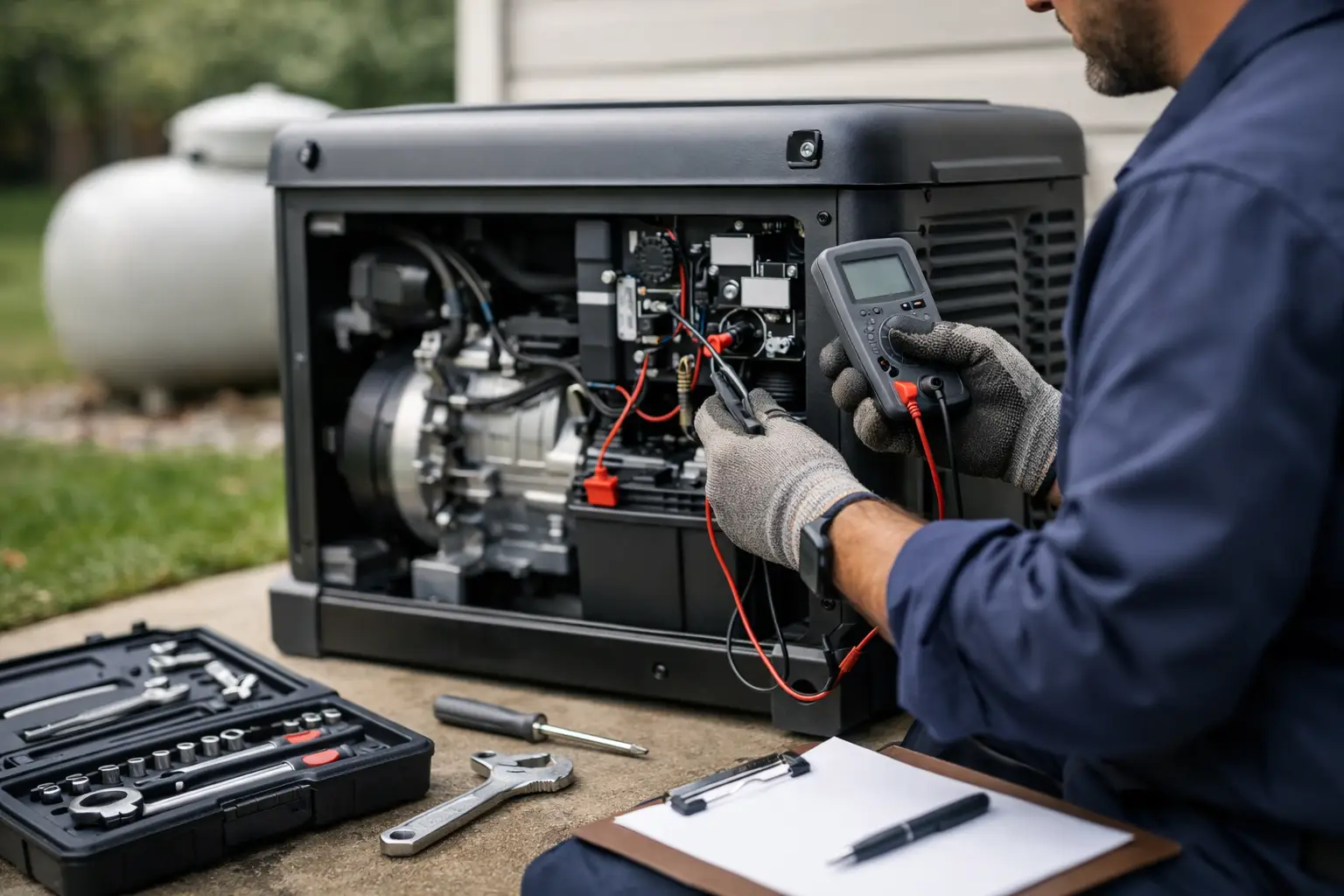
A professional repair visit generally begins with diagnostics. The technician reviews fault codes, operating history, battery condition, fluid levels, wiring, fuel delivery, and transfer operation. This step matters because the symptom is not always the source of the problem. A generator that will not start may have a weak battery, but it could also have a charging issue, corroded connection, failed controller input, low fuel pressure, or an overdue maintenance problem.
For common residential standby systems, minor repairs may involve a battery, charger, sensor, relay, fuse, loose connection, or adjustment. These jobs are typically far less expensive than engine, alternator, or control-board repairs. Labor, travel, diagnostic time, and the availability of manufacturer-specific parts all affect the final bill.
More extensive repairs can involve fuel-system components, starter motors, voltage regulators, cooling-system parts, transfer switches, engine controls, or replacement circuit boards. Commercial systems may require additional testing, larger components, specialized lifting, coordination with building operations, or after-hours work to protect continuity. There is no responsible one-price answer without inspecting the generator and its supporting equipment.
The Factors That Drive Generator Repair Costs
The failed component and its root cause
Parts prices differ significantly. Replacing a battery or cleaning a connection is not comparable to replacing an automatic transfer switch controller or repairing damage caused by a fuel supply issue. The cost can also rise when a failed component damages another part of the system.
A clear diagnosis protects you from unnecessary spending. For example, repeatedly replacing a dead battery will not solve the problem if the battery charger is failing or the generator has a parasitic draw. The right repair addresses the cause, not just the warning light.
Generator age, make, and parts availability
Older generators can remain reliable when maintained properly, but certain parts may become harder to source as models are discontinued. A factory-trained service provider can determine whether an approved replacement is available and whether repair remains the sensible investment.
Brand and model matter as well. Modern standby generators use model-specific control systems and software. Generic repairs or incorrect parts can create new faults, compromise warranty coverage, or leave the unit unable to exercise and transfer properly.
Fuel type and system condition
Natural gas, propane, and diesel generators each have different maintenance and repair needs. Fuel problems are especially common after a generator has sat unused, a supply line has been altered, or a regulator has failed. Diesel systems may need attention for fuel quality, filters, and contamination, while natural gas and propane systems depend on correct pressure and properly sized piping.
The generator itself may be healthy while the fuel system prevents it from starting or carrying load. That distinction is why complete system testing is worth the effort.
Access, urgency, and testing requirements
A unit located behind landscaping, on a roof, in a restricted mechanical area, or at a commercial site with limited shutdown windows can require more labor. Emergency calls during a severe weather event may also cost more than scheduled service.
After a repair, testing should confirm more than an engine start. A proper service visit may include verifying voltage and frequency, confirming the transfer switch responds correctly, checking that priority loads behave as intended, and ensuring the generator returns to standby without new alarms. This is the difference between a generator that starts and a backup power system you can trust.
Typical Repair Categories and What They Mean
It is helpful to think about repairs in three categories rather than focus on a single advertised price.
Routine corrective repairs address wear items and common service findings, such as batteries, chargers, sensors, filters, spark plugs, belts, minor wiring repairs, or connection cleanup. Catching these issues early is often the most affordable path.
Operational repairs restore a generator that will not start, will not stay running, produces an alarm, or fails during an exercise cycle. These may involve starter circuits, fuel delivery, ignition components, cooling systems, actuators, or control inputs. Diagnostic skill has a direct impact on the cost and outcome of this work.
Major system repairs involve critical electronic controls, transfer-switch components, significant engine issues, alternator faults, or damage from corrosion, rodents, flooding, overheating, or improper installation. At this stage, a contractor should explain the repair scope, expected reliability after repair, available warranty coverage, and whether replacement deserves consideration.
When Repair Makes Sense and When Replacement May Be Smarter
Repair is usually the right choice when the generator is within its expected service life, has been maintained, and needs a clearly defined component replacement. A well-installed standby generator can provide many years of protection, especially when repairs are completed promptly and followed by regular maintenance.
Replacement may be the better long-term decision when major repairs stack up, replacement parts are obsolete, the unit is undersized for current electrical needs, or the original installation has persistent code, fuel, or transfer-switch problems. A growing household, home office, medical equipment requirement, or business expansion can also change what reliable backup power looks like.
The lowest immediate price is not always the best value. Keeping an aging, unreliable system alive through repeated service calls can cost more than installing a properly sized modern unit with current controls, warranty support, and a service plan. On the other hand, replacing a generator because of one repairable fault is equally wasteful. The decision should be based on the whole system, not pressure or guesswork.
How Preventive Maintenance Reduces Repair Costs
Most costly generator failures do not appear without warning. A weak battery, recurring alarm, small coolant leak, exercise failure, rodent damage, or inconsistent transfer should be addressed before the next outage. Unfortunately, many owners only discover these conditions when they need power most.
A scheduled maintenance program provides regular inspections, fluid and filter service where required, battery testing, exercise review, fault-code checks, and operational testing. It also creates a service history that helps technicians spot patterns before they become emergency repairs.
Homeowners should pay attention to warning lights, unusual noises, fluid leaks, damaged enclosures, and missed exercise cycles. Business owners should also verify that the generator supports the equipment it is meant to protect and that staff know who to call if an alarm appears. Do not reset recurring faults and assume the problem is gone.
Questions to Ask Before Approving a Generator Repair
Ask the service provider what failed, what caused it to fail, and what testing will be completed after the repair. You should also know whether the quoted work includes parts, labor, diagnostic time, travel, taxes, and any recommended follow-up service.
For a significant repair, ask whether the part is manufacturer approved, what warranty applies to the repair, and whether other conditions could affect reliability. If the issue involves the transfer switch or fuel system, confirm that those components will be tested as part of the completed work. A generator that runs without transferring power to the building has not solved the problem.
The best service relationship does not end when the invoice is paid. GenTek Power approaches standby systems as long-term protection equipment, with trained technicians, clear communication, and support that continues after installation or repair.
When your generator reports a fault or misses an exercise cycle, schedule service before storm season makes the decision urgent. A timely inspection can turn an uncertain repair into a straightforward correction and help ensure your backup power is ready when the lights go out.