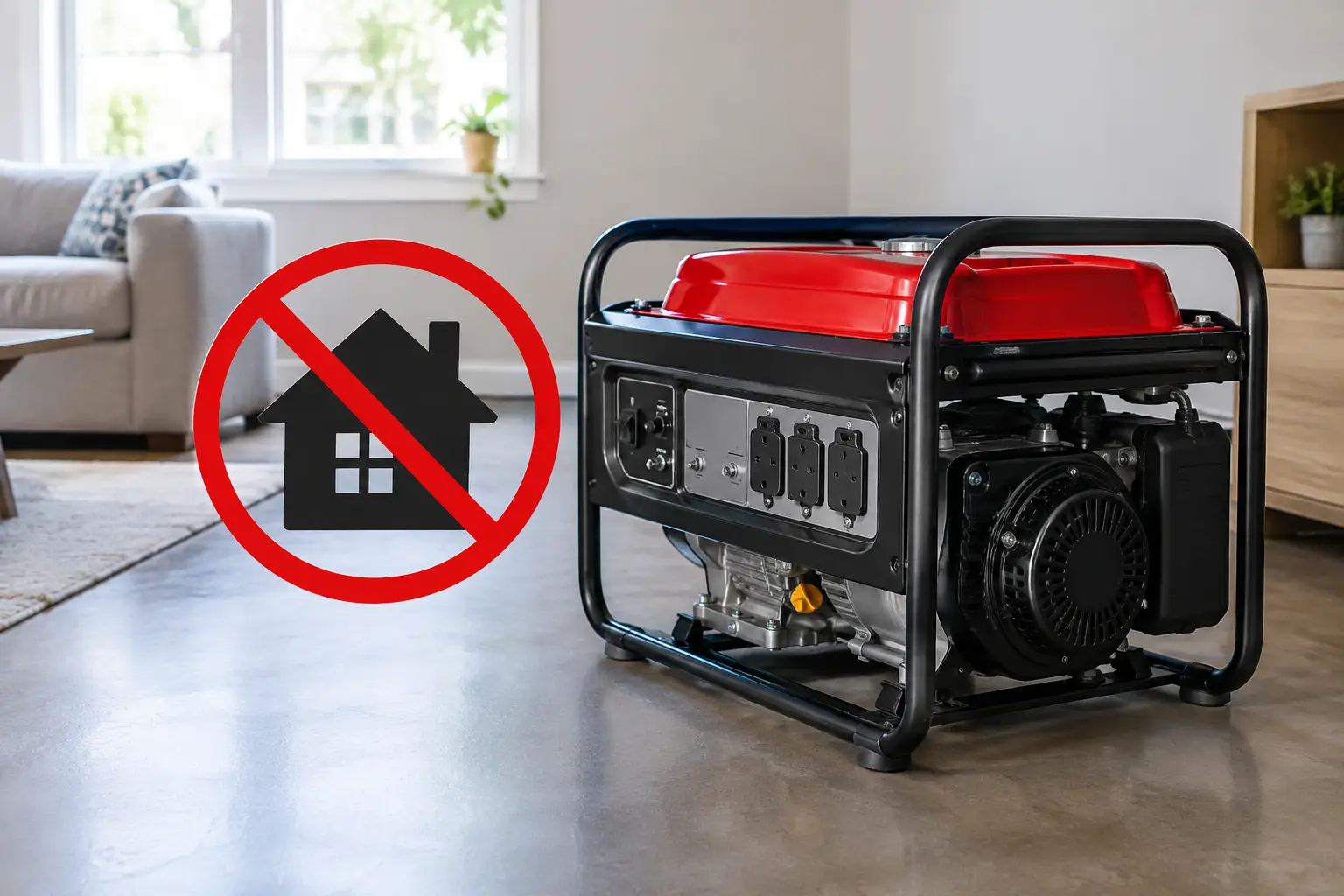
A storm has knocked out the power, the refrigerator is warming up, and the house is getting colder by the hour. Moving a generator into the garage, basement, or enclosed porch can feel like a practical solution. But are generators safe indoors? No. A fuel-burning generator must never run inside a home, garage, shed, crawlspace, or any partly enclosed area.
The risk is not a minor inconvenience or a rule made for ideal conditions. A running generator produces carbon monoxide, an invisible, odorless gas that can build to deadly levels in minutes. During an outage, the safest backup-power decision is also the clearest one: keep combustion generators outdoors and have a properly designed system installed for the loads you need to protect.
Why indoor generator use is so dangerous
Portable and standby generators that run on gasoline, diesel, natural gas, or propane create exhaust. That exhaust contains carbon monoxide, often called CO. You cannot see it, smell it, or taste it, and it can enter occupied spaces through doors, windows, attic vents, dryer vents, soffits, and gaps around utility penetrations.
Carbon monoxide prevents the body from using oxygen normally. Early symptoms can look like the flu or simple fatigue: headache, dizziness, nausea, weakness, or confusion. As exposure increases, people can lose consciousness without recognizing the danger. Sleeping occupants, children, older adults, and pets may be especially vulnerable because they may not notice symptoms in time.
This is why an open garage door does not make generator operation safe. Neither does placing the unit near a doorway, under a carport, in a screened patio, or just inside a shed to keep it dry. These areas restrict airflow and allow exhaust to collect or drift directly toward the building. Carbon monoxide has caused fatal incidents in garages even when doors were open.
Are generators safe indoors if the room is ventilated?
No. There is no amount of household ventilation that makes operating a fuel-burning generator indoors safe. Box fans, cracked windows, open doors, and garage ventilation systems are not substitutes for outdoor placement. Exhaust can move unpredictably with wind, temperature, and the layout of your property.
This applies to a generator operating in an attached garage as well as a detached building. An attached garage is particularly dangerous because it shares walls, ceilings, and penetrations with the home. A detached shed may seem less risky, but anyone entering the space is exposed, and exhaust can still travel toward nearby doors and windows.
The only exception people sometimes confuse with a generator is a battery power station. Battery-based units do not produce engine exhaust, so some are designed for indoor use. They still require proper charging, dry conditions, adequate clearance, and compliance with the manufacturer’s instructions. They are not interchangeable with a whole-home standby generator, and they may not have the capacity to run major loads such as central air conditioning, well pumps, electric heat, or a full business operation for long.
Safe outdoor generator placement matters
Putting a generator outside is essential, but placement still matters. The exhaust must remain well away from the home and be directed away from any opening that could draw fumes inside. Follow the generator manufacturer’s required clearances and all local code requirements.
For portable generators, a common safety benchmark is to operate the unit at least 20 feet from the home, doors, windows, and vents, with the exhaust pointed away from the building. Conditions on site can require greater distance. Never place a portable generator under a deck, in an alcove, beside an open window, or near an air intake simply because it is protected from rain.
Permanent standby generators also belong outdoors on an approved base with code-compliant clearances. The correct location accounts for exhaust direction, property lines, utility equipment, windows, ventilation openings, service access, snow accumulation, and the manufacturer’s specifications. This is not a place for guesswork. A poorly located generator can create a safety problem before the first outage even occurs.
Carbon monoxide alarms are a backup, not permission
Every home should have working carbon monoxide alarms on each level and near sleeping areas. Businesses should also use appropriately placed CO detection where fuel-burning equipment could affect occupied spaces. Test alarms regularly and replace them according to the manufacturer’s schedule.
But a CO alarm does not make an unsafe setup acceptable. It is the last warning layer, not a way to justify running a generator in a garage or closer to the building than recommended. If an alarm sounds, move everyone to fresh air immediately and contact emergency services. Do not re-enter until authorities say it is safe.
Avoid risky power connections during an outage
Carbon monoxide is not the only generator hazard. Improper electrical connections can injure utility workers, damage appliances, start fires, and leave your home without dependable power when you need it most.
Never plug a portable generator directly into a wall outlet to energize the house. This dangerous practice, often called backfeeding, can send electricity onto utility lines and create a serious electrocution risk for line crews. It can also overload wiring and damage the generator or connected equipment.
A safe home backup arrangement uses an approved transfer switch or interlock installed by a qualified electrician. This equipment isolates the home from the utility before generator power is supplied. It lets you select intended circuits and manage loads without extension cords running through doors or windows.
For families who need refrigeration, internet, sump pumps, well equipment, medical devices, heating, or cooling protected automatically, a permanently installed standby generator is usually the more dependable approach. When utility power fails, the system detects the outage, starts automatically, transfers the selected loads, and shuts down after power is restored. The equipment stays outside where it belongs, ready to work without someone going out in severe weather to set up a portable unit.
Fuel, weather, and maintenance add to the safety picture
Portable generators need fuel handling, refueling, and storage discipline. Gasoline should be stored only in approved containers and kept away from living spaces, ignition sources, and heat. Never refuel a generator while it is running or still hot. Spilled fuel can ignite, and vapors can travel farther than most people expect.
Wet weather creates another challenge. A generator must be protected from rain and snow without being enclosed. A purpose-built, open-sided generator cover can help when it is approved for the unit and preserves required airflow. Do not improvise with a tarp, tent, canopy wall, or makeshift box around a running generator. Restricting ventilation to keep the unit dry can create the same carbon monoxide danger as putting it in a garage.
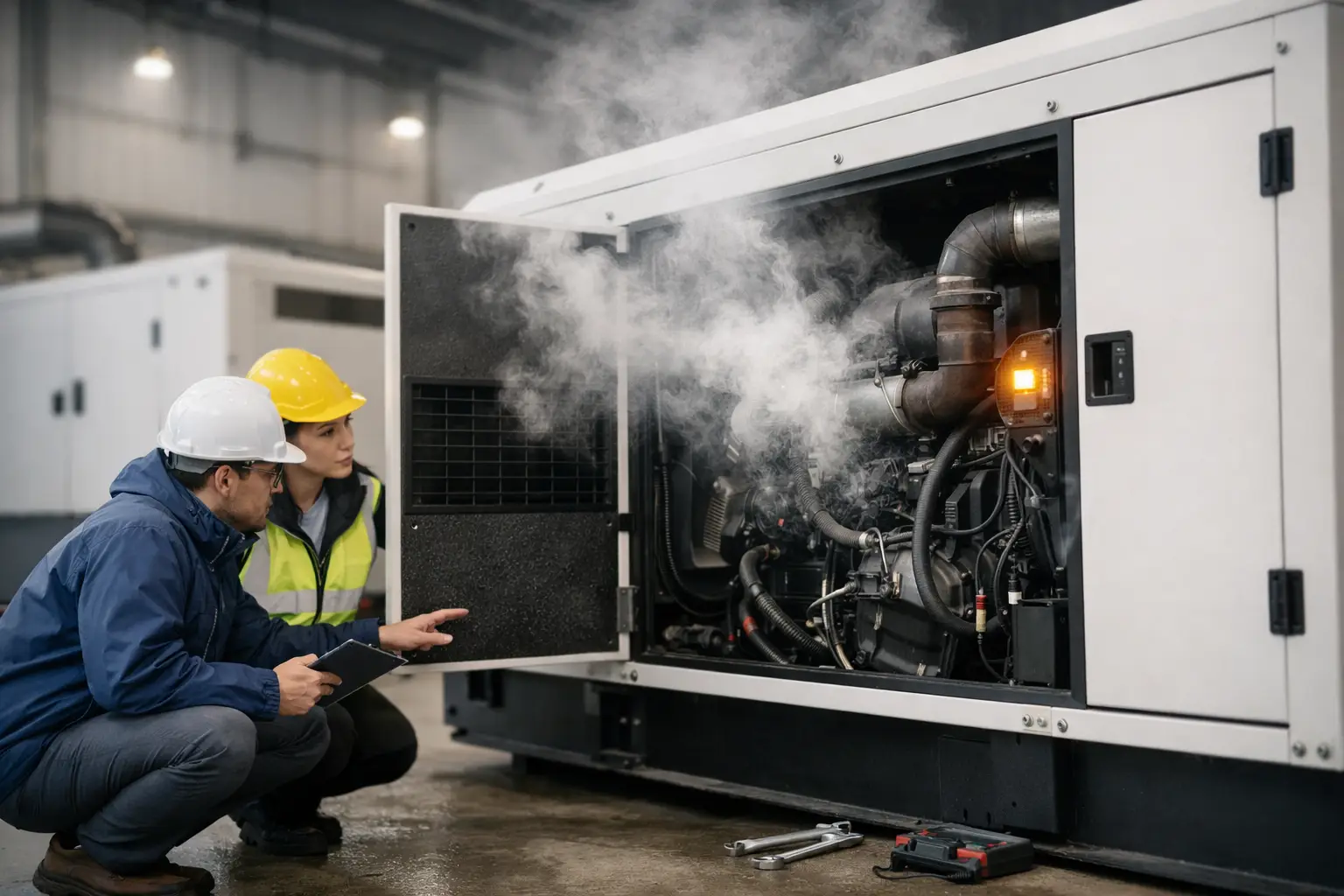
Standby systems reduce many of these issues because their fuel supply, placement, transfer equipment, and weather-rated installation are planned as one system. They still need scheduled maintenance. Oil, filters, batteries, fuel supply, exercise cycles, and error alerts all affect whether the generator will start during a real outage.
A safer path to dependable backup power
The right generator is not simply the biggest unit that fits a budget. It must be sized around the systems you need to keep operating, the available fuel source, electrical startup demands, local requirements, and the physical layout of the property. A home that needs a sump pump, furnace, refrigerator, internet, and selected lighting has different needs than a property that also requires central air conditioning, a well pump, or electric vehicle charging.
For a business, the conversation extends to critical equipment, inventory protection, communications, security, life-safety requirements, and how long an interruption can be tolerated. Oversizing can add unnecessary cost, while undersizing can leave critical systems unprotected or cause nuisance overloads.
A professional installation addresses the entire chain: consultation, load assessment, generator placement, permitting, fuel coordination, electrical transfer equipment, testing, and future service. At GenTek Power, that approach is designed to remove the uncertainty from generator ownership and provide support long after installation day.
When the lights go out, your backup power should bring calm, not introduce another emergency. Keep fuel-burning generators outside, maintain working CO alarms, and choose a system installed to protect the people and equipment that depend on it.