A standby generator that will not start during an outage is more than an inconvenience. It can mean spoiled food, a cold home, lost internet, flooded equipment, interrupted business operations, or a dangerous gap for someone relying on powered medical equipment. Generator failure analysis is the disciplined process of finding out not only what stopped working, but why it stopped working before the next outage puts your property at risk.
The answer is rarely as simple as “the generator is broken.” A modern standby system depends on the generator itself, fuel supply, battery, controller, transfer switch, electrical connections, and routine maintenance. One weak point can keep the whole system from protecting what matters.
What Generator Failure Analysis Should Actually Find
A proper diagnosis does not begin by replacing parts based on a guess. It starts by determining where the failure occurred: Did the utility outage signal reach the generator? Did the engine attempt to crank? Did it start but fail to produce stable power? Did it run correctly but fail to transfer power to the building?
Those details matter because the same customer experience – no backup power – can have very different causes. A generator that never receives a start command needs a different repair than one that starts, runs for 20 seconds, and shuts down on a low-oil-pressure alarm.
For homeowners, this distinction prevents unnecessary expense and helps avoid repeat failures. For businesses, it helps protect continuity plans. A repair that gets a unit running temporarily may not solve the underlying issue if the real problem is a weak battery charger, restricted fuel flow, neglected service interval, or an improperly configured transfer switch.
The goal is to identify the root cause, verify the repair under operating conditions, and document what should be monitored going forward. That is how a backup system becomes dependable rather than merely installed.
The Most Common Reasons Standby Generators Fail
Battery and charging problems
The starting battery is one of the most common points of failure. A standby generator may sit for months waiting for an outage, and a battery can lose capacity long before it appears visibly damaged. Corroded terminals, loose connections, a failing charger, or cold weather can reduce available starting power when it is needed most.
A generator may still pass a brief exercise cycle with a marginal battery, particularly in mild weather. Then a prolonged outage, low temperatures, or multiple start attempts expose the weakness. A technician should test battery condition, charging voltage, cable connections, and the battery’s ability to perform under load rather than relying on a visual inspection alone.
Fuel supply interruptions
Natural gas, propane, and diesel systems each have different failure points. Natural gas generators can be affected by undersized piping, closed valves, regulator issues, or pressure changes under load. Propane systems may have a low tank level, restricted fuel supply, or vaporization problems during cold weather. Diesel units can experience fuel contamination, clogged filters, air in the lines, or degraded fuel after extended storage.
Fuel problems are especially frustrating because the generator may crank normally and even start briefly. If it stalls, surges, or alarms after startup, fuel delivery should be evaluated alongside engine and controller conditions. The correct fix depends on the system and the installation, which is why a qualified technician should assess pressure, flow, fittings, and fuel quality instead of treating every no-start event the same way.
Missed maintenance and aging components
Standby generators are built to wait, but they are not maintenance-free. Engine oil degrades, filters become restricted, spark plugs wear, belts age, and small pests can damage wiring or block airflow. A generator that runs only during its weekly exercise cycle can develop problems that remain invisible until it is asked to carry real electrical load.
Manufacturer-recommended maintenance intervals are a baseline, not a suggestion. The right schedule also depends on run time, local weather, fuel type, unit age, and how critical the protected loads are. A home with a refrigerator and sump pump has different risk tolerance than a business protecting servers, refrigeration, production equipment, or life-safety systems.
Transfer switch and electrical faults
Sometimes the generator operates properly, but the building does not receive backup power. In those cases, attention shifts to the automatic transfer switch, utility sensing circuits, control wiring, breakers, and load connections.
The transfer switch is the component that detects a utility failure, tells the generator to start, and safely moves selected circuits or the entire electrical service to generator power. A fault in this process can leave a generator idle during an outage or running without supplying the property. Because transfer equipment involves live electrical systems and utility power, diagnosis should be handled by licensed professionals following safe lockout and testing procedures.
Controller alarms and sensor faults
Modern generator controllers provide useful information, but an alarm code is a starting point, not always the final diagnosis. Low oil pressure, high temperature, overspeed, underspeed, overcrank, and communication alarms can result from an actual operating condition, a failed sensor, damaged wiring, or a control issue.
For example, a low-oil-pressure shutdown could point to insufficient oil, but it could also involve a faulty pressure switch or wiring connection. Clearing an alarm without finding its cause can leave the system vulnerable to the same shutdown during the next storm.
A Better Process for Generator Failure Analysis
The strongest service approach follows the evidence. First, the technician reviews alarm history, run history, maintenance records, and the conditions surrounding the failure. Was there a real outage? Was the unit exercising? Did it start and stop? Did the transfer switch move power?
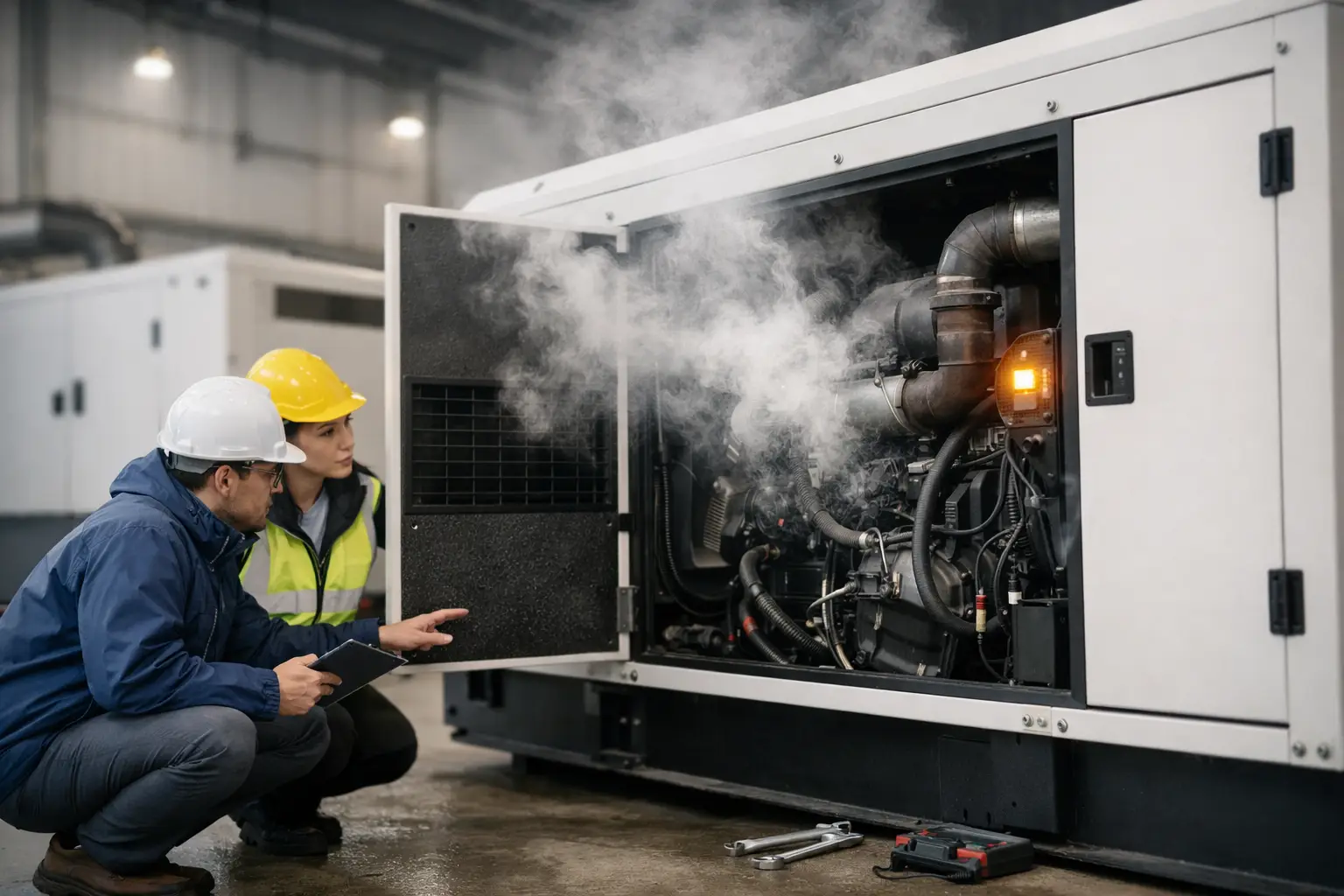
Next comes a physical inspection of the generator enclosure, battery, wiring, fluid levels, air intake, exhaust path, fuel components, and electrical connections. This often reveals issues such as corrosion, animal damage, loose terminals, leaks, or blocked ventilation before more extensive testing begins.
The system should then be tested in a controlled manner. Depending on the symptom, that may include simulating a utility outage, verifying generator startup, measuring battery and charging performance, checking fuel pressure, confirming output voltage and frequency, and observing transfer switch operation. When appropriate, load testing confirms that the generator can carry the circuits it was designed to support.
Finally, the repair must be verified, not assumed. A dependable service provider records the findings, explains what failed, confirms what was repaired, and identifies maintenance or monitoring actions that reduce the chance of recurrence.
Why Installation Quality Affects Long-Term Reliability
Some generator problems begin years before the first failed outage event. Poor cable routing, undersized fuel lines, improper grounding, weak weather protection, incorrect load calculations, and incomplete commissioning can all create delayed failures.
This is why generator ownership should not end when installation is complete. Proper sizing and code-compliant installation establish the foundation, but annual service, system testing, and responsive support keep that foundation working. GenTek Power approaches standby systems as long-term protection equipment, with the installation, maintenance, and service accountability needed to support it.
Remote monitoring can also help, but it is not a replacement for maintenance. Monitoring may alert a service team to a low battery, missed exercise cycle, or active fault before an outage occurs. It cannot replace a physical inspection of fuel components, fluids, connections, filters, and transfer equipment.
When to Call for Service Instead of Resetting the System
It is reasonable for an owner to check the display for a visible alert, confirm that the emergency stop is not engaged, and look for obvious exterior damage. Beyond that, repeated resets can hide a serious problem or allow damage to continue.
Call for professional service if the generator will not exercise, repeatedly displays an alarm, cranks without starting, starts and shuts down, runs but does not transfer power, leaks fuel or oil, produces unusual noise, or has been exposed to flooding, impact, rodent damage, or storm debris. If you smell gas, suspect a fuel leak, or see damaged electrical equipment, keep clear of the area and treat it as a safety issue first.
The best time for generator failure analysis is not while your home is dark or your operation is losing money. A scheduled inspection and realistic system test can expose small weaknesses while there is still time to correct them. When the next outage arrives, your backup power should feel uneventful – because it simply works.