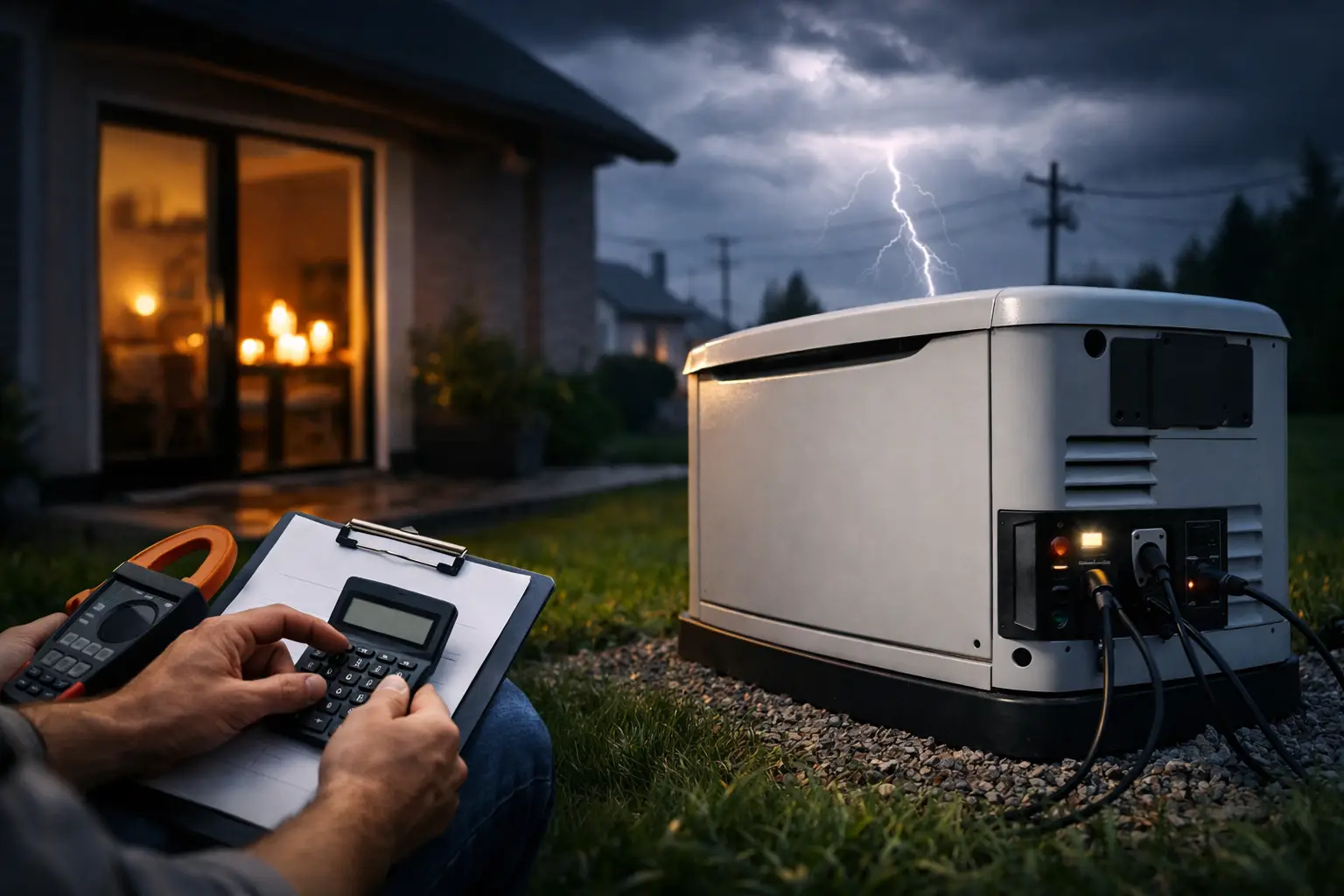
A generator that is too small does not fail politely. It may trip when the furnace starts, struggle with a well pump, or leave the refrigerator and internet down when you need them most. A generator sizing calculator is a useful starting point, but dependable backup power depends on more than adding a few appliance wattages together.
The right generator is sized around what must stay on during an outage, what starts at the same time, and how your electrical system is designed. For a home, that may mean heat, sump protection, refrigeration, lighting, internet, and a medical device. For a business, it may mean protecting servers, point-of-sale systems, refrigeration, security, or production equipment. The goal is not simply to buy more generator than you need. It is to build a system that performs reliably when the grid does not.
What a Generator Sizing Calculator Can Tell You
A calculator estimates the electrical load your generator must support. Most ask you to select appliances, HVAC equipment, pumps, lighting, and other loads, then total their running watts and account for starting watts. The result usually suggests a generator size in kilowatts, or kW.
That estimate is valuable because it turns a vague concern – “I want backup power” – into a practical conversation. It can help you decide whether you need coverage for selected essentials or a whole-home system. It can also reveal that a major load, such as central air conditioning, an electric range, or a deep well pump, changes the project significantly.
Still, online calculations have limits. They cannot see your electrical panel, identify an overlooked hardwired load, confirm your utility requirements, or determine whether a particular motor has an unusually high starting demand. They also cannot tell you whether a transfer switch, fuel supply, placement location, and generator capacity all work together under local code.
Treat the calculator result as a planning range, not a final equipment specification.
Start With the Outage You Need to Handle
The most accurate sizing decisions begin with priorities, not generator models. Ask what happens in the first hour, the first day, and several days into a power outage.
For many homeowners, the answer is straightforward: protect food, keep the house safe and livable, maintain communications, and prevent water damage. A selected-circuit system may cover the refrigerator, freezer, furnace blower, sump pump, garage door, a few lights, outlets, and internet equipment. That approach can be cost-effective when the household is comfortable managing nonessential loads during an outage.
Whole-home backup is different. It is designed to power the home with fewer compromises, often including larger appliances and more circuits. But “whole home” does not always mean every device can run at maximum output at the same moment. A properly designed system may use load management to prevent high-demand equipment from starting together. This is particularly common with air conditioners, electric heat, pool equipment, electric vehicle chargers, and electric cooking appliances.
Business owners should separate critical operations from convenient operations. A small office may need network equipment, emergency lighting, security, and computers. A restaurant may need refrigeration, ventilation, and point-of-sale equipment. A generator that keeps the lights on but cannot protect revenue-producing equipment may not solve the real problem.
Running Watts and Starting Watts Are Not the Same
Every sizing calculation has two numbers to consider. Running watts are the power a device uses while operating normally. Starting watts, sometimes called surge watts, are the extra power certain motors need for a few seconds when they start.
A refrigerator may run at a modest wattage but require a larger surge when its compressor cycles on. The same applies to sump pumps, well pumps, furnace blowers, air conditioners, freezers, and many workshop tools. If several motor-driven loads start near the same time, the generator can be pushed beyond its available capacity even if the normal running total looks acceptable.
This is why adding only the labels from a few appliances can produce a misleading result. A professional load assessment considers which equipment is likely to run together, which equipment has motor startup demand, and whether controls can stagger those loads. The answer depends on the actual equipment in your home or facility.
It also depends on fuel type and generator rating. Standby generators are commonly rated in kW, while appliance labels may list watts or amps. As a basic reference, watts equal volts multiplied by amps. But electrical systems with motor loads, power factor, and 240-volt equipment require more care than a simple conversion.
A Practical Way to Use a Generator Sizing Calculator
Before using a calculator, make a realistic list of the equipment you want available during an outage. Include hardwired loads people often forget: furnace or boiler controls, sump pumps, well pumps, septic pumps, garage doors, security systems, water heaters, and ventilation equipment.
Then review the nameplates on major appliances and HVAC equipment. Look for voltage, running amps, minimum circuit ampacity, maximum overcurrent protection, and any listed starting requirements. If those details are unclear, take clear photos for your generator professional. Guessing is less helpful than it sounds, especially for older equipment or specialized commercial systems.
Next, choose your backup approach. If you want essential circuits only, calculate the loads that will be connected to the backup panel. If you expect the entire electrical panel to be backed up, identify large loads that may need management. A good design does not force you to remember a complicated shutdown routine every time a storm arrives.
Finally, leave room for real life. Families add freezers, home offices, workshop equipment, and electric appliances. Businesses add technology and operational loads. Some capacity margin is sensible, but oversized equipment can increase upfront cost, fuel use at light loads, and installation complexity. The right margin is based on your expected use, not a one-size-fits-all percentage.
Why Installation Details Affect Generator Size
The generator is only one part of the backup power system. The transfer switch determines how your home or business safely disconnects from utility power and connects to generator power. The electrical panel configuration determines which circuits can be supported. Fuel piping and gas-meter capacity determine whether the generator can deliver its rated output during a prolonged outage.
Natural gas systems deserve special attention. A generator may appear appropriately sized on paper, yet underperform if the gas line is undersized or the meter cannot supply the generator alongside other gas appliances. Propane systems require similar planning around tank size, vaporization, and expected runtime in cold weather.
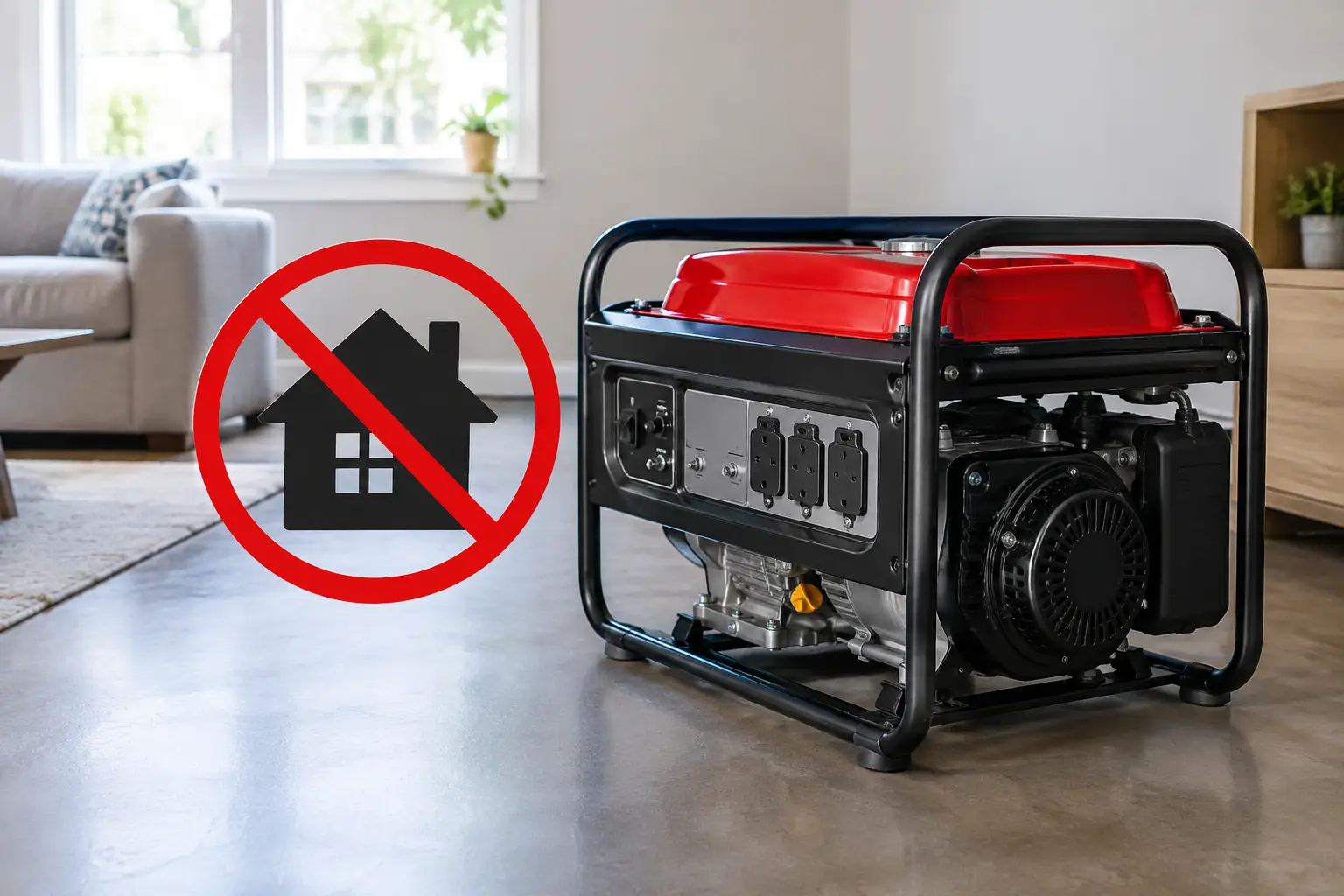
Permitting, placement clearances, exhaust direction, electrical code requirements, and utility coordination also shape the final design. These are not administrative details to handle after selecting equipment. They protect safe operation, preserve warranty requirements, and reduce the risk of costly changes midway through installation.
When a Professional Load Assessment Is Worth It
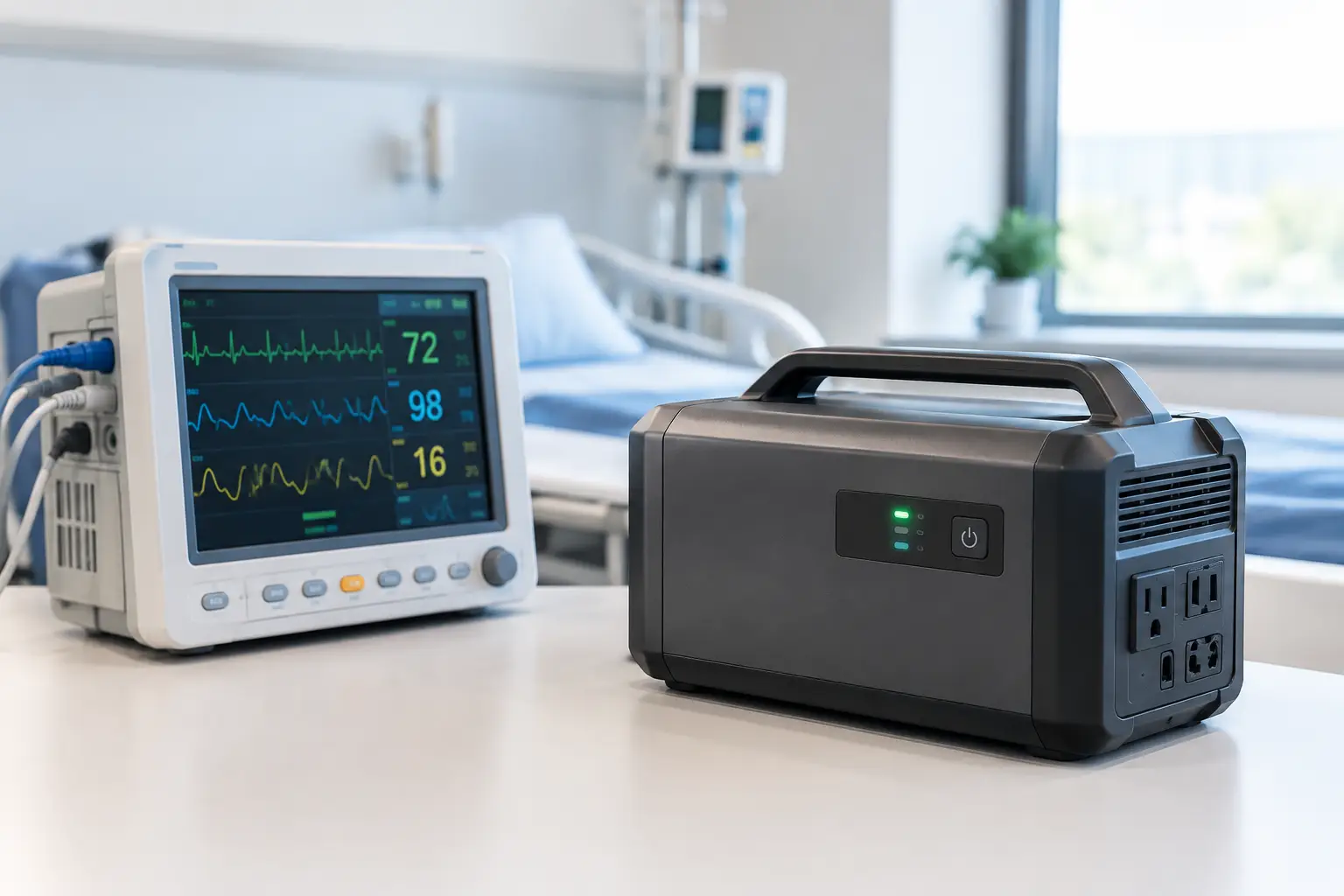
A calculator is especially likely to need professional verification when you have central air conditioning, electric heat, a well or septic pump, a large home, multiple HVAC systems, solar equipment, an EV charger, or critical medical equipment. The same is true for any commercial property where downtime has a direct financial or safety consequence.
A qualified standby power provider should review your electrical service, identify critical loads, inspect the proposed installation area, evaluate fuel supply, and explain what will and will not be powered. You should receive a clear scope of work rather than a vague promise that a generator will “run the house.”
At GenTek Power, this process is built around the system as a whole: equipment, installation, permitting, testing, and service after the installation is complete. That accountability matters when the first true test happens at night, in bad weather, with utility power unavailable.
Size for Confidence, Then Plan for Support
The best backup power system is not the largest unit on a brochure. It is the one that starts automatically, carries the loads you depend on, and is maintained by people who will answer when an outage exposes a problem. Use a generator sizing calculator to clarify your needs, then let a proper site assessment turn those numbers into dependable protection for the people and operations that rely on you.