A standby generator is supposed to remove uncertainty when the power goes out. But a generator maintenance agreement is what helps make sure that promise holds up when a storm, utility failure, or equipment issue puts your home or business to the test. The system may sit quietly for months, but it still needs professional attention to start automatically, carry the intended load, and run safely when you need it most.
For homeowners, that can mean protecting food, heat or air conditioning, internet service, sump pumps, and medical equipment. For business owners, it can mean keeping essential operations moving instead of facing lost revenue, damaged inventory, or an unsafe shutdown. Maintenance is not an optional add-on after installation. It is part of owning dependable backup power.
Why standby generators need scheduled service
A generator is more than an engine outside your building. It is a connected system with an engine, battery, alternator, transfer switch, fuel supply, electrical connections, controls, and safety components. Any one of those areas can affect whether the generator starts and transfers power correctly.
Automatic exercise cycles are helpful, but they are not a substitute for a technician inspecting the system. A generator can complete a brief weekly run and still have a weak battery, deteriorating fuel, a small fluid leak, a loose connection, a controller warning, or a transfer switch issue waiting to surface during a long outage.
Scheduled service catches small concerns before they become an emergency call. It also creates a documented service history, which is valuable for warranty requirements and gives you a clear picture of your system’s condition over time.
What a generator maintenance agreement should include
Not every service plan provides the same level of protection. A low-cost visit that only starts the generator may sound adequate, but it can leave important components unchecked. A worthwhile generator maintenance agreement should clearly explain what is inspected, tested, replaced, and documented.
Professional inspections and preventive service
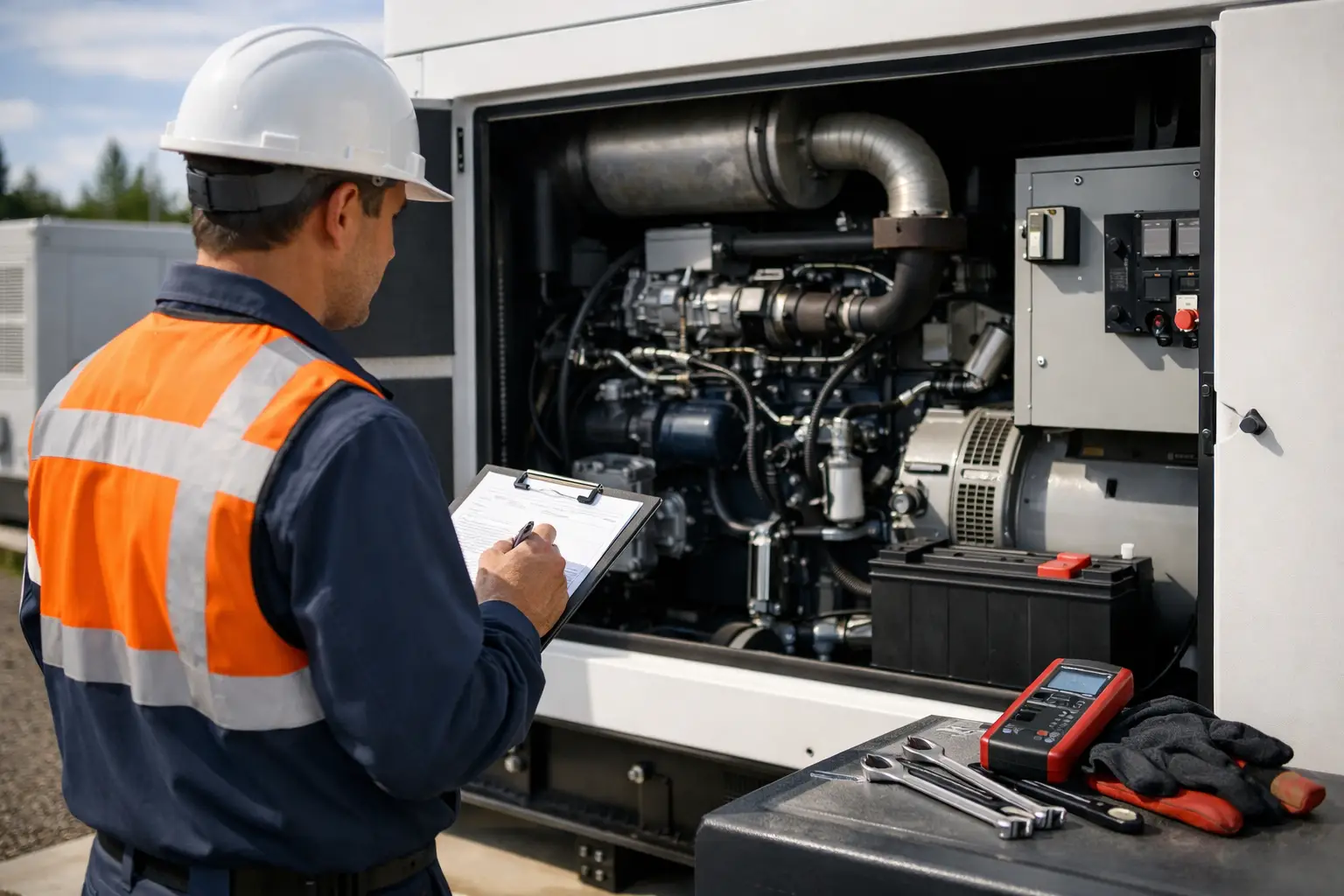
At each scheduled visit, a qualified technician should inspect the generator enclosure, engine compartment, wiring, battery, exhaust system, fuel connections, and visible components for damage, corrosion, leaks, pest activity, or wear. They should check fluid levels and service intervals, then replace maintenance items such as oil, filters, or spark plugs when required by the manufacturer and operating hours.
The exact work depends on the generator model, its age, how often it has run, and whether it supports a home or a critical commercial load. A unit that ran for several days during a recent outage may need different attention than one that only completed its regular exercise cycle.
Battery and charging-system testing
Battery failure is one of the most common reasons a standby generator will not start. The battery may look fine from the outside but lose capacity over time, especially through temperature swings. A proper maintenance visit includes checking battery condition, terminals, cables, and the charging system.
This is a simple area to overlook and an expensive one to ignore. Replacing a marginal battery during planned service is far better than finding out it cannot crank the engine after the neighborhood has already lost power.
Transfer switch and load testing
The transfer switch is the part of the system that senses a utility outage, starts the generator, and moves selected circuits or the entire building onto backup power. It deserves the same attention as the generator itself.
A technician should verify that the system starts, transfers, and returns to utility power properly. When appropriate, load testing confirms the generator can carry the electrical demand it was designed to support. This matters particularly for whole-home systems and businesses where heating and cooling, pumps, refrigeration, communications equipment, or production systems must stay online.
Not every visit requires the same type of load test. The right approach depends on the equipment, local conditions, fuel type, and the consequences of downtime. What matters is having a service provider that understands your system and can identify when more thorough testing is necessary.
Controller checks, alerts, and remote monitoring
Modern generators store fault codes and operating information in their controllers. Those records can reveal issues that are not obvious during a quick visual inspection. Your service provider should review alerts, exercise history, run hours, and any fault conditions, then explain what they found in plain language.
If remote monitoring is part of your setup, it adds another layer of confidence between scheduled visits. Monitoring can flag status changes or warning conditions so service can be arranged before an issue becomes a failure. It does not replace hands-on maintenance, but it can reduce the chances of being surprised.
Clear records and service recommendations
You should never be left wondering what was done to your generator. A dependable agreement includes service documentation showing inspection results, work performed, parts replaced, and recommended next steps.
That clarity matters because some repairs are not predictable. A maintenance agreement helps prevent many problems, but it cannot guarantee that every component will last forever. When a repair is needed, you deserve a straightforward explanation of the issue, the urgency, the available options, and the cost before work proceeds.
What maintenance agreements may not include
This is where careful reading matters. Some agreements include routine labor and scheduled maintenance materials but charge separately for repairs, replacement parts, emergency calls, or after-hours service. Others may offer preferred scheduling or reduced rates for agreement customers.
Neither approach is automatically wrong. The key is knowing what you are buying. Ask whether filters, oil, batteries, spark plugs, travel, diagnostic time, remote monitoring, and emergency response are included. Also ask how often the system will be serviced and whether the plan follows your manufacturer’s requirements.
Be cautious of vague promises such as “annual checkup” without a defined scope. A generator is a long-term investment, and the service agreement should be specific enough to protect it.
How often should your generator be serviced?
Most residential standby generators benefit from professional maintenance at least once a year. In many cases, twice-yearly service is the smarter choice, particularly where weather is severe, the generator runs frequently, the property is exposed to debris or pests, or the home relies heavily on backup power.
Commercial systems often require a more customized schedule. A generator supporting a restaurant, medical office, retail operation, multi-unit property, or critical facility may need more frequent inspections, testing, and fuel management. The more serious the impact of an outage, the less sense it makes to rely on a minimal service schedule.
Manufacturer recommendations should guide the plan, but real operating conditions matter too. A professional provider will consider run hours, system age, fuel source, load requirements, and outage history rather than treating every generator the same.
Choosing a service partner you can call during an outage
The best maintenance agreement is backed by people who will still answer the phone after the installation is complete. Look for licensed, factory-trained technicians who work on the generator brand and equipment you own. Confirm that the provider understands both the generator and the transfer switch, not just one side of the system.
You should also expect transparent terms, documented service, and a clear path for support when an alert appears or the system does not perform as expected. A one-time installer may be less expensive upfront, but backup power is not a one-time purchase. It is a relationship that has to work years later, often under difficult conditions.
GenTek Power approaches maintenance as part of that long-term responsibility. The goal is not simply to check a box once a year. It is to keep your backup power system prepared for the moment your property needs it.
Before the next storm season, take a few minutes to review your generator’s last service date, exercise history, and support plan. If any of those answers are unclear, that is the right time to arrange professional service, not the middle of an outage.