A commercial generator maintenance guide is not paperwork for the facility file. It is the plan that determines whether your business keeps operating when utility power disappears. When the lights go out, your generator may be protecting refrigeration, security, communications, IT equipment, life-safety systems, inventory, or the ability to serve customers. A unit that has not been tested, fueled, and serviced can turn a manageable outage into an expensive operational failure.
Commercial standby power is often expected to work perfectly after sitting idle for months. That expectation is reasonable, but only when the system receives professional attention before a storm, grid failure, or utility disruption puts it under load.
Why Commercial Generator Maintenance Cannot Wait
Generators do not usually fail because one major component suddenly breaks. More often, smaller problems build quietly: a weak starting battery, contaminated fuel, a coolant leak, a clogged filter, loose electrical connections, or an automatic transfer switch that has not been exercised. None of those issues are easy to spot from a quick walk-around, and each can prevent a system from starting when it matters.
The financial cost depends on your operation. A medical office may lose access to critical systems. A restaurant may face food spoilage. A warehouse can lose climate control, lighting, and security. For offices, an outage can stop transactions, disconnect remote teams, and create a poor customer experience. The right maintenance plan is based on those consequences, not just the generator’s age or the calendar.
Maintenance also protects the equipment investment itself. A commercial generator, transfer switch, fuel system, and associated electrical infrastructure are designed to provide long-term service. Skipping scheduled care can shorten component life, affect warranty coverage, and leave known issues undiscovered until emergency service is required.
Commercial Generator Maintenance Guide: What to Check
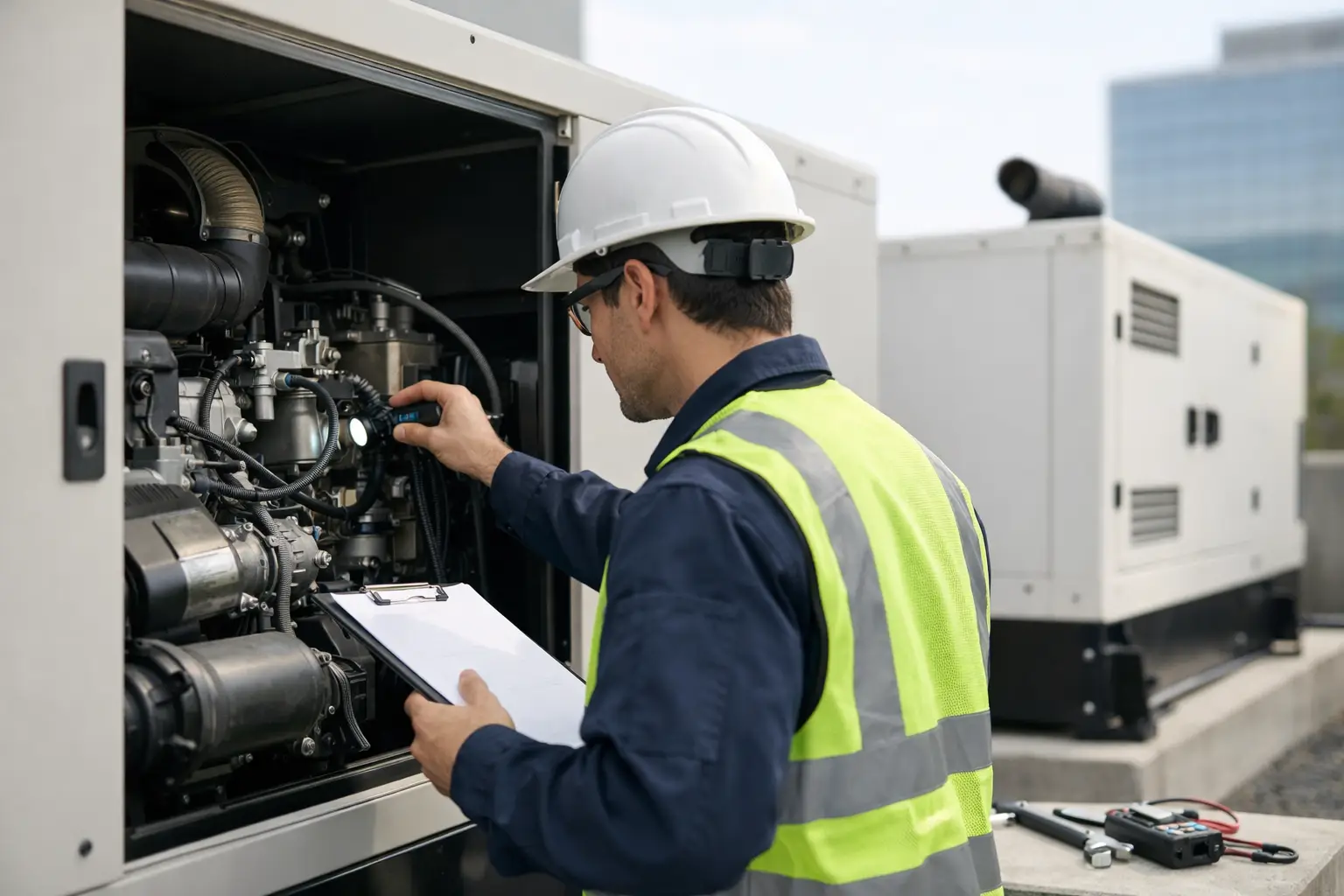
A dependable program combines routine site checks with scheduled professional service. Your team can help identify visible concerns, but licensed generator technicians should perform the inspections, testing, adjustments, and repairs that affect safe operation and code compliance.
Start with a documented visual inspection
A designated facility contact should inspect the generator area regularly, especially after severe weather, construction activity, or a real outage. The enclosure should be clear of leaves, snow, standing water, stored materials, rodent activity, and anything that could restrict airflow or block access. Check that the unit is secure, the area is clean, and there are no signs of physical damage, corrosion, fluid leaks, or unusual odors.
Look at the control panel without changing settings. Warning lights, fault codes, low battery notifications, or alarm messages should be addressed promptly. Clearing an alarm without identifying its cause only hides the condition that could cause a no-start later.
Verify fluid levels and signs of contamination
Engine oil, coolant, and fuel all require attention. Low oil or coolant can indicate a leak, while discolored fluids may point to contamination, age, or an internal mechanical concern. The correct service interval varies by generator model, engine hours, operating environment, and manufacturer requirements. A lightly used unit may still need fluid and filter changes based on time, not only run hours.
Fuel deserves special attention. Diesel can develop water contamination and microbial growth during long storage periods, while natural gas and propane systems have their own supply, regulator, and piping considerations. A generator with adequate fuel on paper may still fail if the fuel is degraded, restricted, or unavailable at the required pressure during operation.
Keep batteries and charging systems healthy
Starting batteries are one of the most common causes of generator failure. The engine may be in excellent condition, yet it cannot start without a battery that can deliver sufficient power. Professional service should include battery condition testing, terminal inspection, charger verification, and replacement recommendations based on measured performance rather than guesswork.
Battery concerns are especially common in extreme heat and cold. If your facility operates in a climate with seasonal temperature swings, battery testing should be treated as a priority before periods of expected severe weather.
Exercise the generator and transfer switch
Regular exercise confirms that the engine starts, runs, and reports normal operating conditions. It also circulates fluids and helps reveal faults that would otherwise remain hidden. However, an unloaded exercise is not the same as proving that the generator can carry your facility’s critical load.
Your maintenance provider should establish an exercise schedule that follows the manufacturer recommendation and the needs of your business. In many cases, periodic testing under load is necessary to verify performance. The right approach may involve running the building on generator power during a planned window or using a load bank. The choice depends on the system design, operational risk, available downtime, and the type of loads being protected.
The automatic transfer switch needs equal attention. This is the equipment that senses utility loss and transfers your building to generator power. A generator can start perfectly and still leave the building without backup power if the transfer switch is not functioning correctly. Technicians should inspect connections, controls, transfer operation, and signs of overheating or wear.
Set the Right Service Schedule
There is no single schedule that fits every commercial site. A generator supporting a small office has different demands than one supporting a cold-storage facility, multifamily property, data room, or critical care environment. Run hours matter, but so do the consequences of failure.
For many commercial systems, a monthly operational check and a more detailed quarterly or semiannual inspection create a strong foundation. Annual service typically includes a deeper review, fluid and filter service as required, battery testing, fuel assessment, transfer switch inspection, and documented performance testing. Systems with frequent run time, harsh environmental exposure, older equipment, or high-consequence loads may need more frequent attention.
The key is consistency. Maintenance should not be postponed because the generator performed well during the last outage. One successful event does not confirm that fuel quality, batteries, belts, hoses, controls, and electrical components remain ready for the next one.
Maintain Records That Support Fast Decisions
Every inspection, exercise, alarm, repair, and outage should be documented. Good records help technicians identify recurring faults, track battery and fluid replacement history, confirm run hours, and plan service before a failure becomes urgent. They can also support insurance, compliance, and internal facility-management requirements.
After a real outage, record how long the generator ran, whether it carried the intended load, any alarms that appeared, fuel usage, and any concerns noticed by staff. A post-outage inspection is worthwhile even if the system seemed to operate normally. Extended run time can expose wear or fluid consumption that was not visible beforehand.
Know When to Call for Service
Do not wait for a scheduled visit if the generator displays an active alarm, fails an exercise cycle, starts roughly, emits unusual smoke, leaks fluid, has a low battery warning, or makes abnormal noise. The same is true if the transfer switch does not transfer as expected or critical equipment behaves differently while on generator power.
Emergency repairs are sometimes unavoidable, but they should not become your maintenance strategy. A qualified service partner can diagnose the issue, source correct parts, verify repairs under real operating conditions, and provide clear recommendations for what needs attention now versus what can be planned.
A low-cost installer may be available for the initial project and nowhere to be found after the first alarm. Long-term backup power reliability requires a provider that understands the full system and remains accountable after installation, including the generator, transfer switch, fuel supply, controls, and protected loads.
Give Your Generator a Job Before the Next Outage
The best time to find a weak battery, fuel problem, or transfer-switch fault is during a planned service visit, not at 2 a.m. during a storm. Put a documented maintenance schedule in place, assign responsibility for routine site checks, and work with trained technicians who can test the system as a complete backup power solution.
When your business depends on power, maintenance is how you protect the people, equipment, and commitments that depend on your doors staying open.