A standby generator can sit quietly for months, then be expected to power your home or business within seconds of an outage. That is why asking what does generator maintenance include is more than a routine service question. It is how you protect the equipment that keeps your heat, refrigeration, internet, security systems, and essential operations running when the utility power fails.
Generator maintenance is a planned inspection, testing, and service process designed to find small problems before they become no-start failures. The exact scope depends on the generator model, fuel type, age, runtime, and manufacturer requirements. But a professional maintenance visit should always focus on one outcome: confirming your system is safe, healthy, and ready to carry the load when you need it.
What Does Generator Maintenance Include for a Standby System?
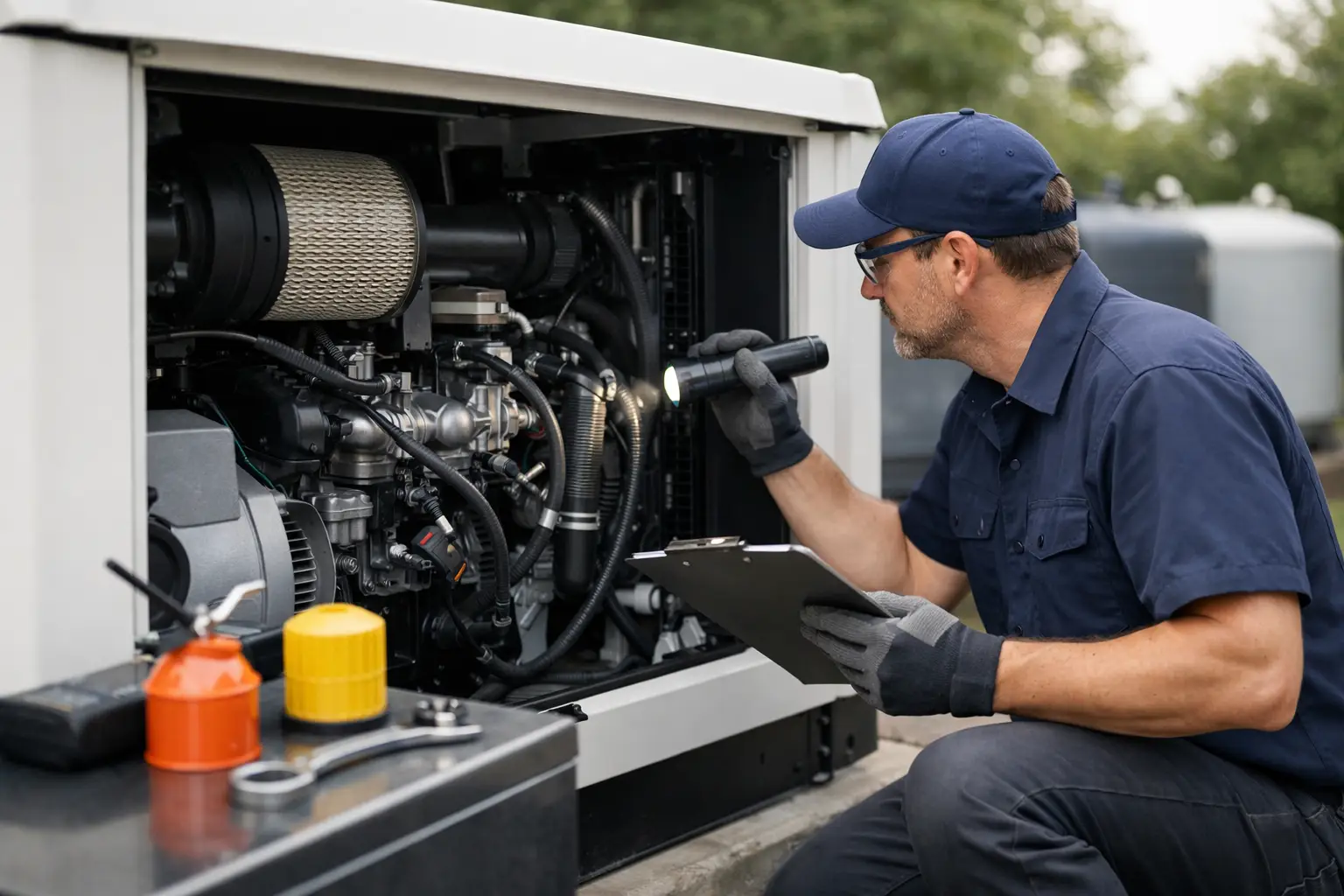
A complete maintenance appointment goes beyond starting the unit and listening for a few minutes. A factory-trained technician reviews the generator, the automatic transfer switch, the fuel supply, batteries, electrical connections, and the record of how the system has been operating.
For most residential and commercial standby generators, maintenance commonly includes these core tasks:
- Inspecting the generator enclosure, engine compartment, wiring, and connections for damage, corrosion, pests, leaks, or loose components
- Checking engine oil, coolant, fuel system condition, and other fluid levels, then replacing fluids and filters according to the manufacturer schedule
- Testing the battery, battery charger, terminals, and starting system
- Running the generator and verifying operating voltage, frequency, engine speed, alarms, and error codes
- Exercising and inspecting the automatic transfer switch to confirm the system can transfer power correctly during an outage
- Reviewing remote monitoring alerts, maintenance history, and any operating issues reported by the owner
A qualified technician also looks for concerns that are easy to miss from the outside, such as a restricted air intake, a weakening battery, a fuel supply issue, or an error code that has not yet caused the unit to stop running.
The Engine Service That Keeps a Generator Ready
Like a vehicle, a generator engine needs clean oil, filtration, cooling, and reliable starting power. Unlike a vehicle, it may operate very little between service visits. That lack of use is exactly why scheduled care matters.
Oil and Filter Changes
Engine oil breaks down over time, even when the generator has not run many hours. The service interval may be based on runtime, calendar time, or both. During maintenance, the technician checks the oil level and condition, replaces the oil and filter when due, and looks for signs of leaks around the engine.
Waiting until the generator has a problem is not a good oil-change strategy. During a prolonged outage, an engine under load produces heat and relies on proper lubrication. Clean oil helps protect internal components when the system is working hardest.
Air Filters, Spark Plugs, and Cooling Checks
Air filters can collect dust, leaves, insects, and debris, especially on outdoor units. A restricted filter can affect engine performance and increase strain. Spark plugs, where applicable, are checked or replaced on the manufacturer schedule to support reliable starts and smooth operation.
The cooling system also needs attention. Technicians inspect coolant levels and hoses on liquid-cooled models, while air-cooled units require clear airflow around the enclosure and cooling passages. Snow buildup, landscaping, stored materials, and rodent nests can all create problems that are preventable with regular inspection.
Battery and Electrical Testing Are Not Optional
Battery failure is one of the most common reasons a standby generator will not start. The unit may have completed its weekly exercise just weeks earlier, yet a failing battery can still leave the system unable to crank during a real outage.
Professional generator maintenance includes testing battery condition, inspecting terminal connections for corrosion, and confirming the battery charger is operating correctly. The technician will also inspect wiring, circuit protection, grounding, and control connections for wear or damage.
This is particularly valuable for systems exposed to major temperature swings. Extreme heat and cold both shorten battery life. Replacing a battery proactively is far less disruptive than discovering it has failed while the power is out.
Testing the Generator Under Realistic Conditions
A weekly self-test is useful, but it is not a full confirmation that the generator can support your property. Many exercise cycles run without carrying the building’s electrical load. They show that the engine can start, but they do not always prove that power will transfer properly or that the generator can perform under demand.
During scheduled service, the technician runs the generator and verifies critical operating readings such as voltage and frequency. Depending on the system and service plan, the unit may also be tested with load or monitored during a transfer sequence. The goal is to identify unstable output, unusual engine behavior, overheating, fault codes, or transfer issues before an outage exposes them.
For a home, this can mean confirming that the generator is prepared to support selected circuits or whole-home backup. For a business, it may involve a more detailed review of critical loads, transfer timing, and the conditions needed to keep operations running safely.
The Transfer Switch Needs Maintenance Too
The automatic transfer switch, often called the ATS, is the component that senses utility loss and directs generator power to your home or building. If the generator is the engine of your backup power system, the transfer switch is the decision-maker.
A generator can be mechanically sound and still fail to protect the property if the transfer switch has a wiring issue, damaged contactor, control problem, or communication fault. Maintenance should include an inspection of the switch enclosure, electrical connections, control settings, and transfer operation.
This part of service is especially important after electrical work, renovations, storm damage, or changes to the equipment your generator supports. Adding a large HVAC system, EV charger, appliance, or business load can change the demands on your backup power plan.
Fuel Supply and Site Conditions Matter
Most residential standby generators use natural gas or propane. A maintenance visit should include a visual review of fuel line condition, shutoff access, and any obvious signs of damage or leakage. For propane systems, the fuel level and tank arrangement matter as well. A perfectly maintained generator cannot run without adequate fuel.
Diesel systems require additional attention because stored fuel can degrade or collect water and contaminants. Fuel quality testing, filter changes, and tank inspections may be part of the service plan, particularly for commercial equipment.
The technician should also inspect the installation area. The generator needs required clearance for airflow, exhaust, and safe service access. Overgrown shrubs, loose debris, blocked vents, or drainage issues can affect performance and create avoidable safety concerns.
Maintenance Frequency Depends on Your Equipment and Use
Many homeowners schedule generator maintenance once a year, often before severe weather seasons. That schedule works for many lightly used residential units, provided the generator’s automatic exercise cycle is active and there have been no warning alerts or long outages.
More frequent service may be appropriate when a generator runs often, supports a business, operates in harsh conditions, or is required for critical equipment. A unit that has carried a property through an extended outage may need prompt follow-up service, even if its regular annual appointment is not due yet.
The manufacturer manual sets the baseline, but a professional service provider should tailor recommendations to your specific equipment and how much continuity matters at your property. A family relying on medical equipment has different risk tolerance than a homeowner who only wants backup for convenience. The same is true for a business that loses revenue every hour the power is down.
Why Maintenance Records Protect Your Investment
Good maintenance includes documentation. Service records show what was inspected, what was replaced, which readings were observed, and whether any concerns need follow-up. This creates a clear history for future technicians and can help support warranty requirements.
It also removes guesswork. If your generator reports an alert, a service team can review prior battery readings, run hours, fault history, and past recommendations instead of starting from zero. That leads to faster, more accurate decisions when reliability matters.
At GenTek Power, maintenance is approached as ongoing protection, not a quick visit to check a box. The right service plan gives you a qualified team that understands the installation, tracks the equipment’s condition, and is prepared to respond when an issue appears.
Your generator was installed for the moment normal life stops: the lights go out, the temperature drops, or business systems cannot afford another minute offline. Keeping it maintained is how you make sure backup power is more than a promise on the day you need it.