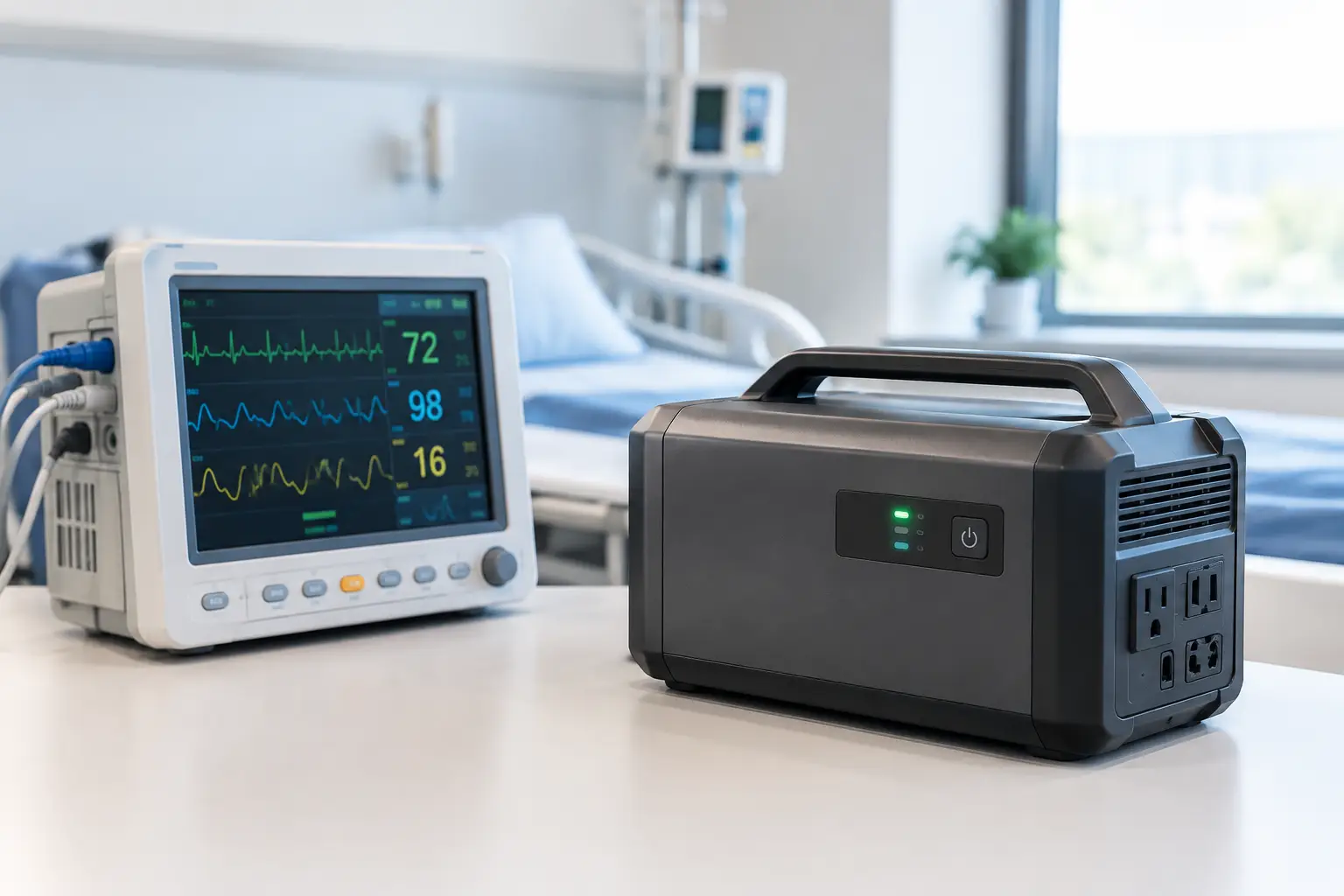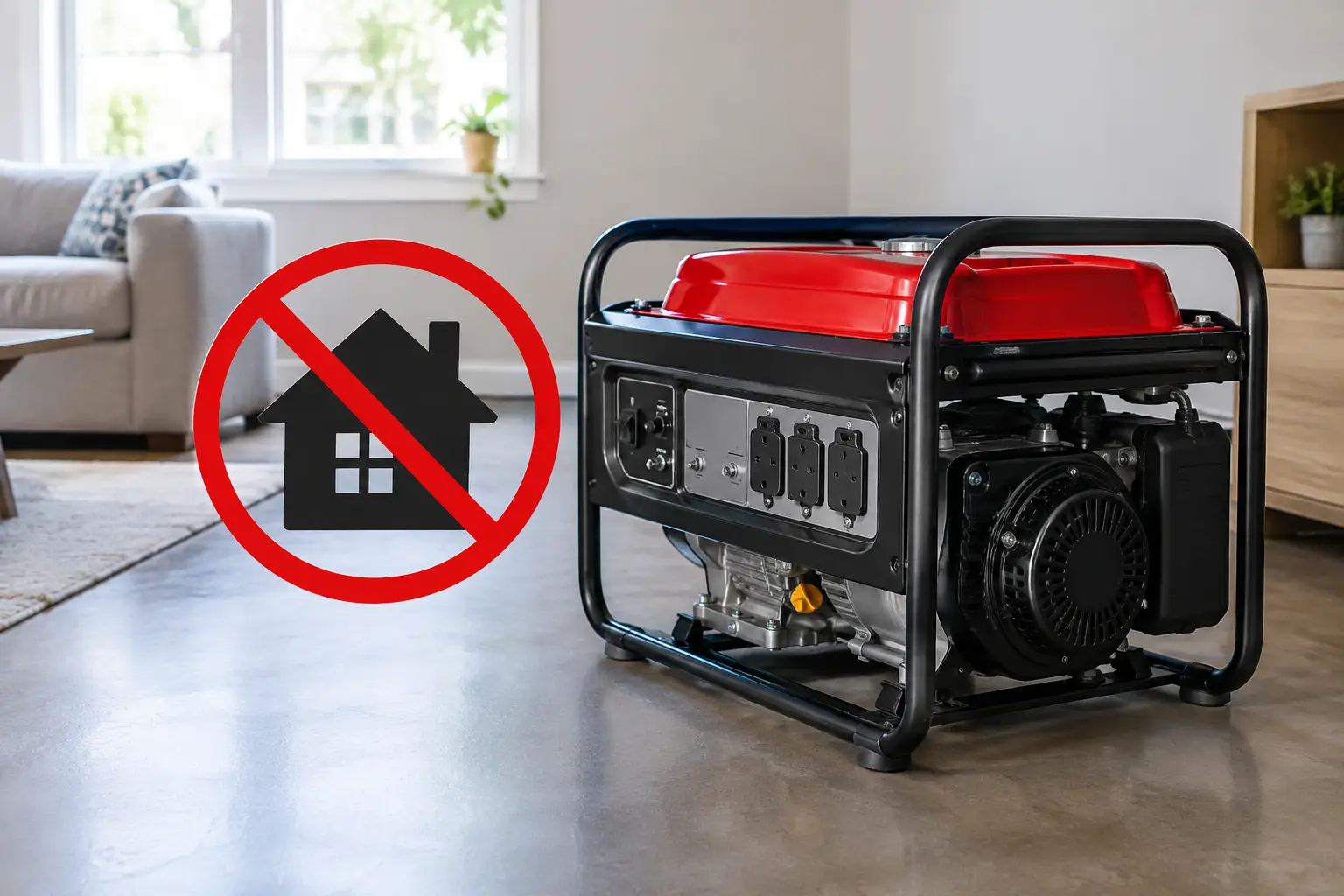
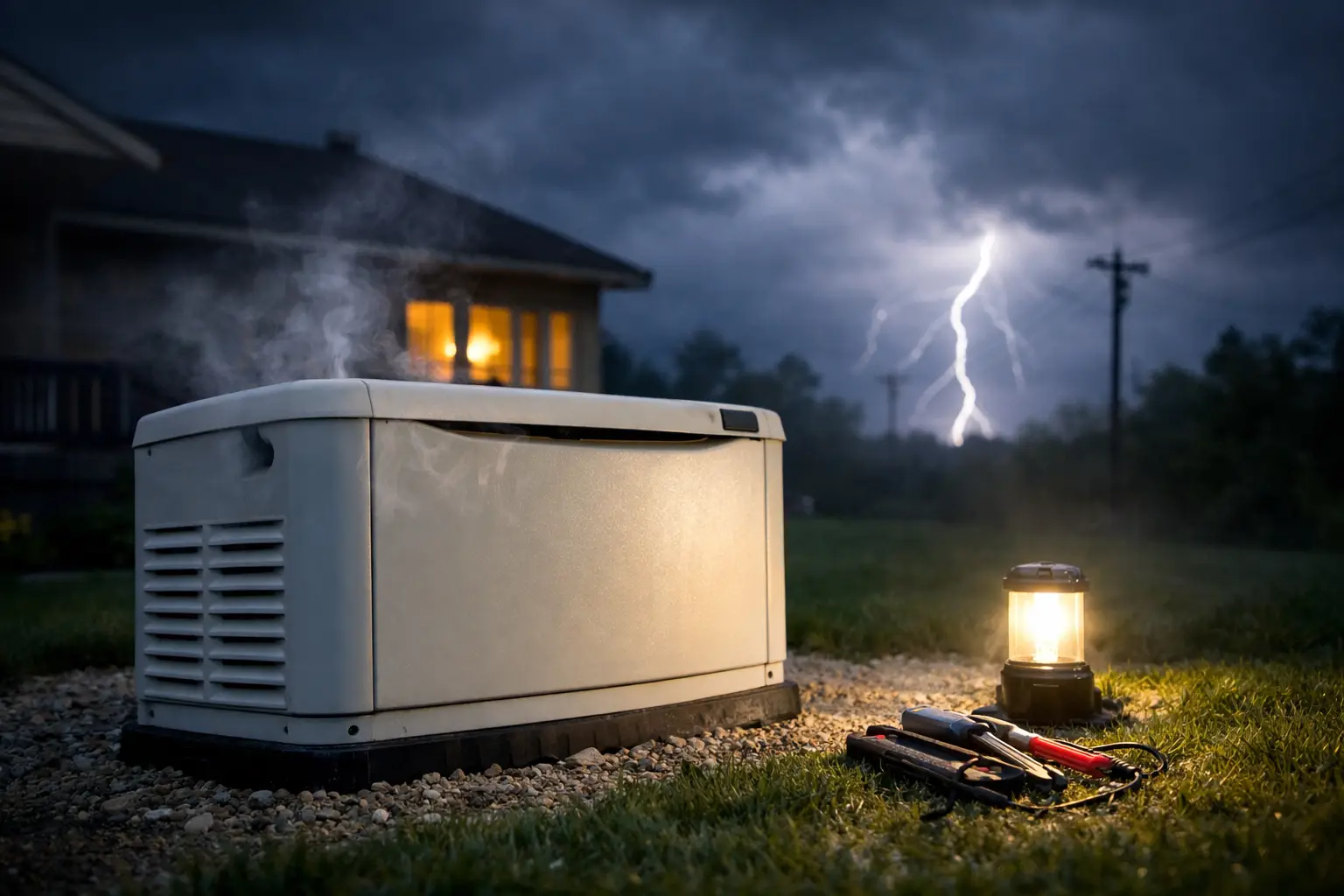
The hardest time to find out your generator has a problem is the exact moment the power goes out. That is why homeowners and business owners ask about the top reasons generators fail during outages before they invest in a system, or after a close call that exposed a weak point. In most cases, generator failure is not random. It usually traces back to sizing, installation quality, fuel delivery, battery condition, or maintenance that was delayed until it mattered.
A standby generator is supposed to remove uncertainty, not add to it. But that only happens when the system is designed correctly, installed to code, tested under real conditions, and supported over time. If any one of those pieces is missing, the generator may still look fine on a calm day and then struggle when the outage is long, cold, hot, or storm-driven.
Top reasons generators fail during outages
The most common failures tend to follow a pattern. Some are mechanical. Some are electrical. Some begin with contractor shortcuts that are easy to miss until the utility power drops and the system has to perform.
Skipped or inconsistent maintenance
This is one of the biggest causes of trouble, and it affects both residential and commercial systems. Generators are engines, and engines need regular service. Oil breaks down, filters clog, spark plugs wear, batteries weaken, and small issues become large ones when equipment sits too long without inspection.
A generator that starts once during an occasional self-test is not the same as a generator that is ready for a real outage. Weekly exercise cycles can reveal some problems, but they do not replace hands-on maintenance. If the unit has not been serviced on schedule, the chance of failure rises sharply when it is asked to run for hours or days.
Battery failure
A standby generator can have plenty of fuel and still do nothing if the starting battery is dead or too weak to crank the engine. Battery issues are especially common in older systems, units that sit in extreme temperatures, or generators that have not had charger performance checked during service.
This catches many owners off guard because the generator appears healthy until startup is required. By then, there is no margin for error. A weak battery is one of the simplest problems to prevent, but one of the most common reasons a generator fails when it is needed most.
Fuel supply problems
When people think about the top reasons generators fail during outages, fuel problems belong near the top of the list. A natural gas or propane generator depends on steady, properly sized fuel delivery. If gas pressure is too low, the regulator is undersized, the tank is not filled appropriately, or the piping was not designed for the generator’s load, the unit may start and then shut down, or never start at all.
Diesel systems have their own concerns, including fuel contamination, aging fuel, and storage issues. The trade-off is that on-site diesel storage can provide more independence in some applications, but it also requires disciplined fuel management.
Fuel issues are often installation or planning issues before they become performance issues. That matters because a low bid installer may not spend enough time coordinating fuel requirements properly. On paper, the generator is there. In practice, it cannot get what it needs to run under full demand.
Wrong generator size for the load
An undersized generator is one of the most preventable problems in backup power. If the unit is too small for the connected load, it may overload, trip, cycle improperly, or fail to carry essential equipment consistently. This happens when sizing is based on rough guesses instead of a proper load calculation.
For a home, that can mean trouble with air conditioning, electric heat, well pumps, sump pumps, or large appliances starting at the same time. For a business, it can mean interrupted operations, unstable power for sensitive systems, or shutdowns that defeat the point of having backup power in the first place.
Oversizing is not automatically the answer, either. A system that is much larger than necessary can create its own inefficiencies and cost issues. The right answer is a generator matched to real-world demand, startup loads, and the priorities of the property.
Transfer switch issues
A generator does not protect a building by itself. The transfer switch is what safely moves the property from utility power to generator power and back again. If that switch is miswired, poorly installed, damaged, or incompatible with the application, the whole system can fail even if the generator engine runs perfectly.
This is one reason professional installation matters so much. Many outage failures are not engine failures at all. They are transfer failures, control failures, or wiring errors that only show up when the system has to switch under actual outage conditions.
A proper commissioning process should verify more than startup. It should confirm full system operation, including transfer timing, load acceptance, and safe return to utility power.
Installation shortcuts and code violations
Some generator failures begin on day one. Improper wire sizing, poor grounding, bad terminations, rushed permitting, weak weather protection, and incomplete startup procedures all create risks that may stay hidden for months.
This is where customers often pay for a cheap install twice. The first cost is the installation itself. The second cost comes later, when the system fails during an outage, requires emergency troubleshooting, or must be reworked to meet code and manufacturer standards.
A professionally managed installation is not just about neat appearance. It is about long-term reliability. When every component is selected, installed, and tested correctly, the system is far more likely to perform under stress.
Environmental and operating conditions
Outages rarely happen on mild, comfortable days. They often happen during storms, heat waves, deep cold, or high winds. Those are exactly the conditions that put more strain on backup equipment.
Cold weather can affect batteries, oil viscosity, regulators, and startup performance. Heat can increase engine stress and ventilation demands. Flood-prone placement can damage components or create unsafe conditions. Debris, snow, ice, or blocked airflow can also interfere with operation.
This does not mean standby generators are unreliable in bad weather. It means they need to be installed and maintained with those conditions in mind. Unit placement, clearance, pad stability, drainage, and seasonal service all matter more than many people realize.
Lack of testing under real load
A generator that starts is only halfway proven. It also needs to carry the intended load reliably. Some systems are never tested beyond a basic startup check, which leaves too many unanswered questions.
Will the generator handle air conditioning startup? Will it support critical circuits and business equipment together? Will it maintain voltage and frequency properly under demand? These are not details to leave unresolved until the first extended outage.
Load testing and complete commissioning help identify problems early. Without that step, a property owner may have a false sense of security.
Control board, sensor, or alarm shutdowns
Modern standby generators rely on controls and protective sensors to prevent damage. If the unit detects low oil pressure, overcrank, overspeed, overtemperature, or another fault, it may shut itself down. That protection is useful, but it can feel like a failure when the power is out and the building goes dark again.
Sometimes the shutdown is caused by a real mechanical issue. Other times it points to a sensor problem, a wiring issue, or a condition that maintenance should have caught earlier. Either way, the lesson is the same: standby power is a system, not just a machine. Every part of that system has to be healthy.
How to reduce generator failure risk
The best way to avoid outage disappointment is to treat backup power as a long-term service relationship, not a one-time purchase. Good equipment matters, but design, installation, testing, and follow-up matter just as much.
Start with proper sizing and fuel planning. Make sure the installation is permitted, code-compliant, and completed by qualified technicians who understand both the generator and the transfer equipment. After that, stay current on maintenance and battery checks, and do not assume weekly exercise cycles tell the whole story.
For homes, reliability often comes down to protecting comfort, food storage, internet access, sump pumps, and medical needs. For businesses, it is about continuity, lost revenue, and protecting operations when the grid is unstable. In both cases, the cost of failure during an outage is almost always higher than the cost of doing the job right upfront.
That is why experienced providers such as GenTek Power focus on the full picture instead of just selling a box. When backup power is handled as a complete, professionally supported system, the odds of failure drop and confidence goes up.
If you are worried about whether your generator will perform when the next outage hits, that concern is worth acting on now, while the lights are still on.