When a standby generator starts acting differently, most people notice it in passing and hope it clears up on its own. That is exactly how small issues turn into missed starts during a storm. The most common generator repair warning signs show up before total failure, and catching them early can protect your home, your business, and the systems you depend on every day.
For some owners, that means keeping refrigerators cold, sump pumps running, and the internet on for work. For others, it means avoiding costly downtime, spoiled inventory, or disruption to customers. Either way, the pattern is the same: generators usually give you a warning before they let you down.
Why generator repair warning signs matter
A standby generator is not something you want to troubleshoot in the middle of an outage. If the system is slow to start, running rough, showing alarms, or shutting down unexpectedly during normal conditions, that is the time to act. Waiting often makes the repair larger, more expensive, and more disruptive.
There is also a safety side to this. A generator involves fuel, exhaust, electrical connections, automatic transfer equipment, and battery-backed controls. Strange behavior is not just inconvenient. It can point to overheating, fuel delivery problems, charging issues, or control failures that need qualified service.
1. Hard starting or failure to start
One of the clearest generator repair warning signs is a generator that struggles to start during its exercise cycle or does not start at all. You may hear repeated cranking, notice a delayed startup, or see the unit attempt to turn over and then stop.
Sometimes the cause is straightforward, like a weak battery or dirty battery terminals. In other cases, the problem may involve the charger, fuel supply, spark plugs, sensors, or control board. The point is not to guess. If the generator no longer starts cleanly and consistently, it needs attention before the next outage tests it for real.
2. Unusual noises during operation
Generators make noise, but owners usually know what their system normally sounds like. If the engine suddenly develops knocking, sputtering, popping, grinding, or a sharp change in tone, that should not be ignored.
A rough sound can mean loose components, ignition problems, airflow restrictions, valve issues, or internal wear. In some cases, the problem is minor. In others, continuing to run the unit can cause more damage. A changing sound is often one of the earliest signs that service is needed.
3. Warning lights, alarms, or fault codes
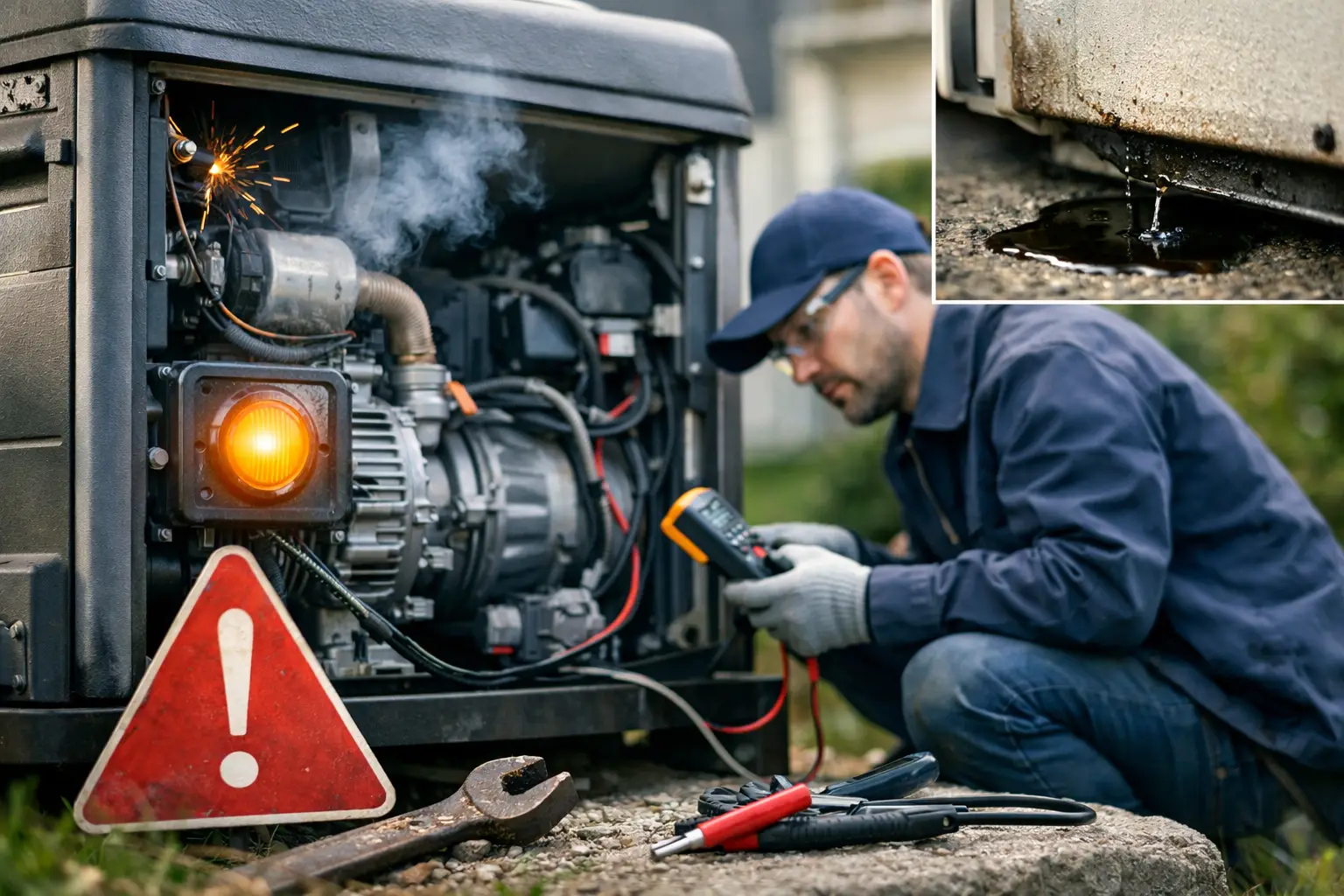
Modern standby generators are designed to tell you when something is wrong. If the controller shows an alert, maintenance reminder, shutdown notice, or fault code, do not reset it and move on without understanding why it happened.
Some alarms are triggered by routine service intervals, while others point to low oil pressure, overcrank events, overheating, battery problems, overspeed conditions, or transfer switch communication issues. It depends on the make and model, but the bigger issue is consistency. A recurring alert almost always means an underlying condition has not been resolved.
4. Fluid leaks or visible residue
If you see oil spots, fuel stains, coolant residue, or wet areas inside or around the enclosure, the system needs inspection. Leaks are easy to dismiss when the generator still runs, but they tend to get worse, not better.
Oil leaks can affect lubrication and engine health. Coolant leaks can lead to overheating. Fuel leaks raise obvious safety concerns and can compromise performance when the generator is called on to run under load. Even a small leak deserves prompt service because it rarely stays small for long.
5. Strong fuel or burning smells
A standby generator should not produce strong, persistent odors around the unit. If you notice raw fuel smell, burning insulation, hot metal odor, or heavy exhaust smell that seems unusual, treat it seriously.
Fuel odor can suggest a leak, venting issue, or incomplete combustion. A burning smell may point to overheated wiring, a failing electrical connection, or debris inside the enclosure. Exhaust issues can involve blockage, leaks, or engine performance problems. Smells are one of those warning signs people often notice before they can identify the source, which is exactly why they matter.
6. The generator runs rough or surges
A generator should run steadily. If it starts hunting, surging, vibrating more than normal, or producing inconsistent output, that is a sign something is off.
This can happen because of fuel delivery issues, dirty filters, ignition problems, governor trouble, or sensor-related faults. On some systems, poor maintenance is the root cause. On others, aging components are beginning to fail. The trade-off with waiting is simple: rough running may still seem manageable during a weekly exercise, but under real outage conditions the unit may shut down or fail to carry the load properly.
7. Battery and charging problems
Many standby generator failures come back to the battery. If the unit shows low battery alarms, struggles to crank, or repeatedly needs battery attention, there may be more going on than battery age alone.
A failing charger, loose cable connection, corroded terminals, or parasitic draw can all create repeat issues. Because the battery is what starts the generator automatically, this is not a minor problem. A generator with an unreliable starting system is a generator you cannot fully trust.
Generator repair warning signs in the transfer process
Sometimes the generator itself starts, but the building still does not receive power as expected. That points to another category of generator repair warning signs: transfer problems.
Delayed or failed power transfer
If the generator runs during an outage but your lights, HVAC, refrigeration, or critical equipment do not come on, the issue may involve the automatic transfer switch, controls, wiring, or communication between components. This is especially important for business owners and homeowners with critical loads because the failure may not be obvious until a real outage occurs.
Intermittent performance under load
A system that starts but cannot hold load steadily may be dealing with load management issues, voltage irregularities, transfer switch faults, or generator output problems. This is one of those situations where testing matters. A no-load exercise does not always reveal what happens when the generator has to do real work.
8. Missed maintenance or poor exercise performance
If your generator has gone too long without professional maintenance, that alone is a warning sign. Standby systems are reliable when they are serviced properly and tested on a schedule. They become unpredictable when filters, fluids, plugs, batteries, firmware, and wear components are left unchecked.
Pay attention to how the generator behaves during its regular exercise cycle. If it misses an exercise, stops early, throws an alert, or sounds different than usual, do not wait for the next storm to see if it sorts itself out.
9. Rust, corrosion, or weather-related wear
Outdoor equipment takes abuse from heat, rain, snow, salt, insects, and debris. Corrosion on terminals, damage inside the enclosure, blocked vents, rodent activity, and deteriorated seals can all affect reliability.
This is especially common on systems that were installed correctly years ago but have not had consistent long-term service. The generator may still look fine from a distance while hidden deterioration is building up. A professional inspection can catch those issues before they become startup failures or shutdown events.
When to call for service
If you notice one of these signs once, monitor it closely. If you notice it repeatedly, or if the generator shows multiple symptoms at the same time, schedule service promptly. That is particularly true if the system protects medical equipment, a home office, a sump pump, refrigeration, security systems, or business operations that cannot tolerate downtime.
The right repair approach is not just about replacing a part. It is about identifying why the issue happened, confirming the generator can start automatically, verifying proper transfer, and making sure the system is ready to perform under real outage conditions. That level of follow-through is what separates a quick patch from dependable backup power.
At GenTek Power, we see the same pattern over and over: customers feel relieved once they stop guessing and get a clear answer from trained technicians who know the equipment. If your generator has been acting differently, trust that instinct. Backup power is supposed to remove stress, not add another uncertainty to the next storm forecast.