A storm does not wait for a convenient time to expose a weak backup-power plan. It can arrive during a heat wave, a winter freeze, a workday, or while someone in your home depends on powered medical equipment. The top backup power mistakes homeowners make usually happen well before the outage: choosing equipment based on price alone, overlooking installation details, or assuming a generator will take care of itself.
A standby generator can protect your comfort, food, communications, security systems, and critical appliances. But dependable backup power is not simply about putting a generator beside the house. It is a properly designed system, installed to code and supported long after the initial installation. Here are the mistakes that can turn a major investment into an unreliable one.
Top Backup Power Mistakes Homeowners Make Before an Outage
1. Sizing the generator by guesswork
Many homeowners start with a generator size they saw online or a recommendation from a neighbor. That approach can leave you with a unit that cannot carry the loads you expected, especially when large equipment starts up.
Air conditioners, well pumps, sump pumps, electric ranges, dryers, and heat pumps can require substantially more power at startup than during normal operation. A generator that seems adequate on paper may struggle when the refrigerator compressor, HVAC system, and pump cycle on at once. On the other hand, buying the largest unit available without evaluating your actual needs can add unnecessary cost in equipment, fuel use, and electrical work.
The right size depends on what your household must keep running and how you plan to live during an outage. Some families want whole-home coverage, including heating and cooling. Others prioritize critical circuits such as refrigeration, lighting, internet, sump pumps, garage doors, and medical devices. A professional load assessment accounts for both running demand and startup demand, then matches the generator, transfer equipment, and electrical design to that plan.
2. Treating fuel supply as an afterthought
A generator is only as dependable as its fuel source. Homeowners sometimes focus on the unit itself and do not confirm whether their natural gas service can support the generator under full load. If the gas line is undersized, the generator may run poorly, fail to produce its rated output, or shut down when demand rises.
Propane systems require the same level of planning. Tank capacity, tank location, regulator sizing, seasonal fuel consumption, and refill access all matter. A propane tank that supports normal household appliances may not provide the outage runtime you expect once a generator is added.
Fuel planning should happen during the design phase, not after the generator is on its pad. A qualified installer coordinates the fuel requirements with the generator specifications and confirms that the system can support real outage conditions. That work is not glamorous, but it is what keeps the lights on when the outage lasts longer than a few hours.
3. Choosing a location for convenience instead of safety
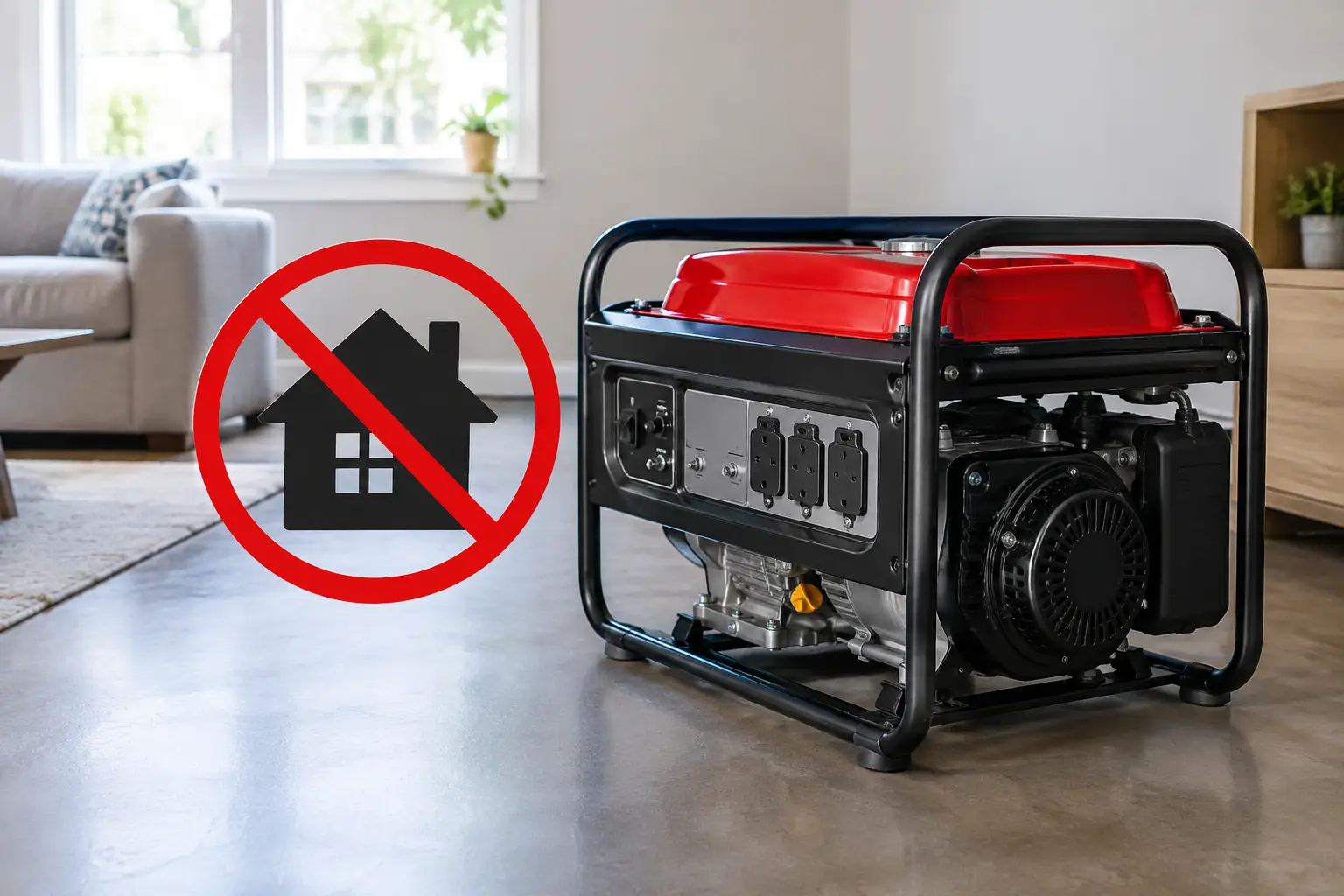
A generator cannot be placed wherever there is open space. It needs required clearances from windows, doors, vents, structures, and combustible materials. It also needs a stable base, accessible service clearance, appropriate drainage, and consideration for exhaust direction and neighborhood noise.
Placing a unit too close to the home can create code and safety problems. Setting it in a low area can expose it to standing water, drifting snow, or poor ventilation. Hiding it behind dense landscaping may look tidy but can restrict airflow and make maintenance harder.
Site planning is one reason turnkey installation matters. The installer should evaluate the property, local requirements, electrical routing, fuel connection, and service access before equipment is ordered. Good placement protects the home, supports reliable operation, and avoids expensive corrections later.
4. Hiring the lowest bidder without checking the scope
Generator installations involve electrical work, fuel piping, permitting, utility coordination, concrete or composite pads, transfer switches, commissioning, and often load management. A low quote can look appealing until you discover it excludes required work, uses undersized components, or leaves you responsible for permits and follow-up repairs.
The issue is not that every lower-priced proposal is automatically wrong. It is that homeowners need to compare what is actually included. Ask whether the contractor will handle permits, inspections, utility coordination, site preparation, fuel work, electrical upgrades, startup testing, warranty registration, and post-install support. Get those answers in writing.
A professionally installed generator should not become a collection of handoffs between contractors who each point elsewhere when something goes wrong. GenTek Power approaches standby systems as a complete responsibility, from consultation through testing and ongoing service. That accountability is especially valuable when a storm has already knocked out power across the area.
5. Skipping permits, inspections, or utility requirements
Some homeowners assume that a generator is a simple appliance and that permits only add delay. In reality, permits and inspections help ensure the electrical and fuel work is safe, code-compliant, and properly integrated with the utility service.
An improperly installed transfer switch can create dangerous backfeed conditions. Incorrect wiring can damage sensitive equipment or prevent the generator from supplying the intended loads. Fuel work that does not meet code can pose safety risks and complicate future insurance claims, home sales, or warranty support.
Requirements vary by location and by the scope of the work. A knowledgeable generator contractor should know which approvals apply, manage the paperwork, and schedule inspections as part of the project. Homeowners should never be left guessing whether their backup system was installed legally and safely.
6. Assuming automatic means maintenance-free
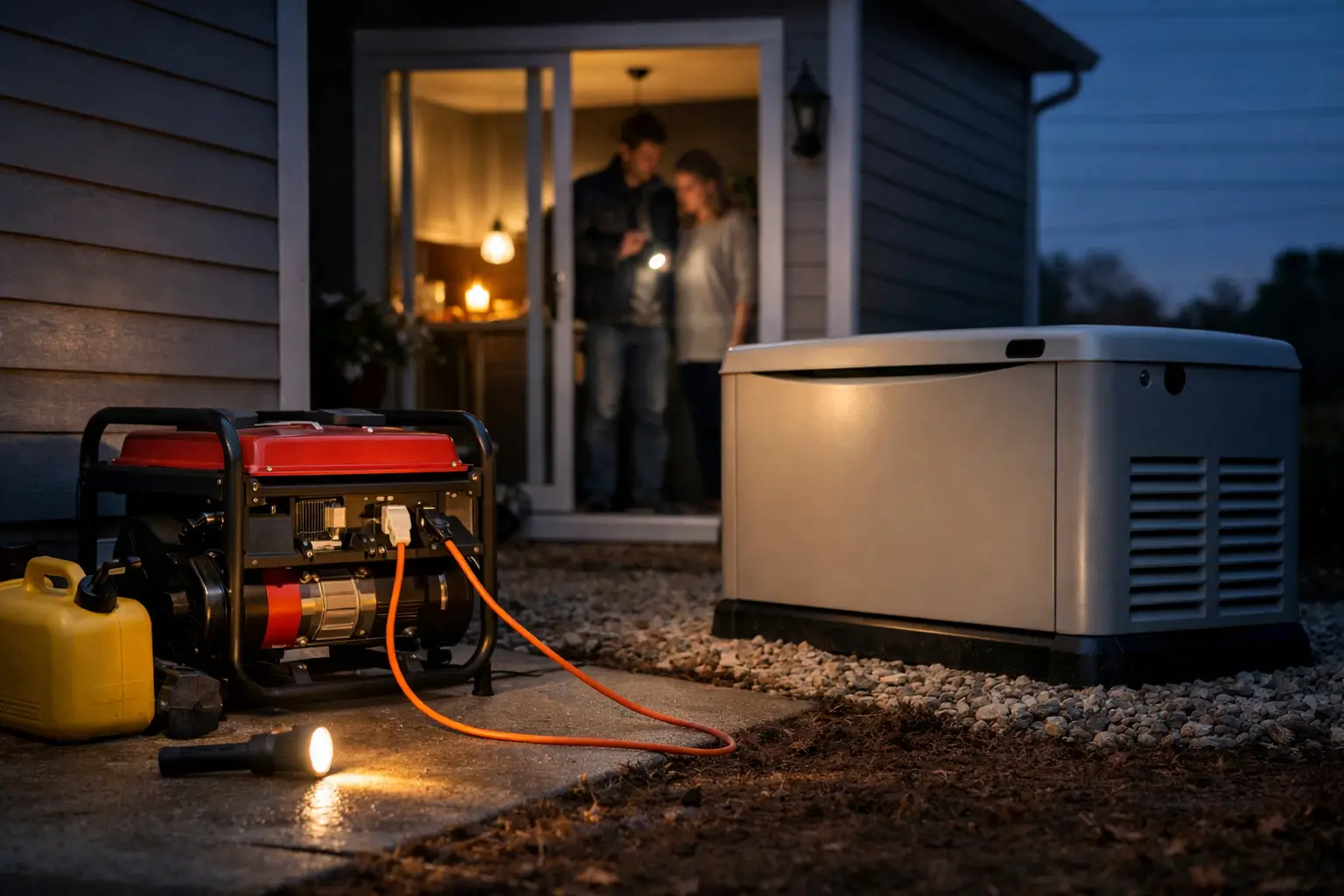
Automatic standby generators exercise themselves, monitor utility power, and start without anyone dragging extension cords through the rain. That convenience can create a false sense that the system requires no attention.
Like any engine-driven equipment, a generator needs scheduled service. Oil, filters, spark plugs, battery condition, coolant levels where applicable, firmware updates, connections, and fault history all deserve professional review. The transfer switch, fuel supply, battery charger, and remote monitoring components should also be checked.
Skipping maintenance often leads to the most frustrating kind of failure: a generator that starts its weekly exercise but does not perform properly under a real load. A regular maintenance plan identifies problems while there is still time to fix them. It also creates a service history that supports warranty coverage and helps technicians diagnose issues quickly.
7. Never testing the system the way it will be used
A brief no-load exercise is helpful, but it does not prove the entire backup system will carry the home during an outage. Homeowners should understand what their system powers, how it transfers, and what they may need to manage if they selected a partial-home or load-managed design.
Professional commissioning should include verifying the transfer switch, confirming protected loads, checking voltage and frequency, and testing generator performance under an appropriate load. After installation, periodic load testing and service visits help confirm the system remains ready.
It also helps to talk through realistic outage scenarios. If you have a well pump, sump pump, electric vehicle charger, multiple HVAC zones, or high-demand kitchen appliances, know which equipment is prioritized. A clear plan prevents confusion at the exact moment your household needs the system to work.
Build a Backup Plan That Holds Up
The best generator system is not necessarily the biggest or the cheapest. It is the one designed around your home, your fuel source, your critical loads, local code requirements, and the level of protection your family expects. It should be installed by qualified professionals, tested before it is needed, and maintained by people who will answer the phone after the sale.
Before the next outage tests your preparation, ask for a detailed assessment of what your home needs to stay safe, comfortable, and connected. A properly planned standby power system gives you more than electricity. It gives your household a dependable plan when the grid cannot.