The worst time to learn your generator project was handled poorly is during a blackout. If you are looking for a standby generator installation guide, you are probably not shopping for a gadget. You are trying to protect food, heat, air conditioning, internet, security, medical equipment, or business operations when the grid fails.
That is why installation matters as much as the generator itself. A standby unit is not a plug-in appliance. It is a permanently installed backup power system that has to be sized correctly, placed correctly, wired safely, fueled reliably, and tested under real operating conditions. When any one of those steps is rushed, the system may still look finished on install day and still fail when you need it most.
What a standby generator installation guide should actually cover
Many articles make standby power sound simple. Pick a unit, set it outside, connect a transfer switch, and you are done. Real projects are not that clean.
A proper standby generator installation guide should help you understand the full process, not just the equipment. That means load planning, site evaluation, code requirements, permitting, utility coordination, fuel supply, electrical integration, startup testing, and long-term service. For homeowners, that process protects comfort and safety. For business owners, it protects continuity, equipment, and lost revenue.
The biggest mistake buyers make is focusing only on generator size or sale price. The better question is whether the system will start automatically, carry the right loads, and keep doing that year after year.
Step 1: Start with what must stay on
The right installation starts with load planning. Some properties need true whole-home backup. Others only need critical circuits such as refrigeration, lighting, sump pumps, well pumps, servers, security systems, or a small office network.
This is where trade-offs matter. A smaller generator costs less up front and may be enough for essentials. A larger system gives you more comfort and fewer lifestyle compromises during a long outage. If you have electric heat, large air conditioning loads, a pool, a workshop, or multiple tenants, sizing gets more complex quickly.
For homes, a professional load assessment should account for starting watts, running watts, and how appliances behave when power returns. For commercial properties, it should also consider continuity priorities. Do you need the entire building powered, or only the systems that keep revenue, safety, and customer service intact?
Step 2: Choose the right fuel source
Fuel decisions shape the entire installation. Most standby systems run on natural gas, propane, or diesel, depending on the property and application.
Natural gas is popular because it offers continuous supply through the utility, which removes the need to refill tanks during an outage. That said, the gas service has to be sized properly. A generator can be underfueled if the existing gas meter or piping cannot support the added demand.
Propane is common in rural areas and properties without natural gas access. It can be highly reliable, but runtime depends on tank size and fuel management. If your area is prone to extended outages, storage planning matters.
Diesel is often used in commercial and larger backup applications, especially where high loads or specific site conditions make it the better fit. It offers strong performance, but fuel storage, maintenance, and emissions requirements may be different.
There is no universal best option. The right choice depends on utility access, outage duration, site layout, and how much risk you want to carry around refueling.
Step 3: Evaluate placement and site conditions
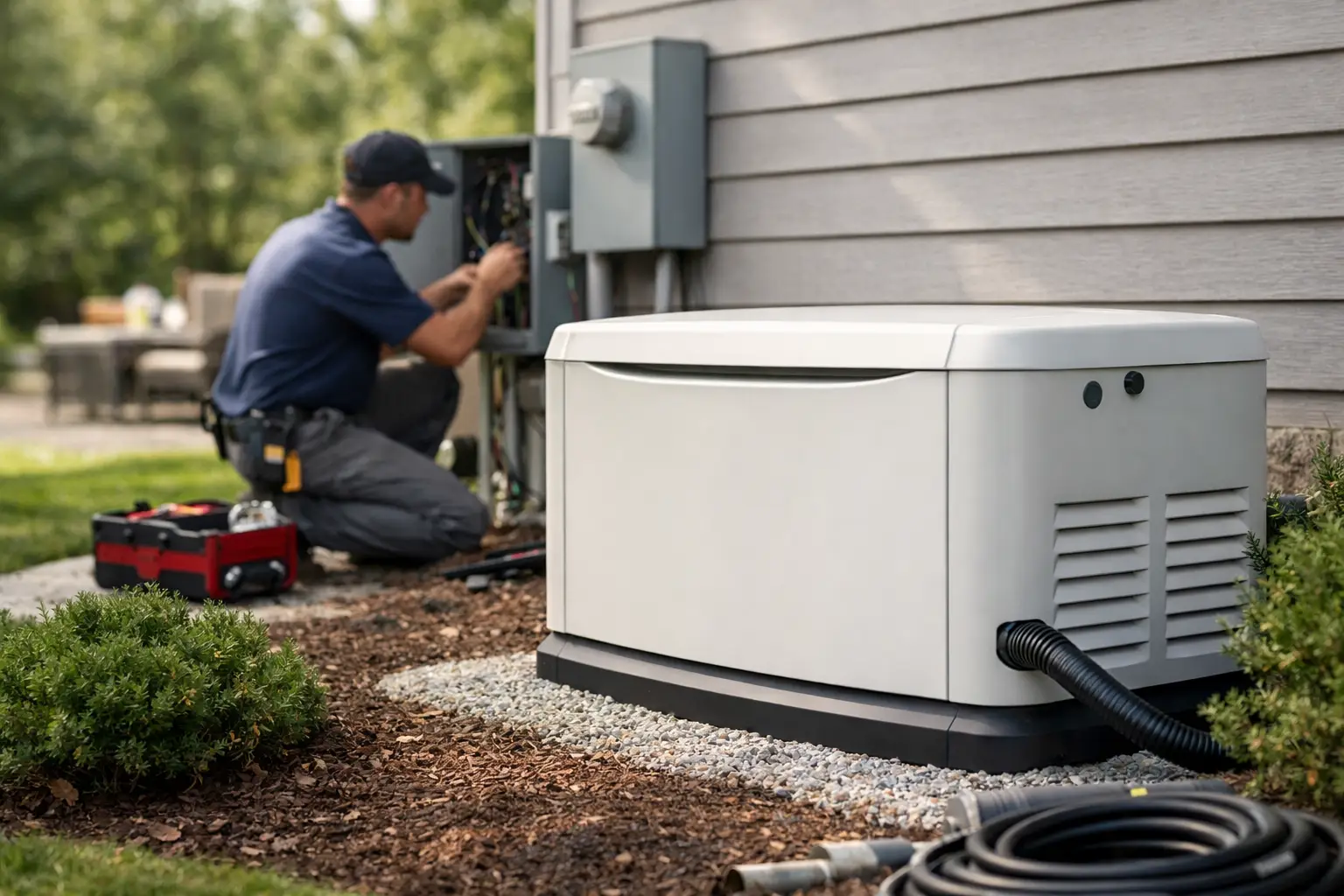
Generator placement is not just about finding open space beside the building. Setback rules, ventilation clearances, snow accumulation, flood risk, service access, and noise all affect where the unit can go.
Installers also need to think about practical realities. Can technicians reach the unit easily for maintenance? Will exhaust discharge near windows, doors, or fresh air intakes? Is the pad stable and above areas where water tends to collect? In colder climates, placement has to account for drifting snow and ice buildup.
This is another area where cheap installations often cut corners. A bad location may technically fit the property, but it can create service headaches, code problems, or unsafe operating conditions later.
Step 4: Handle permits, codes, and utility coordination
This is the part many buyers underestimate. A standby generator project often involves electrical work, fuel work, local permits, inspections, and utility coordination. In some cases, the gas utility must confirm meter capacity or upgrade service. In others, local authorities need approval for placement, clearances, and code compliance before work begins.
If that sounds like a lot, it is. But it is also what separates a dependable installation from a rushed one.
A professional contractor should manage these steps clearly and explain what is required for your property. Homeowners should not be left chasing inspectors, calling the utility, or trying to decode local requirements on their own. The same goes for business owners who need timelines coordinated around operating hours, tenants, or customer access.
Step 5: Install the transfer switch and electrical connections correctly
The transfer switch is the control point that moves your property from utility power to generator power during an outage. It is one of the most critical parts of the entire system.
A properly installed automatic transfer switch detects utility failure, starts the generator, transfers the load, and then switches back when utility power is stable again. If the switch is undersized, poorly wired, or mismatched to the application, the generator system may not perform correctly.
This is not a place for shortcuts. Electrical integration must reflect the real load strategy for the property. Whole-house backup setups are different from partial-load systems. Homes are different from commercial sites. Sensitive electronics, HVAC equipment, and load-shedding strategies all need to be considered during design, not improvised on install day.
Step 6: Test the system under real conditions
A generator installation is not complete when the equipment is bolted down and connected. It is complete when the system is tested, the controls are verified, and the owner understands how it works.
That includes startup procedures, transfer testing, fault checks, and confirming the generator carries the intended loads. If remote monitoring is part of the system, that should be configured and confirmed as well. The owner should know what normal operation sounds like, what maintenance alerts mean, and who to call if something does not look right.
This matters because many installation problems do not show up until commissioning. A loose connection, fuel pressure issue, configuration error, or nuisance fault may not be obvious until the generator is actually called to perform.
Why ongoing service belongs in any standby generator installation guide
A standby generator is a protection system, not a one-time construction project. It needs routine maintenance, battery checks, software updates where applicable, inspection of wear items, and periodic testing.
That is especially important for automatic generators because they tend to sit quietly for long periods, then need to perform instantly under stress. If service is ignored, batteries age out, fuel components degrade, and minor issues turn into no-start conditions.
This is where long-term support matters more than many buyers expect. The installer you choose should still be reachable after the sale, after the permit closes, and after the next major storm. Companies like GenTek Power build their reputation on that full-service responsibility, because backup power only earns its value when it works on the day you need it.
What homeowners and business owners should ask before signing
A good contractor should be able to explain how the generator was sized, what loads it will carry, what permits are required, where the unit will be placed, how fuel supply will be verified, and what testing is included at startup.
You should also ask what happens after installation. Who performs maintenance? Who responds to service calls? Is there a monitoring option? What warranty support is available, and who handles it if a problem comes up?
If the answers are vague, the quote is unusually low, or the process sounds improvised, pay attention. In backup power, unclear scope usually becomes your problem later.
The real goal: confidence during the next outage
The best standby generator installation guide is not the one with the most technical jargon. It is the one that helps you avoid a system that is undersized, underfueled, poorly placed, or unsupported after installation.
If you are investing in standby power, you are not just buying equipment. You are buying confidence that the lights stay on, the heat or AC keeps running, your food stays cold, your internet stays up, and your property is protected when the utility lets you down. A good installation makes that confidence real before the storm shows up.