A standby generator is built to take over when the utility fails. But the moment that matters most is often the moment you are away from the property, asleep, traveling, or focused on keeping your business open. A generator remote monitoring guide helps answer the question every owner should ask: how will you know your backup system is ready before an outage exposes a problem?
Remote monitoring gives homeowners and business owners a clearer view of generator health without opening the enclosure or waiting for a monthly inspection. It can report operating status, exercise activity, battery concerns, fault codes, and utility power loss. More importantly, it creates an opportunity to address warning signs before they become a no-start condition during a storm.
What Generator Remote Monitoring Actually Does
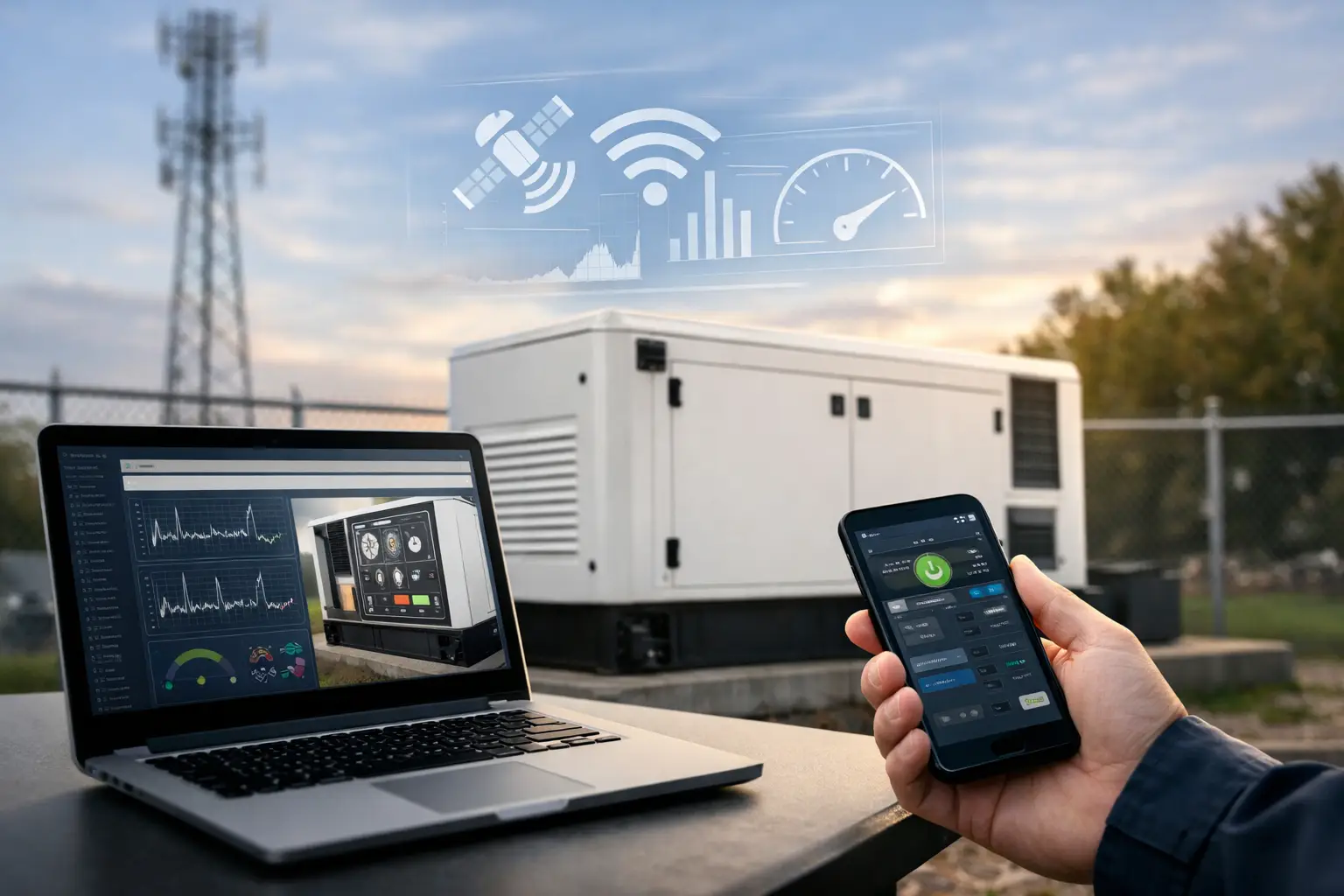
Remote monitoring connects a compatible standby generator controller to a cellular or internet-based communication platform. The system sends status information to an app, web portal, monitoring provider, or a combination of all three. Depending on the equipment and service plan, you may receive alerts directly, while your generator service company may also be notified when the system needs attention.
This is not the same as having someone watch the generator every minute. Monitoring does not replace professional maintenance, fuel checks, battery testing, or a proper load test. It does, however, shorten the time between a developing issue and the point when someone can act on it.
For a family relying on refrigerated medication, a sump pump, heating and cooling, or home internet, that early warning can make a meaningful difference. For a business protecting refrigeration, security systems, communications, point-of-sale equipment, or critical operations, it can reduce the risk of discovering a generator issue only after downtime begins.
The Alerts That Matter Most
Not every alert means the generator has failed. Some messages simply confirm that the unit completed its scheduled exercise and returned to standby as expected. Others require prompt attention. The value of monitoring is not just receiving notifications. It is understanding which notifications are routine and which ones need a qualified technician.
A professionally configured monitoring system may report utility loss and restoration, generator run time, active faults, maintenance reminders, battery charger concerns, low battery voltage, abnormal exercise results, and communication loss. If the generator starts during an outage, monitoring can confirm that it is running and carrying the transfer process as designed.
Communication loss deserves special attention. It does not always mean there is a generator problem. A network change, weak cellular signal, power interruption, or account issue can interrupt reporting. Still, a generator that cannot communicate leaves you with less visibility when you need it most. Treat this as a service item, not a message to ignore indefinitely.
Fault alerts can range from minor service needs to conditions that prevent operation. An alert may point to a battery issue, a low oil condition, a controller warning, an overload event, or a shutdown. The right response depends on the specific code and the generator model. Resetting an alert without finding the cause can hide a problem rather than solve it.
Why Monitoring Is Worth It for Standby Generator Owners
The central benefit is confidence. A standby generator is not a device most owners use every day. It sits quietly for long periods, runs its exercise cycle, and waits for utility power to fail. That makes it easy for small issues to go unnoticed.
Remote monitoring adds another layer of protection by making system status visible between scheduled maintenance visits. If a battery begins to weaken or an exercise cycle does not complete normally, you have a chance to correct it before the next outage. That is especially valuable for seasonal properties, rental homes, elderly family members, and businesses with multiple locations.
Monitoring also supports better service decisions. A technician can often review reported information before arriving, which helps narrow down the issue and ensure the right diagnostic approach. It will not eliminate every site visit, and no service provider can diagnose every fault remotely. But it can reduce uncertainty and help move the repair process forward faster.
There is a trade-off. Monitoring requires compatible equipment, a reliable communication connection, and usually an ongoing service or subscription cost. For a homeowner with a simple generator setup and frequent on-site checks, basic owner alerts may be enough. For properties where outage failure has serious consequences, professional monitoring and responsive service support are usually the stronger choice.
Choosing the Right Monitoring Setup
Start with the generator itself. Many current standby units offer manufacturer-supported monitoring through their controller, while older systems may have limited options or require an upgrade. Compatibility matters because the monitoring equipment must accurately communicate with the generator controller and report meaningful information.
Next, consider the communications path. Wi-Fi can work well where the generator is close to a stable home or business network, but it depends on the router and internet connection remaining available. Cellular monitoring may be a better fit for remote sites, detached equipment, or properties where internet reliability is uncertain. In some installations, the best choice depends on signal strength at the generator location, not inside the building.
Then decide who receives alerts. Owner-only monitoring gives you direct visibility, but it also places the burden of interpreting messages and arranging service on you. A monitored service plan may give both the owner and the service team visibility, allowing the provider to contact you when a condition needs attention. That model is particularly helpful when no one on site is comfortable assessing generator warnings.
Ask clear questions before enrolling: What alerts are included? Who is notified? Is there a recurring fee? What happens after an after-hours fault? Does the service team review alerts proactively, or only when you call? The answers should be specific. A monitoring app alone is useful, but it is not the same as a long-term service relationship.
Monitoring Works Best With Preventive Maintenance
A generator can report a low battery, but monitoring cannot install a new battery. It can show that a unit ran during an outage, but it cannot confirm every mechanical component is in good condition without hands-on inspection. The strongest protection comes from pairing monitoring with scheduled maintenance by trained technicians.
During maintenance, technicians inspect the generator, test batteries and charging systems, check fluids, review fault history, inspect connections, verify operation, and confirm that the transfer equipment performs correctly. They can also make sure the monitoring device is still communicating and that contact information is current.
This matters after changes at the property. A new internet provider, router replacement, electrical renovation, landscaping work near the generator, or a change in ownership can affect equipment access or communication. A maintenance visit is the right time to catch those details.
GenTek Power approaches remote monitoring as part of ongoing generator ownership, not as a substitute for service. The goal is straightforward: identify concerns early, keep the equipment maintained, and make sure you have qualified support when utility power is out.
What to Do When You Receive an Alert
If you receive a notification during an outage, first confirm whether utility power is off and whether the generator is operating. Do not open panels, bypass safety devices, or attempt electrical repairs unless you are qualified to do so. Keep clear of the generator, especially if you smell fuel, see leaking fluids, hear unusual noises, or notice repeated starting attempts.
For a maintenance reminder or communication warning, schedule service before the next severe-weather event. For a shutdown, fault, or failure-to-exercise alert, contact your generator service provider promptly and provide the exact message or code. Screenshots and the time of the event can help the technician understand what happened.
If the system is supporting critical loads, have a backup plan. That may mean moving medication to a safe temperature-controlled location, limiting electrical use, protecting sensitive equipment, or arranging temporary power. Monitoring improves your response time, but preparation still matters.
A good monitoring setup should leave you with fewer surprises, not more alerts to manage. When it is paired with proper installation, routine maintenance, and a service team that answers the phone, your standby generator becomes what it was meant to be: dependable protection when the power grid cannot be.