A standby generator that fails during an outage is more than an equipment problem. For a business, it can mean lost sales, spoiled inventory, interrupted production, unsafe conditions, damaged IT equipment, or a building that cannot remain open. Commercial generator repair is about restoring dependable backup power before a small issue becomes a costly operational failure.
The right response is not always an emergency repair call. Some issues can be identified during a routine inspection, while others require immediate attention from a qualified technician. Knowing the difference helps protect your people, your property, and the work your business depends on.
Signs Your Generator Needs Attention
Commercial generators are designed to start automatically, carry selected loads, and run safely for the duration of an outage. When any part of that sequence is unreliable, the system needs professional attention. Waiting until the next storm or utility failure is a gamble most businesses cannot afford.
Watch for these warning signs:
- The generator fails to start during its scheduled exercise cycle or starts but shuts down unexpectedly.
- The controller displays an alarm, warning light, fault code, low battery message, or maintenance notice.
- You notice fuel, coolant, or oil leaks, unusual exhaust smoke, strong fuel odors, vibration, or unfamiliar noises.
- The generator runs, but the automatic transfer switch does not move the building onto generator power.
A generator can also appear to be working while still leaving critical equipment unprotected. It may run without carrying the intended load, develop unstable voltage, or have a transfer switch problem that prevents power from reaching the building. That is why a proper service visit looks beyond whether the engine starts.
The Battery Is Often the First Failure Point
Starting batteries are one of the most common reasons standby generators fail when they are needed. Batteries age, terminals corrode, chargers fail, and cold weather can expose a weak battery quickly. A weekly exercise may not reveal every battery issue, especially if the system is not tested under meaningful conditions.
A technician should check battery condition, charger output, terminal connections, and starting performance as part of regular service. Replacing a marginal battery before an outage is far less disruptive than discovering the problem after utility power is already down.
Fuel Problems Can Stop a Healthy Generator
Diesel, natural gas, and propane systems each have different service concerns. Diesel fuel can degrade or collect water and contamination over time. Natural gas and propane systems depend on correctly sized, properly functioning fuel supply components. A restricted line, incorrect pressure, empty propane tank, or fuel quality issue can prevent reliable operation.
Fuel-related repairs should never be treated as a quick visual check. The cause may be at the generator, in the supply line, at the tank, or within the equipment that regulates fuel delivery. Proper diagnosis protects both generator performance and site safety.
What Commercial Generator Repair Should Include
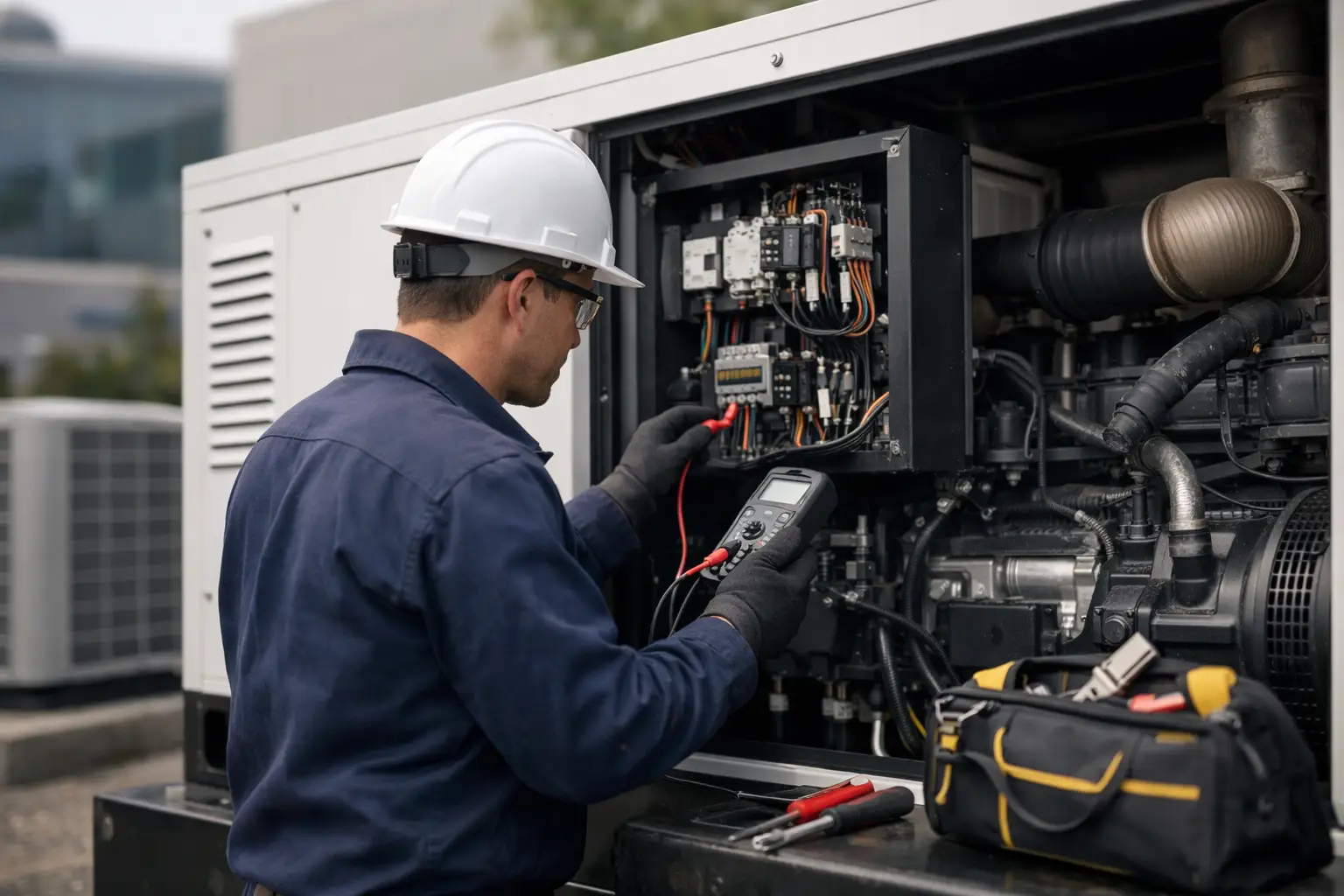
A dependable repair process begins with diagnosing the actual failure, not simply clearing an alarm and hoping it does not return. Fault codes are useful clues, but they are not a complete diagnosis. An experienced technician evaluates the generator, its controller, battery system, fuel supply, electrical connections, and transfer equipment as one backup power system.
For a commercial property, that work should include confirming whether the generator can start, stabilize, accept load, and transfer power back to utility service correctly. The technician should also inspect for worn belts and hoses, fluid leaks, cooling concerns, loose wiring, damaged components, and signs that previous maintenance was missed.
The automatic transfer switch deserves special attention. It is the component that senses a utility outage and directs generator power to the building. If the transfer switch fails, a perfectly healthy generator may never support the loads it was installed to protect. Because transfer equipment involves live electrical sources, inspection and repair should be handled by qualified professionals who understand the system design and applicable electrical requirements.
After repairs are completed, testing matters. A repair is not complete because the alarm disappeared. The system should be verified through the operating sequence that matters most: utility failure, generator start, transfer to emergency power, stable operation, return to utility, cooldown, and reset.
When to Call for Emergency Service
Call for immediate commercial generator repair when a generator will not start, will not transfer power, shuts down under load, has an active critical alarm, or shows signs of a fuel, coolant, oil, or exhaust safety issue. If utility power is already out, avoid repeated start attempts or improvised resets. Repeated cranking can drain batteries, create additional faults, and make the original issue harder to diagnose.
If the generator is running erratically, producing unusual smoke, or showing unstable electrical output, keep employees away from the equipment and follow your site’s safety procedures. Do not bypass safety switches, defeat alarms, or attempt electrical repairs inside the transfer switch. Backup power equipment combines fuel, high voltage, moving parts, and hot exhaust components. The safest repair is one performed methodically by trained personnel.
For a facility with medical equipment, refrigeration, security systems, servers, pumps, climate-sensitive inventory, or legally required life-safety loads, it is wise to have a clear escalation plan before an outage happens. Your staff should know who can authorize service, where the generator and transfer switch are located, and which operations must be protected first.
Prevent Repairs From Becoming Emergencies
Not every generator problem can be prevented. Components wear out, weather is unpredictable, and electrical faults can occur without warning. However, regular maintenance substantially reduces the chance that a minor concern turns into a no-start event during an outage.
A strong maintenance plan is based on the generator’s age, operating environment, run hours, fuel type, manufacturer requirements, and the importance of the loads it supports. A lightly used office generator does not have the same service needs as a unit supporting a restaurant, distribution facility, healthcare setting, or manufacturing operation.
Scheduled service typically focuses on fluids, filters, batteries, chargers, belts, hoses, cooling systems, electrical connections, controller history, and fuel supply condition. Periodic load testing is also valuable because it confirms that the system can perform under real demand, not just start and idle for a brief exercise cycle.
Remote monitoring can add another layer of protection. It can alert the service team to battery concerns, fault codes, missed exercises, low fluid warnings, and other conditions before staff arrive to find the generator unavailable. Monitoring does not replace hands-on maintenance, but it can shorten the time between a developing problem and a professional response.
Choose a Service Partner That Stays Accountable
Commercial generator repair is not a one-time transaction when your business depends on backup power. The best service relationship begins with clear communication about what failed, why it failed, what was repaired, and what should be addressed next. You should not be left with a cleared alarm and no explanation of the condition of the rest of the system.
Look for a provider with licensed, factory-trained technicians, experience with both generators and automatic transfer switches, and a process for documenting service history. Ask how emergency calls are handled, whether they support ongoing maintenance, and how they verify repairs under operating conditions. The lowest initial repair quote is not always the lowest-risk choice if it leaves important questions unanswered.
GenTek Power approaches backup power as a complete system, with installation, maintenance, repair, testing, and long-term support working together. That approach helps business owners avoid the frustration of chasing separate contractors when an outage exposes a weak point in the system.
Your generator should not be a piece of equipment everyone hopes will work. It should be a maintained, tested part of your continuity plan, backed by people who are ready to take responsibility when the lights go out.