The difference between a smart generator purchase and an expensive mistake usually shows up during the first outage. When the lights go out, you find out very quickly whether your system was sized properly, installed correctly, and backed by a company that answers the phone. That is why a whole house generator buying guide should focus on more than just generator brands or price tags.
For most homeowners, this is not a casual purchase. You are protecting refrigeration, heating and cooling, sump pumps, internet service, security systems, and in some homes, medical equipment or home office operations. If you own a business, the stakes are even higher. Downtime can mean lost sales, interrupted service, damaged inventory, and frustrated customers. The right standby generator protects continuity. The wrong one creates a second problem when you thought you were solving the first.
What a whole house generator actually does
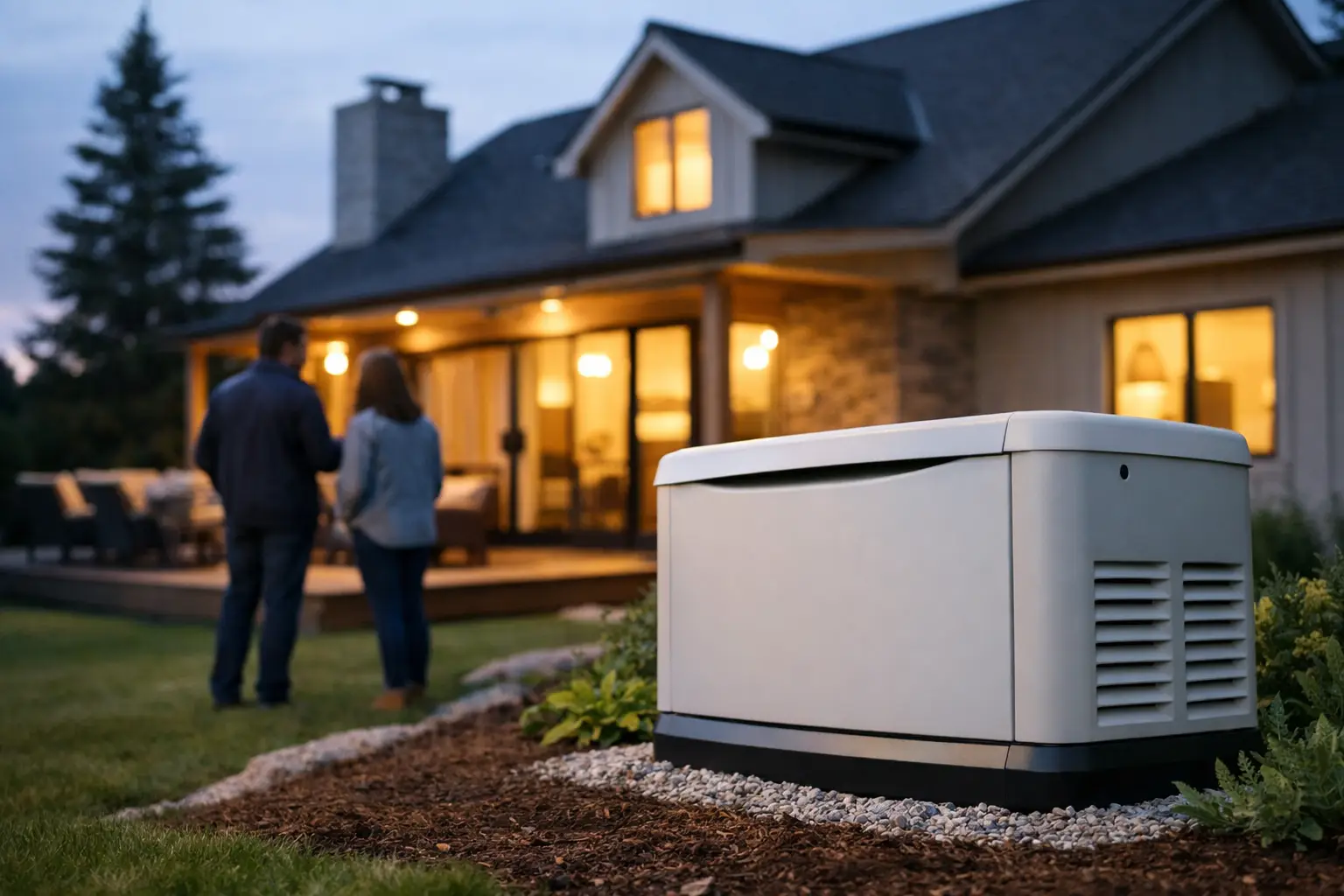
A whole house generator is a permanently installed standby system that turns on automatically when utility power fails. It is connected to your electrical system through an automatic transfer switch, which safely shifts your home or building from utility power to generator power.
That automatic response is what separates a standby generator from a portable unit. You do not need to wheel it out, refill it in the rain, or run extension cords through the house. When the system is designed properly, it restores power to selected circuits or to the entire home within seconds.
That sounds simple, but the result depends on planning. The generator itself is only one part of the system. The transfer switch, fuel source, electrical integration, placement, permitting, startup testing, and long-term maintenance all matter just as much.
Whole house generator buying guide: start with the load, not the machine
The most common buying mistake is choosing a generator based on guesswork. Some people try to match the size of a neighbor’s unit. Others shop by square footage alone. Neither method is reliable.
Generator sizing should begin with your actual electrical load. That means identifying what you want to run during an outage and how those systems behave when they start. Air conditioners, well pumps, sump pumps, electric water heaters, and large appliances can create startup demands that are much higher than their normal running load.
A smaller generator may be enough if your goal is to keep essential systems running. A larger unit may be necessary if you want near full-home comfort with central air, kitchen appliances, laundry equipment, and smart home devices operating at the same time. There is no universal best size. It depends on the home, the equipment inside it, and your expectations during an outage.
Oversizing is not always the right answer either. A unit that is larger than needed can cost more up front, require a bigger fuel supply, and run less efficiently. Proper sizing is about balance – enough capacity to carry critical loads with confidence, without paying for power you are unlikely to use.
Essential backup versus full-home backup
This is one of the biggest decision points in any whole house generator buying guide. Some customers want survival mode. Others want business-as-usual.
Essential backup usually covers refrigeration, heating equipment, sump pumps, internet, lighting, garage doors, and a few convenience circuits. Full-home backup is designed to support the house much more like normal, including central air conditioning and broader appliance use.
Neither approach is wrong. The right choice comes down to budget, outage risk, and how disruptive a power loss is for your household or operation.
Choosing the right fuel source
Most whole house standby generators run on natural gas or propane. Diesel is more common in certain commercial or large-scale applications, but for residential standby power, natural gas and propane are the usual options.
Natural gas is attractive because it is continuous as long as utility gas service remains available. You do not need to schedule fuel deliveries or monitor tank levels. For many homeowners, that makes natural gas the most convenient choice.
Propane can be an excellent option where natural gas is not available. It stores well, performs reliably, and works well for standby systems, but tank sizing becomes part of the planning process. Longer outages require adequate storage, and refueling logistics matter more in severe weather.
Fuel choice is not just about convenience. It affects operating cost, site layout, installation scope, and long-term outage endurance. A good contractor will look at what is available on your property, what your local conditions are, and how long you need to be prepared to run.
Installation quality matters more than most buyers realize
A standby generator is not a plug-and-play appliance. It is a code-regulated power system that must be integrated into your electrical service, coordinated with fuel supply, and placed in compliance with clearance requirements and manufacturer specifications.
That is why low-price generator quotes can be misleading. One contractor may quote only the equipment and basic hookup, while another includes load calculations, permits, utility coordination, concrete or composite pad work, transfer switch installation, startup testing, and post-install support. On paper, the cheaper quote looks attractive. In practice, it may leave out the very steps that make the system safe and dependable.
A proper installation should account for ventilation clearances, noise considerations, local code requirements, fuel pressure verification, weather exposure, service access, and final testing under real operating conditions. If any of those pieces are rushed or skipped, reliability suffers.
Why permitting and utility coordination should not be an afterthought
Many buyers do not realize how much project risk sits outside the generator itself. Electrical permits, gas work, inspections, and utility approvals can delay or derail a project if they are not handled correctly.
This is where experience matters. A contractor that manages the process from consultation through commissioning removes a lot of avoidable friction. It also protects you from failed inspections, surprise change orders, or a system that looks complete but cannot legally or safely operate.
Understanding the real cost
If you are comparing options, focus on total installed value rather than sticker price. The cost of a whole house generator includes the unit, transfer switch, electrical work, fuel connection, pad or mounting, permits, startup, and commissioning. Depending on the property, it may also include trenching, service upgrades, load management equipment, or propane storage work.
Then there is the ownership cost after installation. Like any mechanical system, a standby generator needs regular maintenance. Oil changes, filter replacements, battery checks, software or controller updates, inspection of wear components, and periodic load testing all help ensure the unit works when it is needed.
This is where buyers should think long term. A lower-priced install with no meaningful service support may cost less today and more later. Backup power is only valuable if the system starts, transfers properly, and carries the load during a real outage.
What to ask before you buy
A strong buying decision usually comes down to a few practical questions. How will the generator be sized? What loads will it actually support? Who handles permits and utility coordination? What brand support and warranty coverage apply? Who will service the system a year from now and during the next major outage?
Pay attention to how clearly those answers are given. Vague promises are a warning sign. A professional standby power company should be able to explain the scope, the limitations, the timeline, and the maintenance plan in plain language.
This is also the time to ask about service response. Some installers are eager to sell equipment but are difficult to reach once the project is complete. That may not matter on a sunny day. It matters a lot during a winter outage or a summer heat wave.
A practical whole house generator buying guide for risk reduction
If your main goal is peace of mind, buy with failure points in mind. Do not just ask, “What generator should I get?” Ask, “What could cause this system to let me down?”
The common failure points are predictable: poor sizing, rushed installation, weak fuel planning, ignored maintenance, and no service relationship after the sale. Avoiding those issues is often more important than choosing between two similar generator models.
That is why many property owners prefer a turnkey approach. When one qualified team handles design, installation, testing, and ongoing service, accountability is much clearer. Companies like GenTek Power build around that model because backup power is not just about equipment. It is about trust before, during, and after the storm.
The best time to make a careful generator decision is before the next outage forces one. If you treat this as critical infrastructure instead of a quick retail purchase, you are far more likely to end up with a system that protects your home or business the way it should.