A standby generator is only valuable if it starts when the power goes out. Knowing how to choose a generator maintenance plan means looking beyond a low annual price and asking a more practical question: who will make sure your system is ready when your home, family, employees, or critical equipment need it most?
A generator can sit quietly for months, then be expected to carry essential loads through a storm, utility failure, or extended outage. Fuel quality, battery condition, oil levels, electrical connections, software settings, and load performance all affect whether it does its job. The right maintenance partner helps prevent a small, overlooked issue from becoming a no-start event at the worst possible time.
Start With What Your Generator Must Protect
The maintenance plan should match the consequences of downtime. A homeowner protecting refrigeration, heat, air conditioning, internet service, sump pumps, and medical equipment may need a different service level than a business protecting servers, security systems, inventory, tenant comfort, or revenue-producing operations.
Start by identifying the loads and routines that matter during an outage. If you work from home, rely on a well pump, have a finished basement vulnerable to flooding, or use electrically powered medical equipment, generator reliability is not simply a convenience. It is part of your household preparedness plan.
For a business, consider what an hour without power actually costs. The answer may include lost sales, interrupted production, damaged product, missed deadlines, security exposure, or an inability to serve customers. The greater the impact, the more valuable proactive inspections, testing, remote monitoring, and priority emergency response become.
A good provider will not force every customer into the same package. They should explain which service frequency and coverage level fit your equipment, usage, fuel type, generator age, and risk tolerance.
How to Choose a Generator Maintenance Plan With Real Coverage
The word “maintenance” can mean very different things from one contractor to another. Some plans offer little more than a quick visual inspection and an oil change. Others include comprehensive testing, detailed reporting, parts coordination, monitoring, and support after an outage.
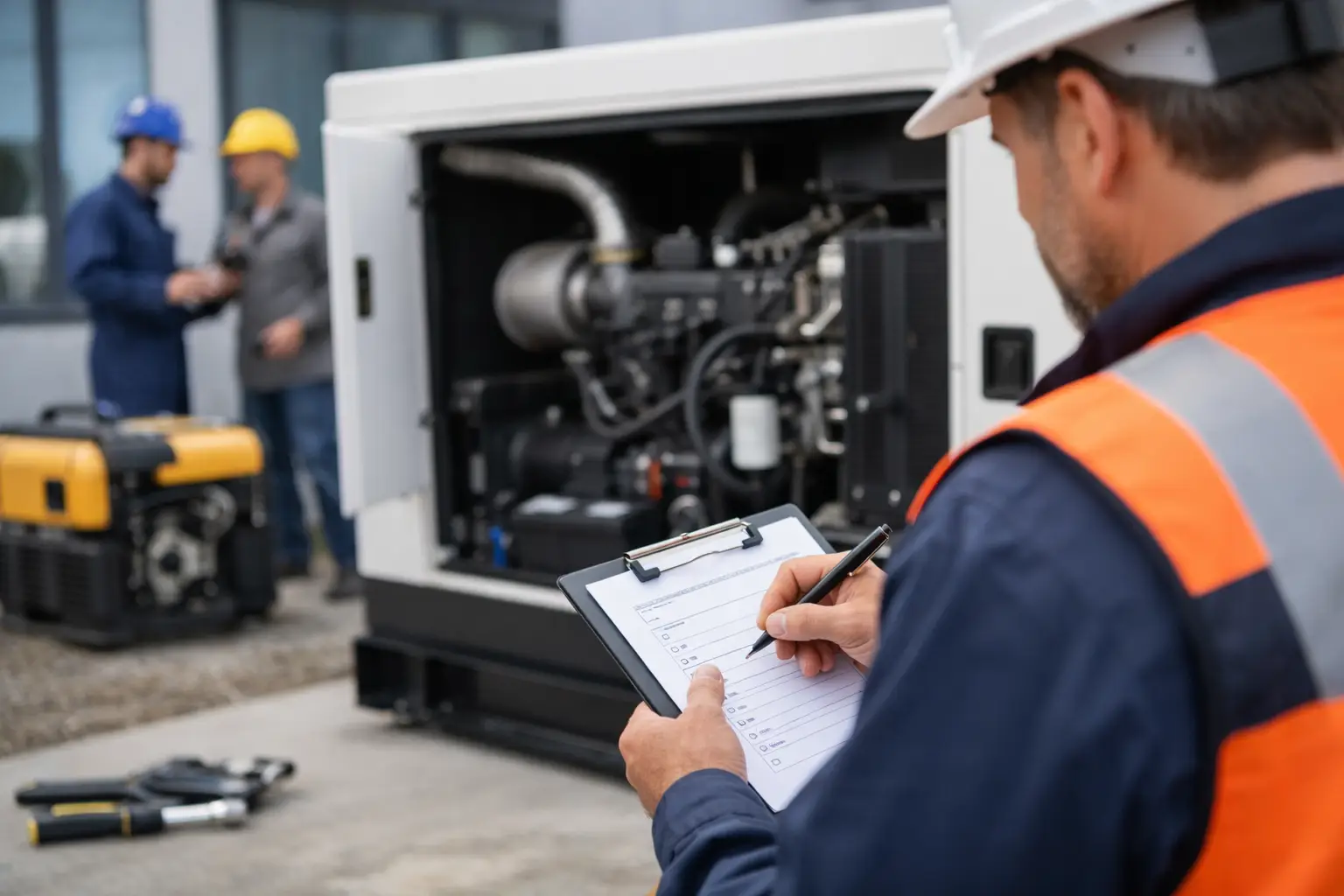
Ask for a clear description of what happens at every scheduled visit. At a minimum, a professional service appointment should address the systems most likely to compromise generator performance:
- Engine oil, filters, coolant, belts, hoses, and fluid leaks
- Battery condition, charger operation, terminals, and starting circuit performance
- Automatic transfer switch operation, wiring connections, controls, alarms, and error codes
- Exercise cycle performance, fuel supply, load testing requirements, and general enclosure condition
The exact checklist will vary by manufacturer and generator model. A liquid-cooled commercial unit needs a different inspection approach than a smaller air-cooled residential unit. What matters is that the work follows manufacturer requirements and is performed by technicians who understand both the generator and the transfer equipment that connects it to your property.
Do not assume an annual visit alone is enough in every situation. Many residential systems benefit from scheduled service at least once or twice a year, depending on manufacturer guidance, runtime, environment, and local conditions. Commercial systems, high-use sites, and generators supporting critical loads may require more frequent inspections and documented testing.
Look for Testing, Not Just a Service Sticker
A generator may appear clean and sound normal during a brief exercise cycle, yet still struggle when it must accept the load from your home or business. That is why the maintenance plan should include meaningful operational checks, not just a sticker showing that someone visited.
Ask how the provider confirms that the automatic transfer switch works correctly. This component senses a utility failure, signals the generator to start, and transfers the building onto backup power. If the transfer switch is not inspected and tested properly, a healthy engine alone will not protect the property.
For systems with critical loads, ask whether the provider offers load testing and how they determine when it is appropriate. Load testing can reveal performance issues that no-load exercise cycles may miss. It is not necessary to perform every type of test at every visit, but the plan should make clear how real-world readiness is evaluated.
You should also receive a service report after each visit. A useful report documents what was inspected, what was found, what was corrected, and what should be monitored or repaired next. Vague statements such as “unit checked” do not give you a reliable record of your system’s condition.
Make Sure Emergency Support Is Defined
The true test of a maintenance provider is often what happens during an outage. Before signing up, ask what support is available when the generator does not start, displays an alarm, or runs but does not transfer power to the building.
Clarify response expectations, emergency call procedures, service territory, and whether plan members receive priority scheduling. No contractor can promise that every repair will be immediate during a widespread regional outage. Severe weather can create high demand, road closures, and parts delays. A dependable provider will be honest about those realities while maintaining a clear process for customers who need help.
Also ask who answers the phone and who performs the work. Generator service involves electrical, mechanical, fuel, and control systems. It should not be handed to an unqualified general handyman or a contractor who only works on generators occasionally. Factory-trained, licensed technicians are better prepared to diagnose issues safely and follow the manufacturer’s service requirements.
Consider Remote Monitoring for Higher-Risk Properties
Remote monitoring is not essential for every generator owner, but it can be a worthwhile addition when outages create significant consequences. A connected monitoring system can alert you and your service provider to alarms, low battery voltage, missed exercise cycles, utility outages, and other conditions that may need attention.
For a second home, a vacation property, a business location, or a home where the owner travels frequently, monitoring can provide valuable visibility. Instead of discovering a problem when you arrive at a dark building, you have a better chance to address it before the next outage.
Monitoring is only useful when someone is accountable for reviewing alerts and responding appropriately. Ask whether alerts go directly to you, to the provider, or both. Find out what happens after an alert is received and whether diagnosis, dispatch, or repair labor is included in the plan.
Compare Price by Value, Not by the Lowest Visit Fee
A low-cost maintenance offer can be appealing, especially if the generator has not caused problems. But a plan that skips transfer-switch checks, uses generic procedures, excludes documentation, or provides no meaningful support may cost more when a failure occurs.
Compare proposals based on the full scope of service. Review how many visits are included, what consumable parts are covered, whether travel charges apply, how repairs are approved, and whether emergency service is billed separately. Transparent pricing does not always mean every future repair is included. It means you understand what is covered, what is not, and how decisions will be handled before you are facing an outage.
Be cautious with plans that promise unlimited coverage without defining exclusions. Batteries, filters, oil, repairs caused by rodents, fuel problems, storm damage, worn components, and manufacturer warranty work can all be handled differently. A professional provider will explain these details plainly rather than burying them in fine print.
Choose a Provider Built for Long-Term Ownership
Generator ownership is a long-term relationship, not a one-day installation project. The best maintenance provider understands the original system design, has access to appropriate parts, keeps accurate service records, and remains available after the sale.
Ask whether the company services the brand and model you own, whether it can support warranty requirements, and whether it handles both generator and transfer-switch concerns. It is also reasonable to ask how long the company has been providing generator service and whether its technicians receive ongoing manufacturer training.
At GenTek Power, the goal is not simply to complete a maintenance visit. It is to give homeowners and business owners confidence that their backup power system is being professionally cared for before the weather turns and before an outage exposes a preventable problem.
Questions to Ask Before You Enroll
Before choosing a plan, request direct answers to a few practical questions. How often will my generator and transfer switch be serviced? What exact inspections and tests are included? Will I receive a detailed service report? Who responds if the system alarms or fails during an outage? Are monitoring, travel, parts, and emergency calls included or billed separately?
Also ask what the provider recommends based on your property. A company that takes time to understand your generator’s age, run hours, load demands, fuel source, and maintenance history is more likely to recommend the right plan than one offering a generic price over the phone.
The best time to resolve a maintenance concern is on a clear, ordinary day – not when the lights are out, the temperature is dropping, and your generator is expected to carry the load. Choose a plan with clear coverage, qualified service, and a provider prepared to stand behind the system for the long run.