If your generator starts during a quick inspection, that is reassuring – but it does not tell the whole story. Generator load testing explained in plain terms means this: a generator needs to prove it can carry real electrical demand, not just turn on and idle for a few minutes. When the power goes out, your system has one job. It has to support the loads it was designed for, without hesitation.
That matters for both homes and businesses. A standby generator may look fine on the surface while hidden issues build up in the fuel system, alternator, voltage regulation, cooling, or transfer performance. Those problems often stay unnoticed until the worst time to find them – during an outage, in bad weather, with a house getting cold or a business losing time and revenue.
What generator load testing actually means
A load test places a generator under controlled electrical demand and measures how it performs. Instead of simply confirming that the engine starts, the technician verifies whether the generator can produce and sustain usable power at meaningful output levels.
In practical terms, the generator is asked to work. The technician monitors voltage, frequency, amperage, engine temperature, oil pressure, and other performance indicators while the load is applied. The goal is not to push equipment carelessly. The goal is to confirm that the system operates the way it should when real loads are present.
This is why generator load testing explained properly is different from a casual run test. A no-load exercise can confirm part of the system is alive. A load test confirms whether the system is ready.
Why a no-load startup is not enough
Many owners assume that if their generator starts and runs, they are covered. Unfortunately, that is not always true. Generators can start normally and still fail when they are asked to support a home, office, server room, refrigeration equipment, sump pumps, or HVAC loads.
Electrical demand changes how the machine behaves. Under load, weak components show themselves faster. Fuel delivery problems may cause unstable performance. Cooling issues may appear as temperatures rise. Voltage and frequency regulation can drift when the generator is carrying the kind of demand it was installed to handle.
For residential customers, that gap can mean spoiled food, frozen pipes, no internet, no heat, or disruption to medical equipment. For commercial customers, it can mean interrupted operations, customer service problems, data loss risk, or preventable downtime.
How a professional load test works
The exact process depends on the generator size, the site, and whether the system is residential or commercial. But a professional load test usually follows a clear sequence.
First, the technician performs a visual and mechanical inspection. That includes checking fluid levels, battery condition, connections, filters, hoses, signs of leaks, and overall installation condition. There is no value in loading a generator without making sure the basics are in order.
Next, the generator is started and allowed to stabilize. The technician confirms it is producing proper voltage and frequency before additional demand is applied.
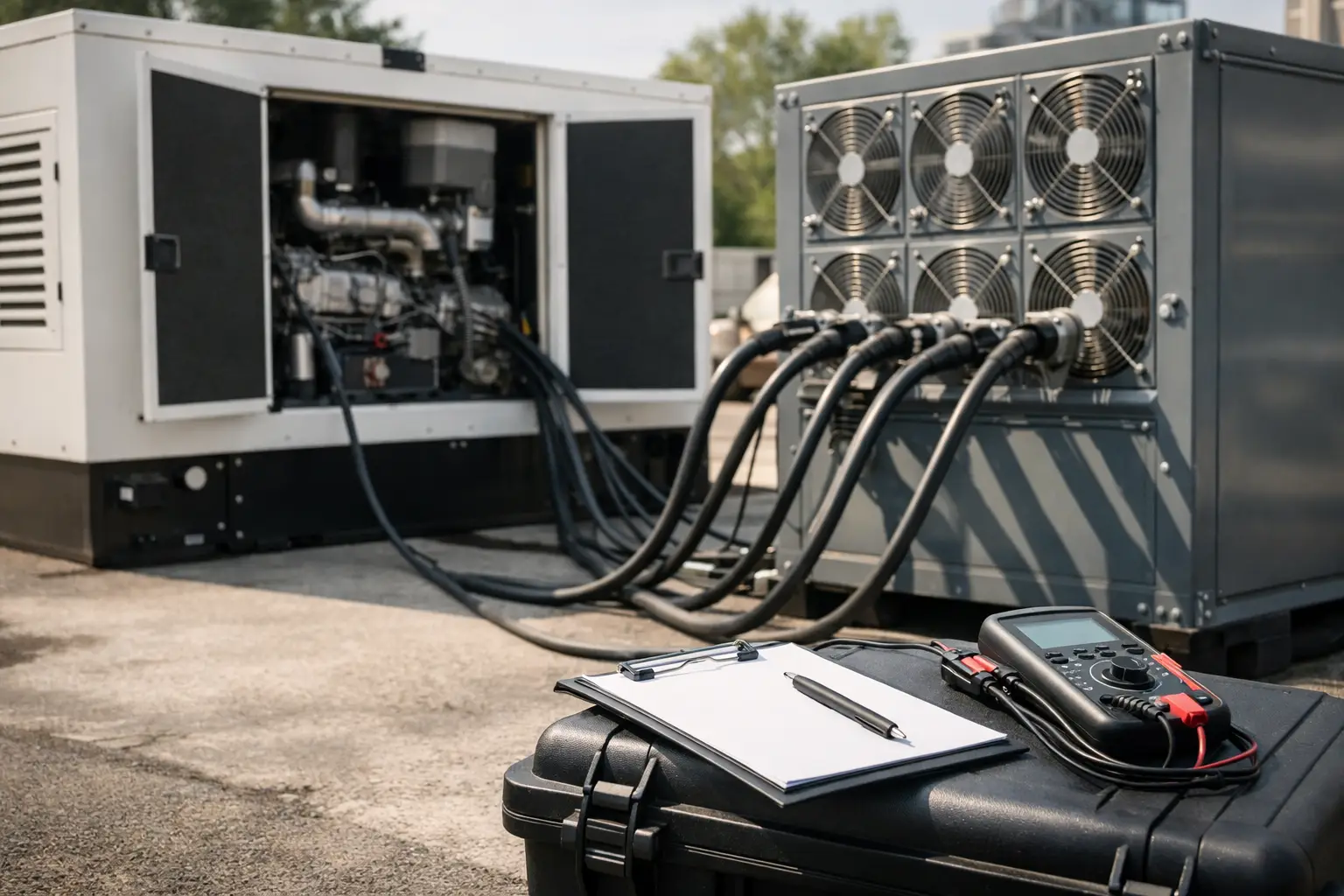
Then a controlled load is introduced. In some cases, that load comes from the building itself. In others, a portable load bank is used to simulate electrical demand safely and precisely. A load bank is especially useful when the building cannot provide enough demand or when the technician needs tighter control over testing conditions.
As the load increases, performance is monitored closely. The technician watches how the engine responds, whether voltage remains stable, whether frequency stays within acceptable range, and whether temperatures remain normal. Transfer operation may also be checked, depending on the system and test scope.
After testing, the generator is cooled down properly, final readings are documented, and any concerns are reviewed with the owner. If the unit does not perform as expected, that is not a failed appointment. It is valuable information caught before an emergency exposes it.
What problems load testing can reveal
A proper test can uncover issues that routine visual checks may miss. Some are minor and easy to correct. Others point to developing failures that need attention before they become expensive or dangerous.
Common findings include weak batteries, fuel quality problems, restricted filters, injector issues, governor instability, worn belts, alternator output concerns, overheating under demand, and transfer switch irregularities. In some systems, the problem is not the generator itself but a mismatch between the installed unit and the actual load profile of the building.
That last point matters more than many owners realize. If a generator was undersized, poorly installed, or never properly commissioned, load testing may reveal that the system cannot support the priority circuits or operational loads you assumed it could. That is exactly the kind of problem you want identified in a controlled service visit, not during a storm.
How often should a generator be load tested?
There is no single answer for every property. It depends on the generator type, the manufacturer requirements, the age of the equipment, the critical nature of the loads, and how the unit is maintained.
For many residential standby systems, regular maintenance combined with periodic performance testing is the right approach. For commercial or mission-critical applications, testing may need to be more structured and more frequent. Facilities that cannot tolerate downtime often need a higher standard of verification than a typical home.
The right schedule should be based on risk, not guesswork. A homeowner relying on backup power for comfort and food protection has one level of exposure. A business protecting operations, refrigeration, communications, or essential equipment has another. In both cases, the safest plan is to follow manufacturer guidance and work with a qualified service provider that understands your specific installation.
Load bank testing vs. building load testing
This is one area where the details matter. Building load testing uses the actual electrical demand from the property. That can be useful because it shows how the generator behaves in the real environment it serves.
Load bank testing uses external equipment to create a controlled, measurable demand. This approach gives technicians more precision and helps validate performance even when the building is not drawing enough power during the test.
Neither method is automatically better in every situation. It depends on the application. Some systems benefit from one approach, while others benefit from both over time. What matters is that the testing method matches the goal – whether that is basic operational confirmation, deeper performance verification, or troubleshooting under specific conditions.
Why professional testing matters
Generator systems are not just engines with extension cords attached. They are integrated standby power systems involving fuel supply, electrical output, controls, transfer equipment, code requirements, and safety procedures. A rushed or inexperienced test can miss important issues or create avoidable risk.
Professional testing matters because interpretation matters. It is not enough to read numbers off a meter. The technician has to understand what those readings mean, what normal looks like for that specific unit, and whether the generator is behaving properly as conditions change.
This is also where long-term service support becomes valuable. A contractor who installs a generator and disappears leaves the owner to sort out future problems alone. A service-focused company approaches testing as part of protecting the investment over time. At GenTek Power, that mindset is central to how standby systems should be supported: not as one-time equipment sales, but as critical infrastructure that needs accountability after installation.
What homeowners and business owners should expect
You should expect clear communication, a documented process, and honest answers. If your generator passes, you should know what was tested and what that means for your readiness. If it does not, you should get a straightforward explanation of the issue, the level of urgency, and the next steps.
You should also expect realism. No contractor should promise that a single test makes a generator immune to future failure. Equipment can still develop problems later. But proper load testing reduces uncertainty, confirms performance under demand, and helps catch hidden weaknesses before an outage turns them into a crisis.
That is the real value. Generator ownership is not just about having a machine outside the building. It is about knowing, with reasonable confidence, that the system will carry your home or business when utility power drops away.
If you are relying on standby power to protect comfort, safety, or daily operations, load testing is not extra. It is part of treating backup power like the serious protection system it is. A generator should not merely start. It should be ready to work when the lights go out.