A standby generator should not become another source of stress the first time the power goes out. That is why backup generator installation matters so much. The equipment itself is only part of the equation. How it is sized, placed, connected, permitted, tested, and supported afterward determines whether it protects your property when you need it most.
For homeowners, that can mean keeping heat, air conditioning, refrigeration, lighting, internet, sump pumps, and medical devices running during an outage. For business owners, it can mean avoiding lost revenue, damaged inventory, interrupted operations, and a very long day explaining downtime to customers or staff. In both cases, the goal is the same – reliable backup power without guesswork.
What backup generator installation really includes
Many people assume installation starts when the generator arrives on site. In reality, the most important work begins earlier. A proper project starts with load planning. That means identifying what the generator needs to power, how those loads behave during startup, and whether the goal is whole-home coverage, whole-building coverage, or protection for selected critical systems.
That distinction matters. A house with electric heating, central air, well pumps, and a large panel setup may need a very different system than a home focused on refrigeration, lighting, communications, and a few essential circuits. The same goes for businesses. A small office, a restaurant, and a medical facility all place different demands on backup equipment.
A complete installation also includes site assessment, code review, permitting, utility coordination, fuel planning, electrical integration, startup testing, and owner education. If any one of those steps is rushed or treated as an afterthought, the risk shows up later – usually during bad weather, when there is no margin for error.
Why professional backup generator installation pays off
There is a reason experienced generator contractors put so much emphasis on process. Standby systems tie into major parts of a property at once: electrical service, fuel supply, local code requirements, and automatic transfer equipment. This is not a simple appliance swap.
A professionally managed installation reduces the chance of undersizing, nuisance shutdowns, transfer switch problems, fuel delivery issues, noise complaints, and inspection delays. It also protects warranty coverage. Many manufacturers expect the system to be installed and commissioned to their standards. If that work is sloppy, the owner often finds out too late.
Low-price installations can look attractive at first, especially when buyers are already budgeting for the generator itself. But the cheapest quote does not always include the same scope. One contractor may allow for proper load calculations, pad preparation, permits, startup, and post-install testing, while another may leave key items vague. That gap is where unpleasant surprises tend to appear.
The better question is not just, “What does it cost?” It is, “Who is taking responsibility for the system working properly after the install is complete?”
The process from consultation to startup
A well-run generator project should feel organized, not confusing. The first step is a consultation focused on your actual risk and power needs. For a homeowner, that often means discussing outage history, heating and cooling systems, appliances, home office requirements, sump pumps, well equipment, and any medical or life-safety concerns. For a business, it means understanding operational priorities, uptime requirements, and what cannot go offline.
Next comes generator sizing and system design. This is where experience matters. Oversizing can increase cost unnecessarily, while undersizing can create load management issues or leave critical systems unsupported. In some cases, a whole-home standby generator is the right fit. In others, a more selective approach makes better financial sense.
Then comes the planning work most customers never see but absolutely benefit from: permitting, site layout, fuel supply coordination, utility communication, and scheduling the electrical and mechanical scope in the right order. Good contractors handle these details because customers should not have to chase approvals or interpret code requirements on their own.
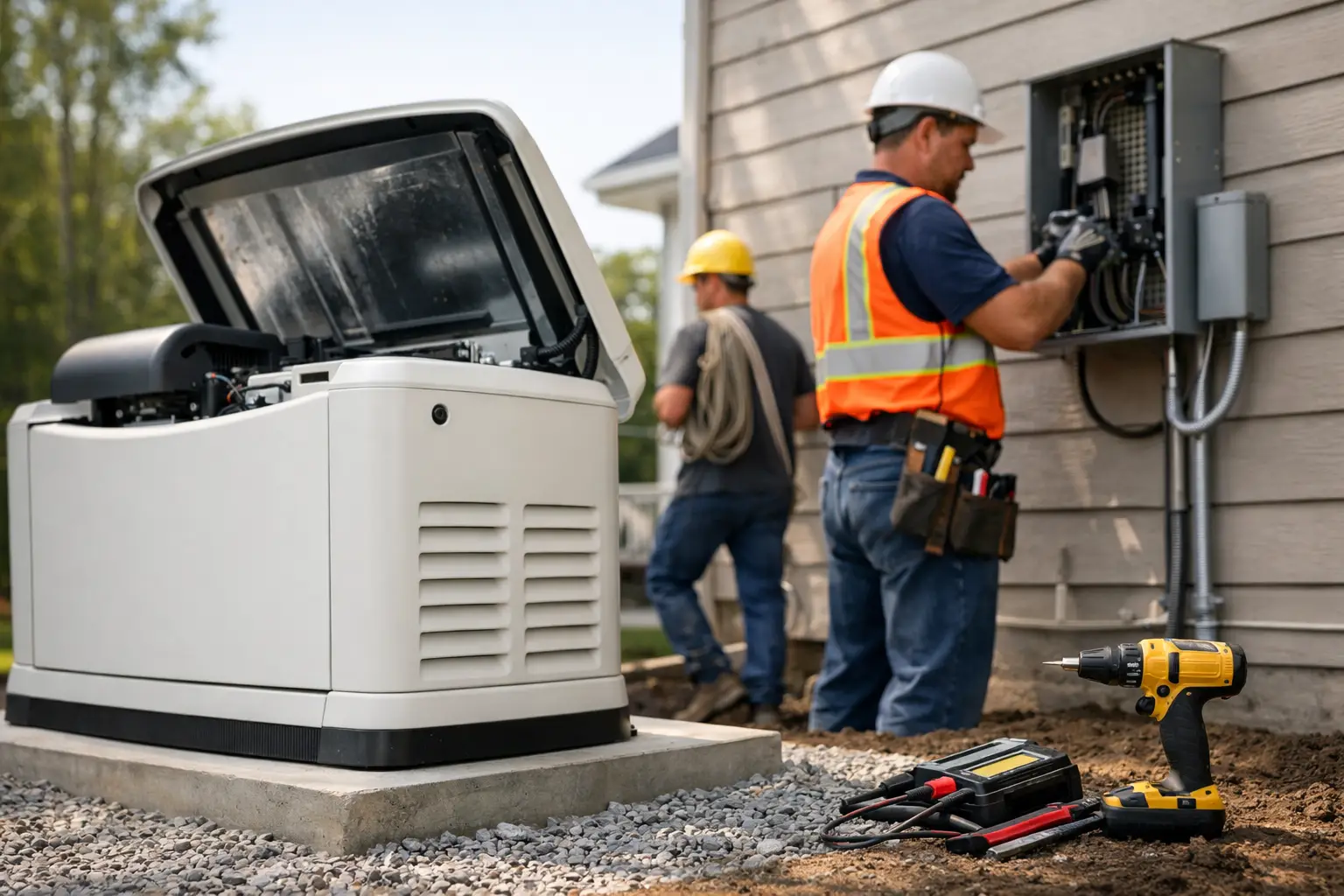
Installation day is only one stage of the project. The generator is placed, electrical connections are completed, the transfer switch is installed, fuel connections are made, and the system is prepared for startup. After that, the equipment must be tested under proper conditions to confirm it starts, transfers, and operates as intended. A handoff should include clear guidance on operation, service intervals, and what support looks like after the system is live.
Sizing mistakes are expensive
The most common issue in backup generator installation is not always visible from the driveway. It is incorrect sizing. People naturally want enough power, but the right amount depends on how the property uses electricity in the real world.
Motor loads such as air conditioners, pumps, compressors, and refrigeration equipment behave differently than lighting or electronics. Startup demands can be much higher than running loads. Homes with electric water heaters, electric ranges, or large HVAC systems may require more planning than expected. Commercial spaces can be even more complex depending on occupancy, equipment, and code obligations.
That is why rule-of-thumb sizing is risky. It may sound simple to match generator size to square footage or panel amperage, but those shortcuts often ignore the loads that actually matter during an outage. Professional sizing helps owners avoid paying for capacity they do not need while still protecting what matters most.
Permits, code, and placement are not side issues
A standby generator has to be located correctly and installed to code. That includes setbacks, ventilation clearances, local regulations, and utility requirements. Fuel source also shapes the project. Natural gas and propane each bring different planning considerations, and not every site has the same options.
Placement is about more than where the unit fits. The generator needs a location that supports safe operation, future service access, and practical connection routing. Noise expectations can also affect the conversation, especially in residential neighborhoods or mixed-use commercial settings.
When permitting and code compliance are handled properly, the project moves more smoothly and the owner gains confidence that the system was installed the right way. When those issues are skipped or glossed over, delays and rework are common.
Installation is only the beginning
A generator that sits quietly for months can give owners a false sense of security. Real reliability comes from maintenance, testing, and support after the sale. Batteries age. Fuel systems need inspection. Software, exercise cycles, and transfer components all need attention over time.
That is one of the biggest differences between a one-time installer and a true standby power partner. The sale may end on startup day, but ownership does not. If the contractor disappears after the installation, the customer is left to sort out service, alarms, warranty questions, and emergency support later.
For that reason, it makes sense to ask who will maintain the unit, how service calls are handled, whether remote monitoring is available, and what happens if the generator has an issue during an outage. Companies like GenTek Power build around long-term support because that is what customers are actually buying – not just a machine, but dependable protection.
What homeowners and business owners should ask before hiring
Before moving forward, ask direct questions. Will the contractor perform load calculations based on your actual needs? Are permits and inspections included? Who coordinates with the utility or fuel provider? Is startup and testing part of the quoted scope? Who handles warranty support and future maintenance?
You should also expect clear answers about pricing. A trustworthy quote explains what is included, what may vary based on site conditions, and what service looks like after installation. If the proposal feels vague, rushed, or unusually cheap, that is usually a sign to slow down.
This is a long-term infrastructure purchase. The right installer should make the process feel clearer, not more complicated.
Power outages are disruptive enough on their own. Backup power should remove uncertainty, not add to it. When the system is designed properly, installed professionally, and supported for the long haul, you get what you were paying for in the first place – confidence that the lights stay on when everything around you goes dark.