A power outage does not wait for a convenient time. It can stop point-of-sale systems during a rush, spoil temperature-sensitive inventory, take down security systems, interrupt production, and leave employees without the tools to serve customers. The best commercial backup power solutions are not simply the biggest generators available. They are professionally planned systems built around what your business must keep running, how long it needs to run, and who will support the equipment after installation.
For many businesses, the right answer is a standby generator paired with automatic transfer equipment and, where needed, an uninterruptible power supply (UPS). That combination protects critical operations through the first seconds of an outage and the extended hours or days that may follow.
What Commercial Backup Power Must Protect
Every facility has a different definition of “critical.” A restaurant may need refrigeration, freezers, lighting, point-of-sale equipment, and kitchen ventilation. A medical or care facility may need life-safety systems, medication refrigeration, communications, and designated clinical equipment. An office may prioritize internet, servers, access control, emergency lighting, and HVAC for occupied areas.
The mistake is treating every electrical load as equally important. Backing up an entire building can be appropriate, but it is not always the most cost-effective or practical design. A better starting point is identifying the systems that prevent safety issues, financial loss, customer disruption, or damage to the facility.
That conversation should account for loads that cycle on and off. Air conditioners, pumps, compressors, elevators, and refrigeration equipment can require significantly more power when starting than when running. A generator that appears adequate on paper can struggle if it was sized without considering these startup demands.
The Main Commercial Backup Power Options
Standby generators for extended outages
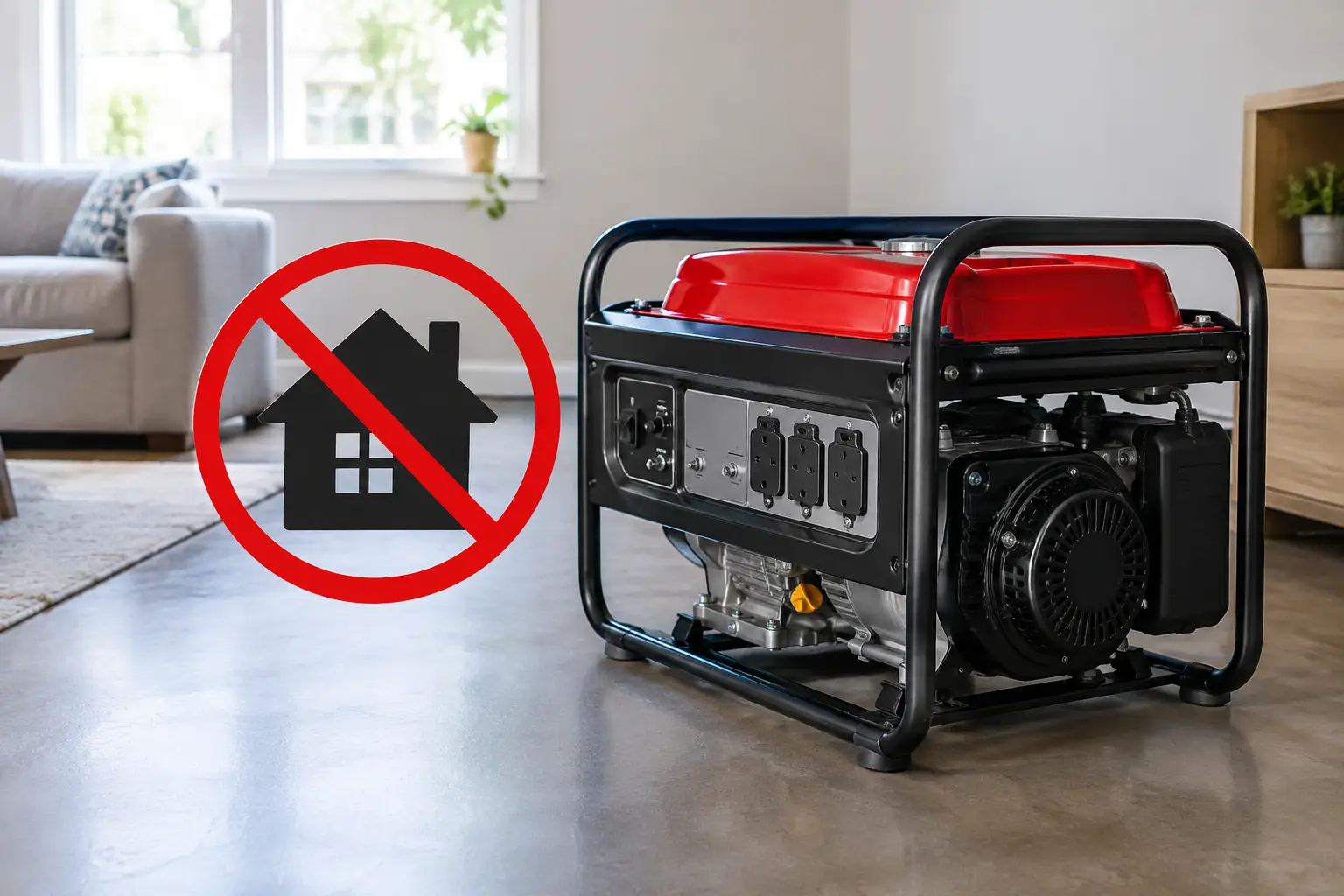
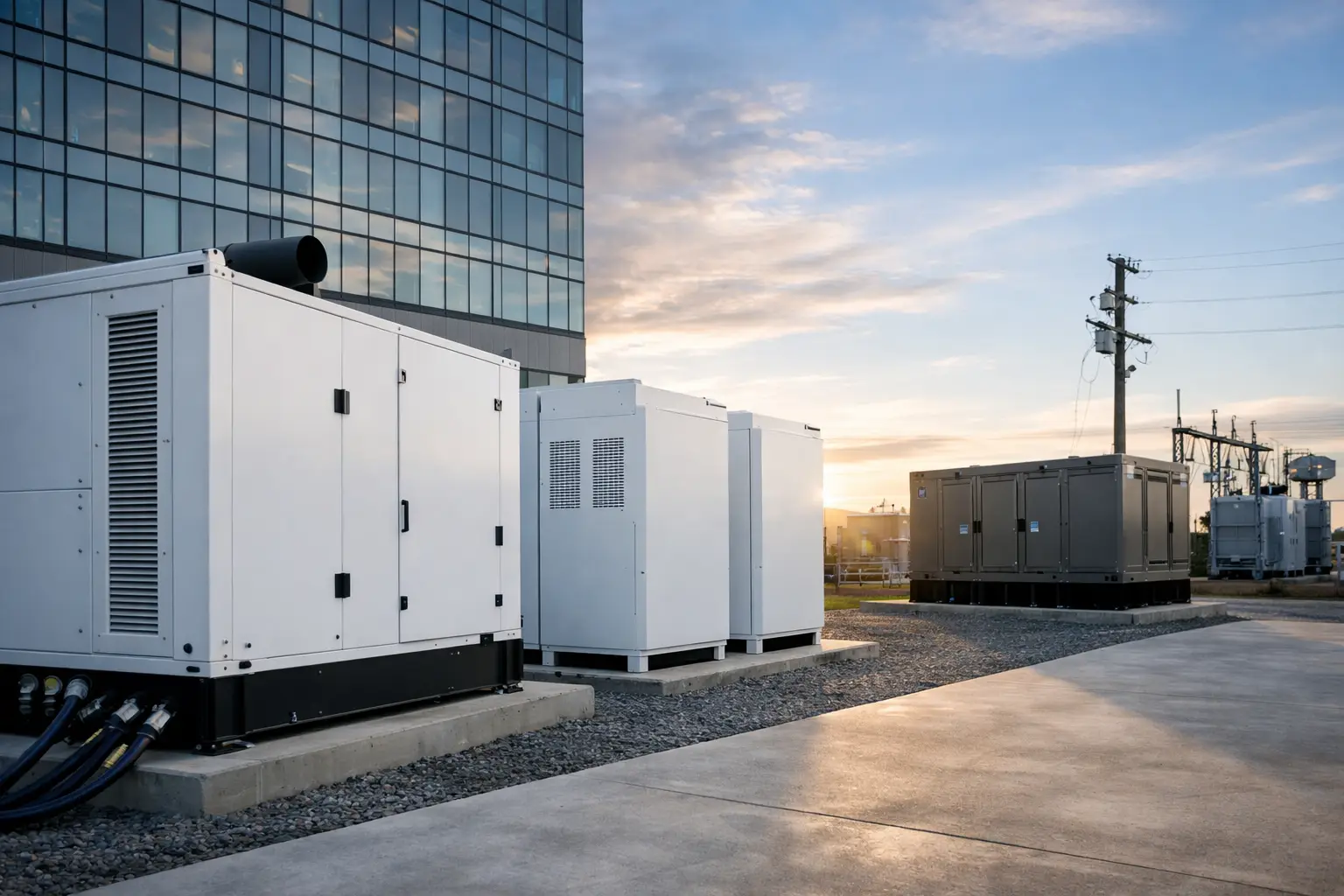
A permanently installed standby generator is the primary solution for businesses that cannot tolerate long outages. When utility power fails, an automatic transfer switch detects the interruption, starts the generator, and shifts selected electrical loads to backup power. Once utility service returns and stabilizes, the system transfers back automatically.
For facilities with access to natural gas, a gaseous generator can provide a practical long-duration fuel source without on-site refueling under normal utility conditions. Propane is often a strong alternative where natural gas is unavailable or where an on-site fuel supply is preferred. Diesel remains common for larger applications and sites with high load demands, but it requires fuel management, testing, and attention to storage requirements.
The right fuel is not a one-size-fits-all decision. Natural gas reduces refueling concerns, yet gas service capacity must be confirmed. Propane offers fuel independence but requires enough storage for the intended runtime. Diesel provides high output and established commercial use, but the fuel must be maintained and replenished. A professional site assessment should evaluate fuel availability, load profile, local requirements, and the outage risks your business actually faces.
UPS systems for zero-interruption equipment
A standby generator needs time to start and accept load. For many building systems, that short delay is acceptable. For servers, network hardware, phone systems, security equipment, electronic controls, and sensitive medical or industrial devices, it may not be.
A UPS supplies battery power immediately when utility power drops. It bridges the gap until the generator is running and can also protect equipment from voltage dips, surges, and unstable power. Depending on the application, a UPS may keep equipment operating for several minutes or longer. It is not usually designed to replace a standby generator for an all-day outage, but it is a critical layer of protection for equipment that cannot reboot or shut down unexpectedly.
Battery energy storage for targeted needs
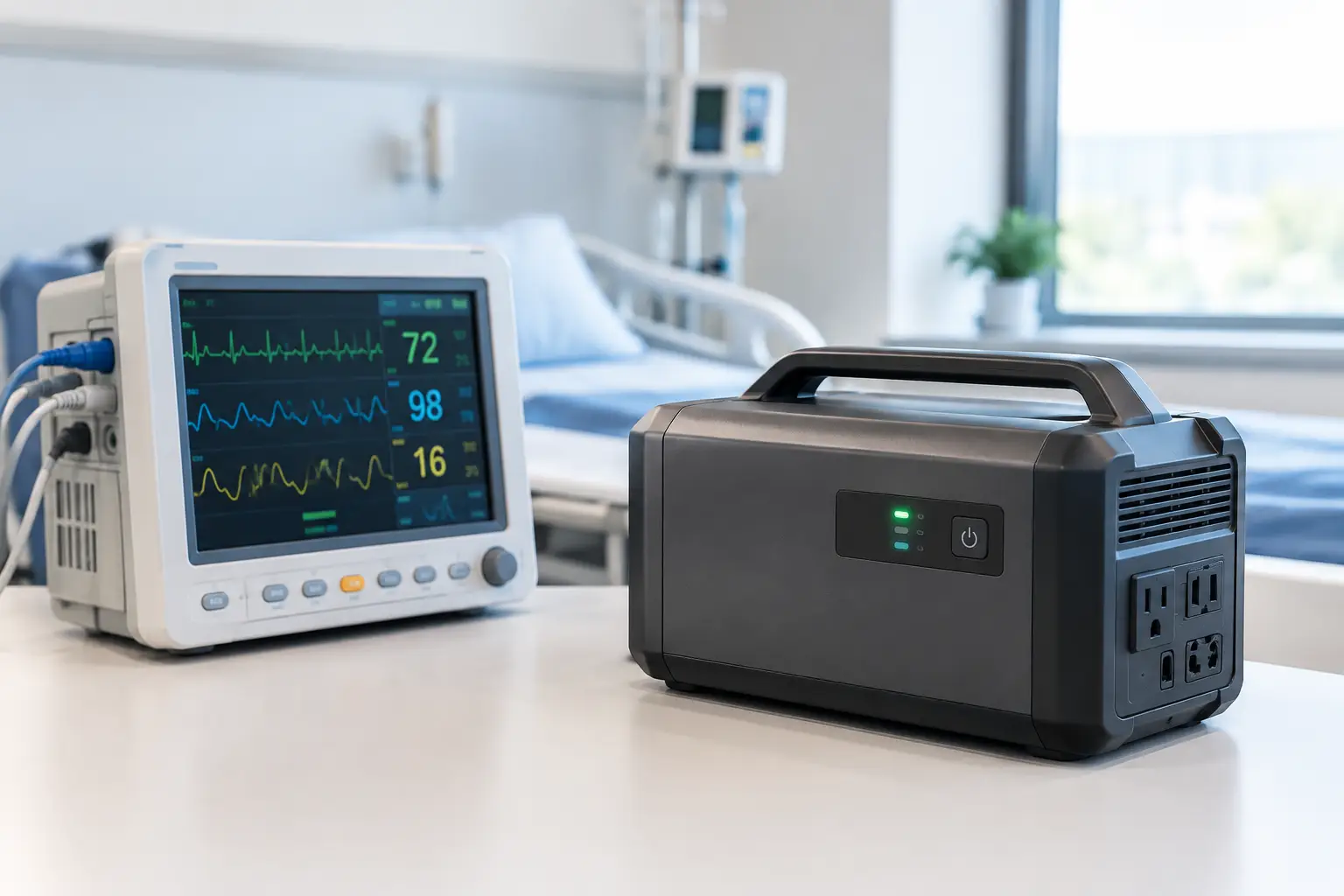
Commercial battery systems can support selected loads, reduce peak demand in certain applications, and provide quiet backup power for limited periods. They can be useful where noise restrictions, emissions concerns, or space limitations affect generator installation.
Their trade-off is duration and cost at higher loads. A battery system that supports communications and lighting may not be practical for large HVAC equipment, commercial refrigeration, or a full production floor through a multi-day outage. In many commercial settings, batteries work best as part of a layered strategy rather than the only source of emergency power.
How to Choose the Best Commercial Backup Power Solutions
The best system begins with a load study, not a generator model number. Your contractor should review electrical demand, existing panels, critical equipment, startup loads, fuel options, placement, sound considerations, and the way your building operates during an outage.
Runtime matters just as much as capacity. Ask a direct question: How long must we remain operational if utility power is unavailable? A retail location may need enough power to protect inventory and process essential transactions. A data-dependent office may need continuity through a workday. A healthcare, manufacturing, hospitality, or food-service operation may need a plan that supports extended operation.
The transfer switch also deserves careful attention. It is the component that manages the move between utility and generator power. An automatic transfer switch should be selected and installed to match the electrical service, the generator, and the loads being protected. For larger or more complex facilities, the design may use multiple transfer switches or prioritize loads in stages.
Do not overlook future growth. If you expect to add refrigeration, equipment, office space, EV charging, or additional tenants, a narrowly sized system can become an expensive limitation. Planning for reasonable expansion is often more cost-effective than replacing major equipment later.
Installation Quality Is Part of Reliability
A commercial generator is only as dependable as the system around it. Proper installation involves much more than setting equipment on a pad and connecting wires. It includes electrical design, fuel supply coordination, transfer equipment, permitting, code compliance, clearance requirements, ventilation considerations, commissioning, and full-load testing.
Poorly planned installations create problems that often appear when the grid fails: inadequate fuel pressure, overloaded circuits, nuisance shutdowns, improper transfer operation, or equipment that was never tested under realistic conditions. Those failures are especially frustrating because they can leave a business with an expensive generator that does not protect operations when it is needed most.
A qualified backup power provider should make the process clear. You should understand what will be backed up, what will not be backed up, how the system operates, what permits are required, and what service support looks like after the installation is complete. Clear scope and transparent expectations are signs of a contractor prepared to stand behind the work.
Maintenance Is Not Optional
Backup generators spend most of their lives waiting. That is exactly why maintenance matters. Engines, batteries, chargers, fuel systems, sensors, and transfer switches all need regular inspection and testing. A unit that starts during a quick weekly exercise may still have a problem under real load.
A commercial maintenance plan should include scheduled inspections, fluid and filter service based on manufacturer requirements, battery testing, operational checks, transfer switch testing, and documentation. Diesel systems also need fuel quality monitoring. Remote monitoring can provide another layer of assurance by alerting the service team to fault conditions, low battery voltage, failed exercise cycles, or other concerns before an outage exposes them.
For businesses with high downtime costs, emergency response and parts availability should be part of the buying decision. The lowest installation price can become costly if the installer is unavailable when the equipment needs attention.
A Practical Path to Backup Power
The most reliable projects follow a disciplined process: assess the facility, identify critical loads, calculate capacity and runtime, select the fuel and equipment, complete permits and installation, then test the system under the conditions it is expected to handle. After that, the relationship should continue through maintenance and support.
GenTek Power approaches commercial standby power as a long-term protection plan, not a one-time equipment sale. That means handling the details that can otherwise fall between contractors, from proper sizing and coordination to testing and ongoing service.
When you evaluate backup power, focus on the moment utility power disappears. Your team should know what stays on, how quickly it returns, how long it will run, and who answers the phone if there is a problem. A professionally designed system gives your business more than electricity during an outage – it gives you a plan you can rely on.