A generator that sat idle through a long utility outage can be more temperamental than most owners expect. Generator startup after long outage is often the moment hidden battery weakness, stale fuel, missed maintenance, or control issues finally show up. If your home or business depends on backup power, this is not the time for guesswork.
Standby systems are built for reliability, but reliability comes from regular exercise, proper installation, and service that does not get skipped when things seem fine. After a prolonged outage, the generator has run hard, switched loads repeatedly, and likely operated in weather that stressed every major component. Even if it kept the lights on the whole time, startup behavior on the next cycle can tell you a lot about its condition.
Why generator startup after long outage can be different
A short outage is one thing. A multi-day event is another. During an extended run, the engine reaches full operating temperature again and again, fuel delivery stays active for long periods, and the battery charging system has to keep up. Once utility power returns and the generator cools down, small problems can become obvious on the next startup.
Sometimes the issue is simple, like a battery that no longer holds a full charge. Other times it is tied to fuel quality, low oil level, a clogged air filter, or a fault that never got addressed after the unit transferred back to utility power. Owners often assume that because the generator ran during the outage, it must be ready for the next one. That is not always true.
The longer the outage, the more important the post-event check becomes. Homes with medical equipment, sump pumps, refrigeration, or remote work demands cannot afford to find out about a startup problem during the next storm. Businesses face the same risk, with the added pressure of operational downtime, inventory loss, and customer disruption.
What to check before you try another startup
Start with the basics. Look at the controller for any active alarms or logged faults. Many modern standby generators record shutdowns, low voltage events, overspeed warnings, and transfer-related issues. If the controller is showing a warning, clearing it without understanding the cause is not a fix.
Check the battery next. Long runs and repeated starts can expose an aging battery fast. Corroded terminals, low voltage, or a weak charger can all cause hard starting after the system has cooled down. Batteries are one of the most common reasons a standby generator fails when needed most.
Fuel condition matters too. With natural gas or propane systems, pressure and regulator performance should be verified if startup seems delayed or rough. For diesel or gasoline units, old fuel, contamination, or restricted fuel filters can create poor ignition, surging, or no-start conditions. If the outage happened after the generator sat unused for too long, stale fuel may already have been an issue before the storm began.
Then check engine fluids and airflow. Low oil, dirty filters, rodent damage, blocked vents, or debris around the enclosure can all affect startup and safe operation. A generator enclosure that looks fine from a distance can still hide leaves, nests, moisture intrusion, or wiring damage.
Signs the system needs service, not another reset
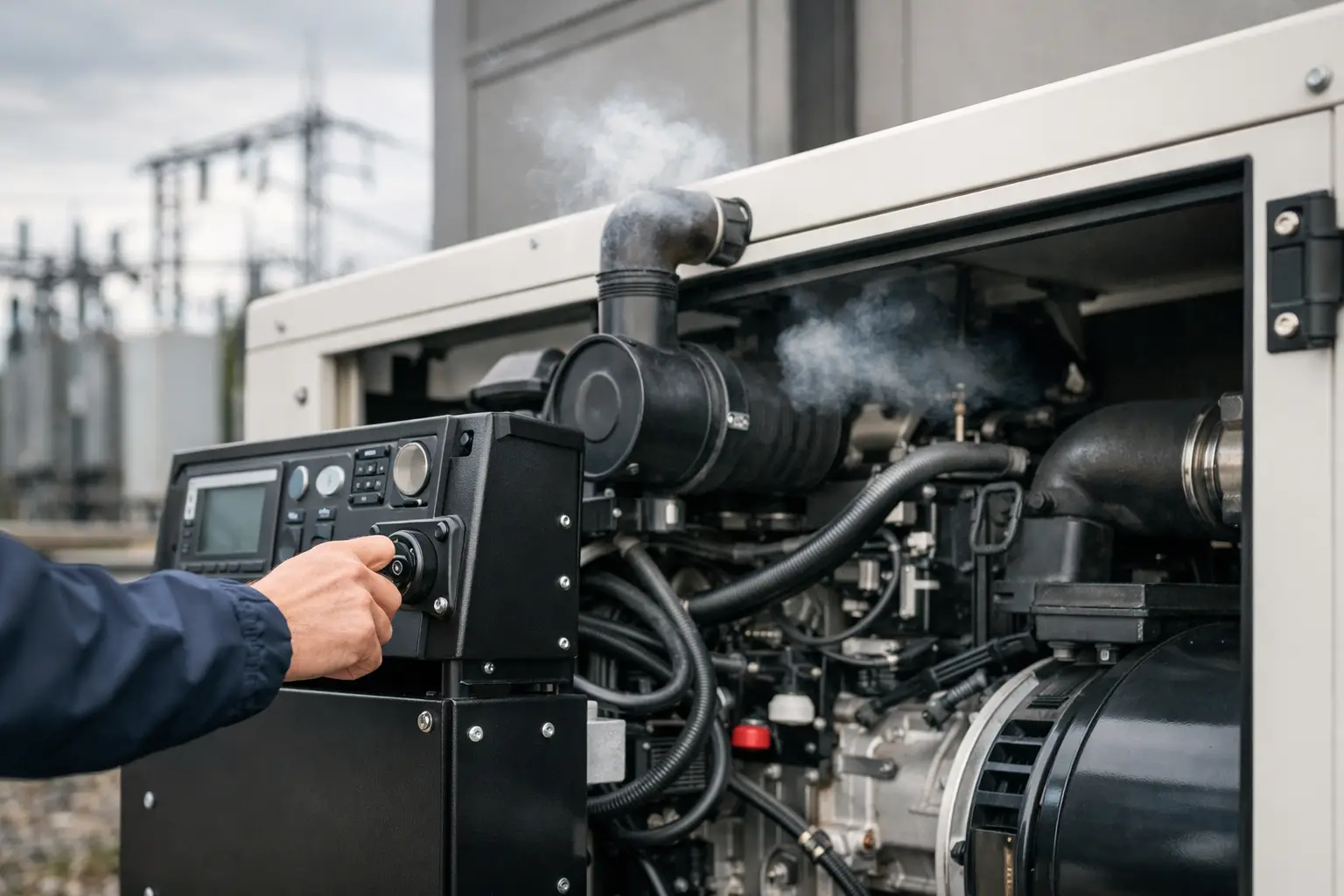
A clean startup should sound smooth and controlled. If the engine cranks longer than usual, stumbles on ignition, hunts for RPM, smokes excessively, or shuts itself down, the system is telling you something. The right response is to diagnose the cause, not just keep trying until it catches.
That is especially true if the generator was recently under heavy load. Extended runtime can accelerate wear on ignition components, sensors, belts, and charging equipment. It can also expose transfer switch problems that are easy to miss when everyone is focused on getting through the outage.
There are also quieter warning signs. Maybe the weekly exercise cycle did not run after utility power was restored. Maybe the app or monitoring system stopped reporting. Maybe the generator starts, but the transfer timing feels off or the unit sounds louder than normal. Those details matter because they point to reliability issues that usually get worse, not better.
Why fuel and battery problems show up first
If there is one pattern we see again and again, it is that fuel supply and battery health decide whether a generator starts confidently after a long event. Batteries age even when the unit is not in active use. Add cold weather, repeated cranking, and a charger that is slightly underperforming, and a battery that seemed acceptable can fail with little warning.
Fuel systems are similar. A natural gas generator may appear to have an engine problem when the real issue is supply pressure. A propane system may struggle if tank level, regulator condition, or vaporization becomes a factor in cold weather. Liquid-fueled units introduce their own concerns, especially if fuel sits too long between service intervals.
This is why professional maintenance is not just about changing oil. It is about verifying the full chain of reliability – fuel, battery, controls, transfer equipment, load handling, and fault history. Missing one weak point is all it takes for the whole system to disappoint you later.
Residential and commercial risk is not the same
For homeowners, a failed startup after an outage can mean spoiled food, no heat or air conditioning, no internet, basement flooding, or a serious disruption for anyone relying on medical devices. It is stressful because it affects comfort and safety at the same time.
For commercial properties, the impact is usually more immediate and more expensive. A startup issue can interrupt transactions, shut down essential equipment, affect tenants, or force staff into workarounds that were never part of the plan. The bigger the building load and the more critical the operation, the less room there is for trial and error.
That is why proper sizing, commissioning, and ongoing service matter so much. A standby system is not just a box outside the building. It is part of your continuity plan. If any part of that plan is weak, a long outage will usually find it.
The role of maintenance after a long run
After any extended outage, the generator should be treated like mission-critical equipment that just completed a demanding cycle. That means inspection, testing, and service based on runtime and manufacturer requirements. Oil and filter changes may be due sooner than expected. Battery testing should be current. Stored fault codes should be reviewed, not ignored.
This is also the right time to confirm the transfer switch is operating properly and that the system returns to auto mode without issue. It sounds simple, but many owners discover too late that the generator was left disabled, in manual, or sitting with an uncleared fault after previous work.
A professional service visit also helps answer the bigger question: did the generator perform within design, or did the outage reveal a sizing or load management problem? If startup is rough because the system is consistently stressed beyond what it was built to handle, the solution may be more than routine service.
When to call a professional
If the generator will not start, starts and dies, shows repeated faults, or behaves differently than it did before the outage, call for service before the next weather event. The same goes for visible leaks, unusual vibration, transfer switch concerns, or a battery older than its recommended service life.
This is not an area where the cheapest fix is usually the safest one. Backup power systems protect homes, families, operations, and critical equipment. They need code-compliant work, accurate diagnostics, and technicians who understand how the generator, transfer switch, and fuel supply operate as one system. That is the standard GenTek Power is built around.
A long outage is a real-world test. If your generator passed, verify it is ready to do it again. If it struggled, take that warning seriously while the weather is calm. The best time to restore confidence in your backup power is before you need to trust it again.