A standby generator usually gets the most attention the day it is installed and the day the power goes out. Everything in between is where reliability is won or lost. If you are weighing a generator maintenance contract vs one time service, the real question is not just price. It is whether you want occasional help or an ongoing plan that protects the system you depend on when the grid fails.
For some owners, a one-time visit makes sense. For others, it creates the exact gap in coverage they were trying to avoid by buying backup power in the first place. The right choice depends on how critical your generator is, how much risk you can tolerate, and whether you want a service provider who knows your system before there is an emergency.
What the choice really comes down to
A one-time service is exactly what it sounds like. You call when you need maintenance, testing, repair, or troubleshooting, and a technician comes out for that specific visit. It is transactional. It can work well if the generator is newer, lightly used, and installed in a setting where an unexpected issue would be inconvenient but not severe.
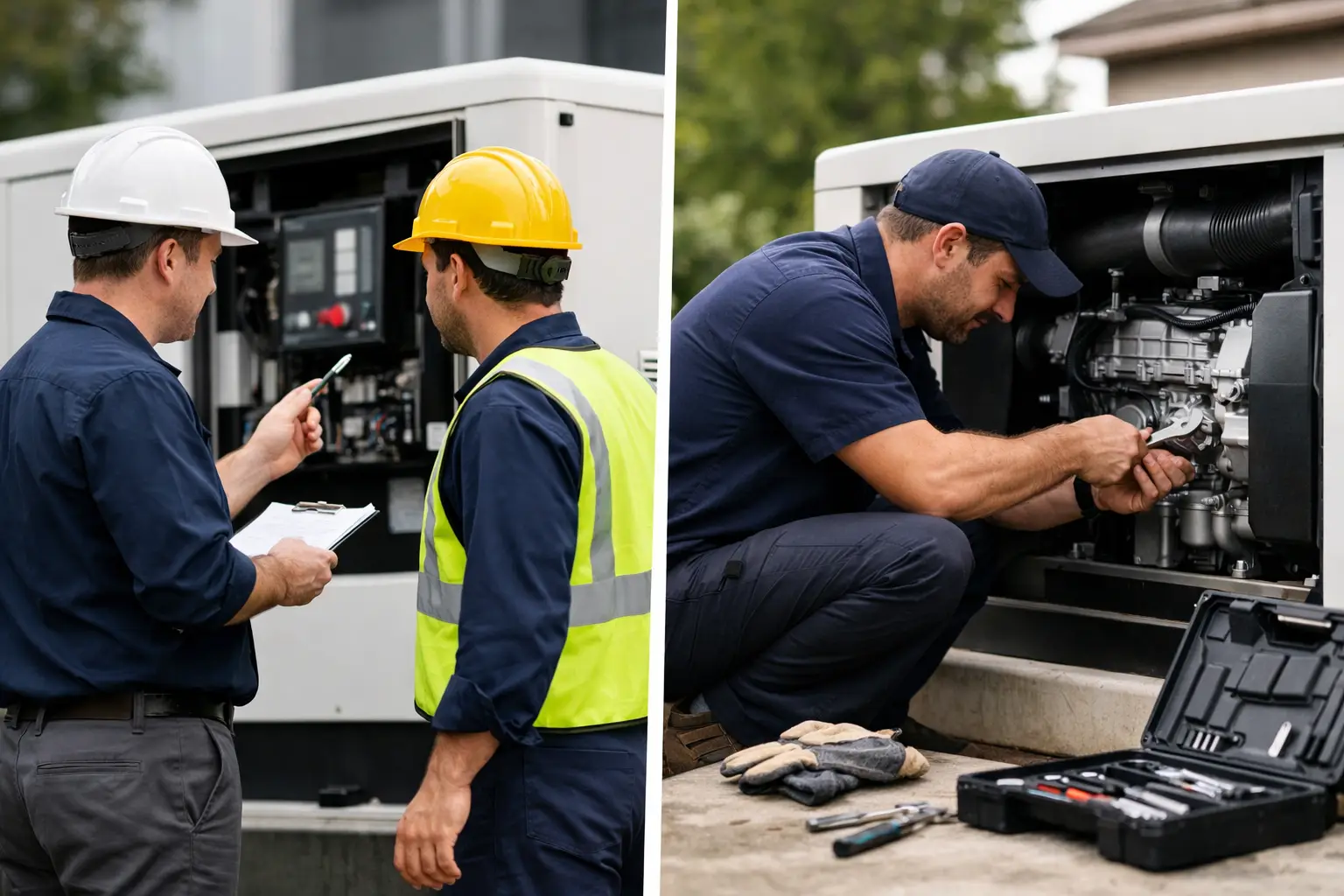
A maintenance contract is a service relationship. It typically includes scheduled inspections, preventive maintenance, testing, and a clearer plan for support over time. Instead of reacting to problems only after symptoms show up, the goal is to catch wear, fuel issues, battery decline, or control problems before they lead to a no-start condition during an outage.
That difference matters because generators rarely fail at a convenient time. They fail during storms, heat waves, cold snaps, and utility disruptions – exactly when service demand is highest.
Generator maintenance contract vs one time service: the reliability question
If reliability is your top priority, a maintenance contract usually wins.
Standby generators are not “set it and forget it” equipment. Batteries age. Oil and filters need to be changed on schedule. Coolant, belts, plugs, firmware settings, transfer switch operation, and exercise performance all need periodic verification. A system can look fine for months and still develop a hidden issue that only appears under load.
With one-time service, maintenance often gets delayed until the owner remembers, sees an alert, or notices something unusual. That is a common pattern, especially with residential systems that sit quietly in the background. The problem is that skipped intervals and delayed inspections increase the odds of discovering an issue too late.
With a contract, maintenance happens on a defined schedule. That structure is the real value. It removes the burden of remembering service dates, arranging visits every year, and hoping nothing gets missed between storms. For businesses, that consistency can be the difference between continuity and downtime. For homeowners, it can be the difference between a brief outage and a long night without heat, AC, refrigeration, internet, or medical support.
Cost is not as simple as the invoice total
At first glance, one-time service often looks cheaper. You only pay when you need something. If the generator runs well and needs little attention, that can feel like the economical choice.
But invoice price and ownership cost are not the same thing.
A maintenance contract spreads service costs into a predictable plan and often reduces the likelihood of larger repair bills caused by neglect. Catching a weak battery during a routine visit is far less expensive than an emergency no-start call during a storm. Finding a small fuel or coolant issue early is easier than repairing damage after the system has failed under pressure.
One-time service can still be cost-effective in certain cases. If you have a very low-use generator, a backup plan that does not depend entirely on the unit, and a high tolerance for occasional service delays, paying as needed may be reasonable. But if the generator protects a home office, sump pump, well pump, server room, retail operation, or any critical system, the lower upfront service cost can become expensive fast when failure has real consequences.
Response time matters more during outage season
This is where many owners start to see the practical difference.
When there is a major outage, service companies are flooded with calls. Customers with ongoing maintenance relationships are easier to support because their equipment history is known, service schedules are established, and the provider already understands the site and system configuration. That does not guarantee instant repair, but it often leads to faster, more organized support than a cold call from someone who has never been serviced before.
If you rely on one-time service, you may still get help, but you are joining the line at the moment everyone else is calling too. And if the company has never worked on your system, the first visit may involve basic fact-finding that could have been avoided through an ongoing maintenance relationship.
For a homeowner, that delay may mean food loss, comfort issues, or disrupted work. For a business, it can mean missed revenue, customer impact, and operational shutdown.
When one-time service makes sense
There are situations where one-time service is a fair and practical option.
If your generator is newly installed, under manufacturer warranty, and your usage is minimal, a single scheduled maintenance visit may be enough for the near term, provided you do not miss required service intervals. The same may be true if you are evaluating providers and want a professional inspection before committing to a long-term plan.
It can also make sense for owners of properties where backup power is helpful but not mission-critical. If an outage is manageable and you have alternatives, you may decide the flexibility of on-demand service fits your risk profile.
The key is honesty about consequences. If the generator fails, what happens next? If the answer is major disruption, flooding risk, inventory loss, lost work, frozen pipes, tenant complaints, or safety concerns, one-time service starts to look less attractive.
When a maintenance contract is the better fit
A maintenance contract is usually the stronger choice when the generator is part of your protection plan, not just a convenience.
For homeowners, that often includes households with medical devices, finished basements, well water systems, home offices, temperature-sensitive spaces, or family members who simply cannot ride out long outages comfortably. For business owners, the case is even clearer when downtime affects operations, refrigeration, security, communications, or customer service.
It is also the better fit if you want accountability. An ongoing service provider is not just showing up for a single invoice. They are helping protect the long-term performance of the system. That relationship tends to support better documentation, better continuity of care, and fewer unpleasant surprises.
This is one reason many customers choose a full-service company rather than a low-cost installer who disappears after startup. The value is not just the installation. It is having qualified support behind the system when weather, wear, and real-world conditions put it to the test.
What to look for in either option
Not all maintenance contracts are equal, and not all one-time service providers are worth calling.
What matters most is the quality of the company behind the service. You want licensed, trained technicians, clear maintenance scope, transparent pricing, and real familiarity with standby generator systems – not a contractor who treats backup power as a side offering. You also want confidence that code compliance, manufacturer requirements, testing procedures, and transfer switch performance are being handled correctly.
Ask practical questions. What is included in routine service? How are parts handled? Is load testing part of the process when appropriate? What is the response plan during high-demand outage periods? Will the provider maintain records and track service intervals? A good contractor answers these clearly, without hiding behind vague promises.
The better question is how much certainty you want
A lot of customers start with price because it is the easiest number to compare. The better question is how much certainty you want from your backup power system.
If you are comfortable managing service timing yourself, accepting some variability in response, and treating the generator more like optional equipment, one-time service may be enough. If you bought a standby generator because power loss would create real stress, real damage, or real business interruption, a maintenance contract usually aligns better with that reason for owning it.
Backup power is about reducing uncertainty. Your service strategy should do the same.
For many property owners, the smartest path is not the cheapest visit. It is the one that gives them the best chance of hearing the generator start when they need it most. That peace of mind comes from planned maintenance, qualified support, and a service partner that stays with the job long after installation day. If that is the kind of protection you expect, make your service decision like reliability actually matters – because when the lights go out, it does.