When the power goes out, most people stop caring about generator specs and start asking a simpler question: how long will it take to get backup power in place? That is exactly why a generator installation timeline explained in plain English matters. If you are protecting a home, a business, refrigerated inventory, medical equipment, or just your ability to work and live normally during an outage, timing is part of the purchase.
The short answer is that a standby generator installation can take anywhere from a few weeks to a couple of months from first consultation to final startup. The actual on-site installation may only take one to three days in many cases, but the full project includes design, equipment availability, permits, inspections, and often utility coordination. That is where the timeline expands or contracts.
A good contractor should be able to tell you not only what happens, but what might slow things down and what can be controlled. That kind of clarity matters because generator projects are not just equipment purchases. They are code-driven electrical and fuel system projects tied to your property, your local authority, and your utility provider.
Generator installation timeline explained by phase
The easiest way to understand the process is to break it into stages. Some projects move cleanly from one phase to the next. Others overlap. What matters most is knowing where time is actually spent.
Phase 1: Consultation and system sizing
This usually happens first and often moves quickly. A contractor will review the property, assess your electrical service, identify which loads need to be backed up, and determine the right generator size. For homes, that might mean whole-home coverage or selected essential circuits. For businesses, it often means focusing on continuity for critical operations rather than every single load.
This phase can take a day or several days depending on scheduling and how complex the site is. If you already know your goals, have access to electrical panels, and can make decisions promptly, it usually moves faster. If there are multiple decision-makers, uncertain load requirements, or questions about fuel type and placement, expect a little more time.
The sizing step is more important than many customers realize. A rushed recommendation can create problems later, from nuisance overloads to unnecessary cost. The right contractor takes the time to get this part right because reliability starts with proper design.
Phase 2: Proposal, approval, and scheduling
Once the system is sized, you should receive a clear proposal covering equipment, scope of work, and expected project steps. This part often feels administrative, but it affects the whole schedule. No permit application or equipment order should move ahead until the proposal is approved.
If financing, internal approvals, or scope revisions are involved, a few extra days can turn into a few extra weeks. Commercial jobs especially tend to spend more time here because more stakeholders are involved. On the residential side, this phase is often much shorter.
Phase 3: Permits and utility coordination
This is where many timelines become less predictable. Most standby generator installations require permits, and many also require some level of utility coordination, especially when an automatic transfer switch and fuel service are involved.
Permit turnaround times vary by jurisdiction. Some municipalities process applications quickly. Others take longer due to workload, seasonal demand, or additional plan review requirements. Utility timelines can also vary depending on whether gas service upgrades, meter changes, or service disconnect coordination are needed.
This phase may take a few days in the best-case scenario or several weeks in a busier jurisdiction. It is one of the biggest reasons why two generator projects that look similar on paper can move at very different speeds.
What affects the generator installation timeline?
If you are comparing bids, this is where experience really shows. The price on paper matters, but so does a contractor’s ability to manage the pieces that affect speed and quality.
Equipment availability is one factor. If the generator and transfer switch are in stock, the schedule is much easier to control. If the project depends on backordered equipment or a less common model, the timeline can stretch. This is especially true during storm seasons or periods of supply chain strain, when demand spikes.
Site conditions matter too. A straightforward installation with easy access, a suitable pad location, nearby utilities, and a modern electrical setup will generally move faster than a project involving long wiring runs, trenching, service upgrades, or tight placement constraints. If local code requires specific clearances or noise considerations, that can also affect the design and schedule.
Fuel source is another variable. Natural gas installations often depend on gas service capacity and utility approval. Propane systems may require tank coordination and placement planning. Diesel systems for commercial use can involve additional considerations around storage and compliance. None of these issues are deal-breakers, but they do change the path.
The actual install: usually faster than people expect
Once permits are approved, materials are on hand, and the schedule is confirmed, the physical installation is often the shortest part of the entire job.
Day 1: Site prep and equipment placement
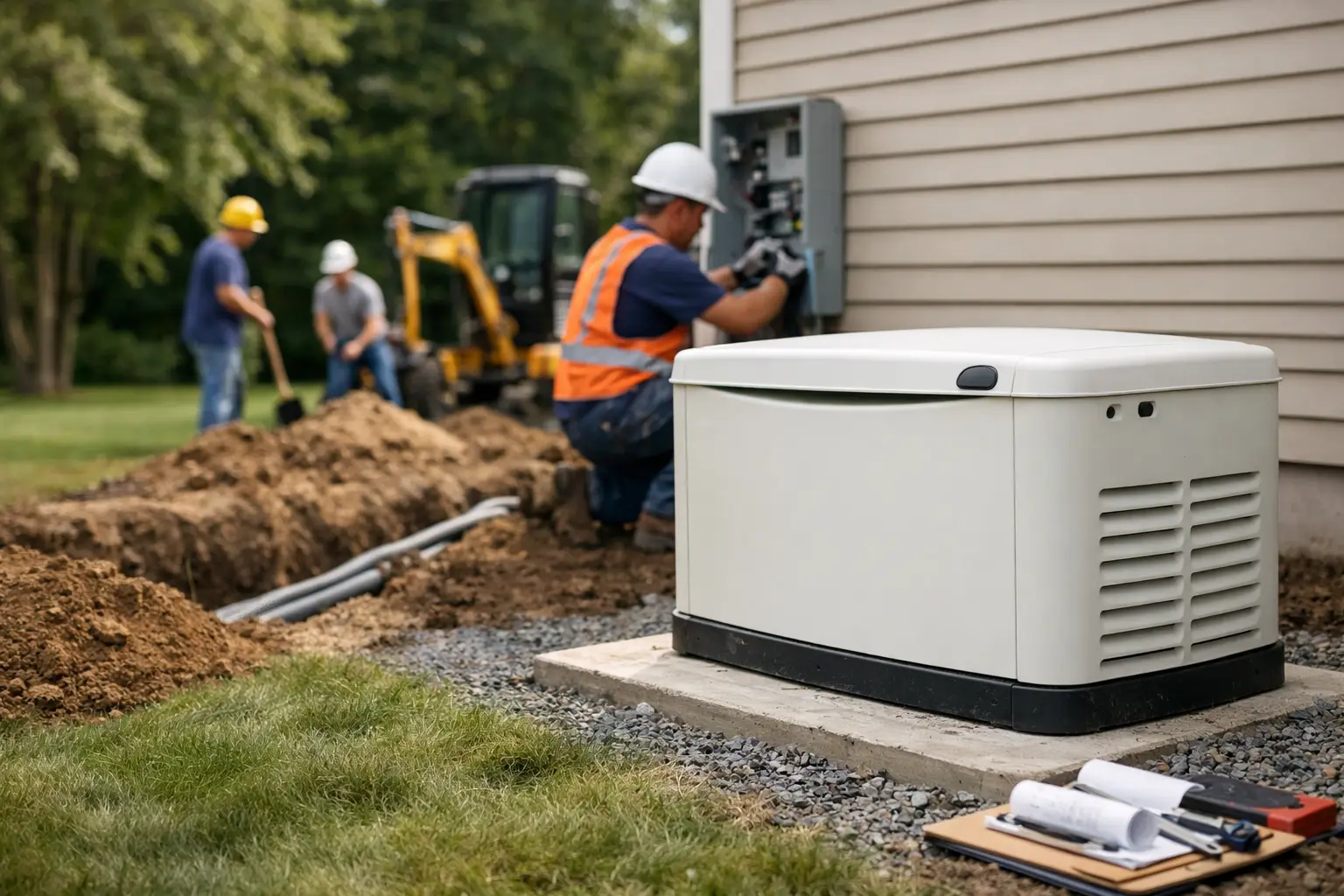
The crew may begin with pad preparation, generator placement, trenching if needed, and setup for electrical and fuel connections. On some properties, this step is simple. On others, access challenges or weather can slow things down.
Day 2: Electrical and fuel connections
The generator, transfer switch, and related wiring are installed and connected. Fuel piping or gas connections are completed, and the system is integrated with the existing electrical service. If the building has special requirements, such as critical loads panels or commercial controls, this stage may take longer.
Day 3: Startup, testing, and final checks
Once everything is connected, the system is tested to confirm automatic operation, transfer performance, and safe startup under outage conditions. This is not the place to cut corners. A generator is only valuable if it performs correctly when utility power fails.
Many residential projects are completed in one to three days on site. Some are faster. Some take longer. Commercial systems, service upgrades, and more involved fuel or distribution work can extend beyond that.
Inspections and final approval
In many cases, the installation is not truly complete until inspections are passed and the system is formally approved. Electrical, gas, and local building inspections may all be part of the closeout process depending on the jurisdiction and scope.
Sometimes inspections happen immediately after installation. Other times, you are waiting on the authority having jurisdiction to confirm a date. That waiting period can feel frustrating, but it is part of making sure the system is installed safely and legally.
A professional installer plans for this and keeps you informed. That matters because the biggest frustration customers usually have is not the work itself. It is not knowing what is happening or why the next step has not started.
A realistic timeline for most projects
For many homeowners, a reasonable expectation is two to six weeks from signed agreement to completed installation, assuming equipment is available and permitting moves normally. Some projects are done sooner. Others take longer because of municipal review, utility work, or site complexity.
For commercial jobs, the range can be wider. Load analysis, larger equipment, engineered plans, utility approvals, and operational constraints can add time. The upside is that a well-managed contractor can still give you a clear path and realistic milestones instead of vague promises.
If someone quotes an unusually fast timeline without discussing permits, inspections, fuel coordination, or startup testing, that is worth questioning. Speed is helpful, but not if it comes at the expense of code compliance or long-term reliability.
How to keep your project moving
Customers do have some influence over the timeline. Quick access for site visits, timely approval of quotes, clear decisions on system scope, and fast response to permit or utility questions can all help. If your property has older electrical infrastructure, unusual site conditions, or a need for service upgrades, bringing that up early also helps avoid surprises.
Just as important is choosing a contractor who owns the process from beginning to end. That means consultation, permitting, coordination, installation, testing, and support are treated as one managed project rather than a collection of handoffs. Companies like GenTek Power build trust this way because customers are not left chasing subcontractors or guessing who is responsible when a delay happens.
Why the timeline matters as much as the generator
A standby generator is purchased for one reason: confidence when the grid fails. That confidence does not start on the first outage. It starts during the project itself, with clear communication, proper planning, and disciplined execution.
The best generator installation timeline explained is not just about days on a calendar. It is about knowing what is happening, what could change, and whether your contractor is prepared to handle those changes without cutting corners. If you are planning backup power for your home or business, ask for the full timeline, not just the install day. The right answer should leave you feeling protected before the first storm even arrives.