A standby generator usually gets ignored for the exact reason you bought it – it sits quietly in the background until the power goes out. Then, in one stormy minute, it becomes one of the most important systems on your property. If you are asking how often should a standby generator be serviced, the short answer is at least once a year, but for many homes and businesses, that is only the baseline.
The right service schedule depends on the generator model, fuel type, runtime, environment, and how much is riding on that system working without hesitation. A house with occasional outages has different maintenance needs than a business protecting refrigeration, internet, security, or critical operations. What never changes is this: standby generators are not install-it-and-forget-it equipment.
How often should a standby generator be serviced?
For most standby generators, professional service once every 12 months is the minimum recommended schedule. Many manufacturers also call for maintenance after a set number of run hours, often around 100 to 200 hours, even if a full year has not passed.
That means the real answer is not simply annual service. It is annual service or sooner based on use. If your generator has run through multiple outages, extended storm events, or weekly exercise cycles that add up over time, it may need attention before the calendar says it is due.
For higher-demand applications, twice-a-year service is often the smarter approach. This is especially true for properties with long winter outages, heavy summer storm exposure, medical equipment, home offices, or business systems that cannot tolerate a failed startup.
Why yearly service is the minimum, not the goal
A standby generator is a mechanical engine, an electrical system, and an automatic backup device all in one. Oil breaks down. Batteries weaken. Filters clog. Coolant ages. Connections loosen. Software settings and fault history may need review. None of that is obvious from the kitchen window.
The generator may still perform its weekly self-test and look fine while a service issue is developing underneath. That is why routine maintenance matters. You are not just keeping the machine clean. You are reducing the odds of failure during the exact moment you need it most.
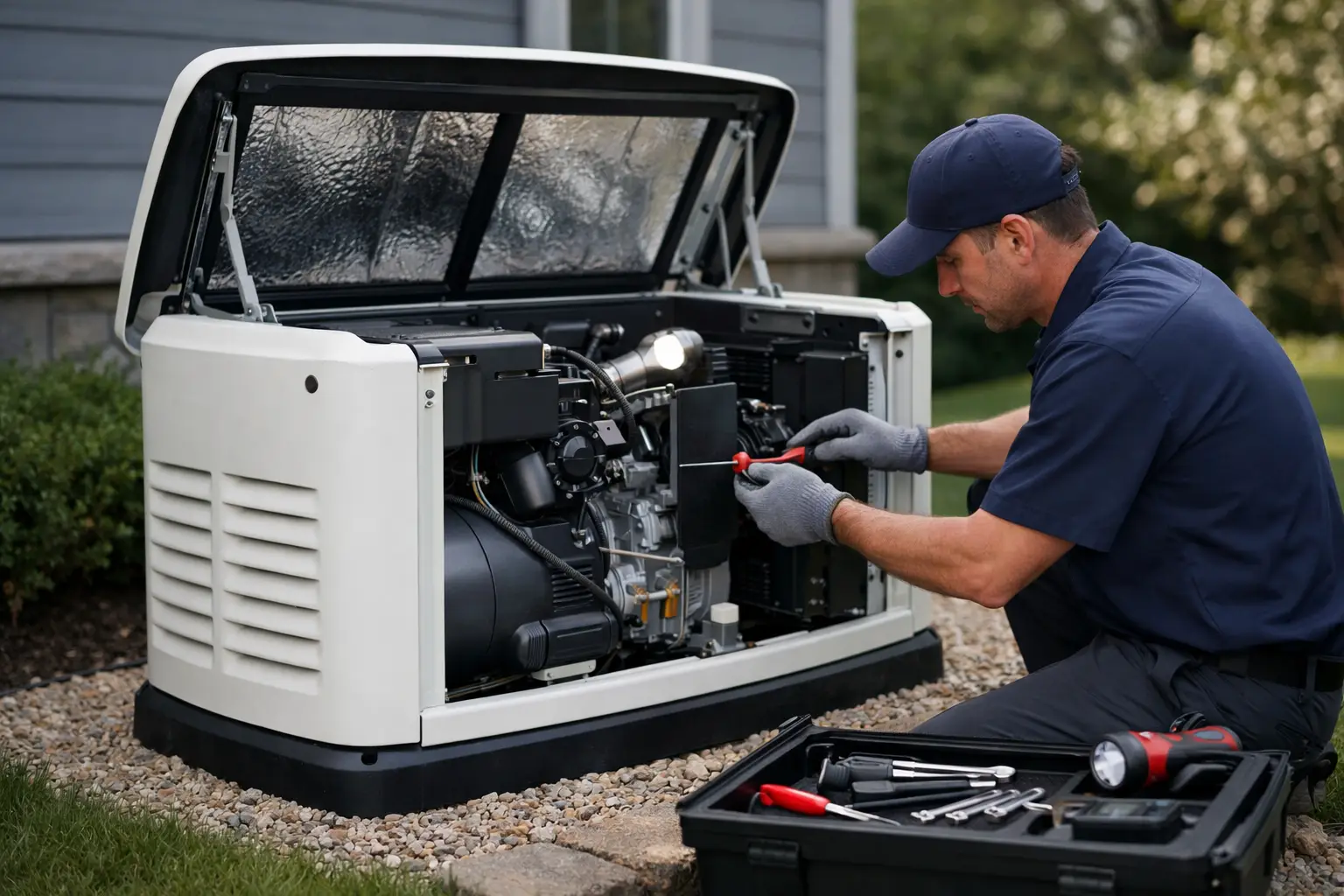
This is where professional service makes a real difference. A trained technician is not only swapping filters and fluids. They are checking transfer operation, verifying output, inspecting wear, reviewing alarms, and looking for signs that a small issue is about to become a no-start event.
What affects how often a standby generator should be serviced?
Runtime is one of the biggest factors. A generator that ran for ten minutes during brief flickers is not in the same condition as one that carried your home through a two-day outage. Every hour of operation adds heat, vibration, and engine wear.
Fuel type matters too. Natural gas, propane, and diesel systems each have different maintenance needs. Diesel units in particular may need closer attention to fuel condition and related components, while gaseous-fueled residential systems still require regular inspection of ignition, oil, battery health, and airflow.
Your environment also plays a role. Coastal air, extreme cold, heavy dust, pollen, and debris can all shorten maintenance intervals. So can installation location. A unit tucked near landscaping, exposed to drifting snow, or surrounded by cottonwood fluff may need more frequent cleaning and inspection than one in a cleaner, more protected setting.
Then there is the risk tolerance of the property owner. If a missed startup means mild inconvenience, annual service may be enough. If a missed startup means spoiled inventory, frozen pipes, lost work, or interrupted medical equipment, more frequent service is the safer decision.
What happens during standby generator service?
Good generator maintenance is more than an oil change. A proper service visit usually includes replacing engine oil and filters at the required intervals, checking air and spark-related components where applicable, inspecting belts and hoses, testing the battery and charging system, and reviewing coolant condition on liquid-cooled units.
The electrical side matters just as much. A technician should inspect wiring and connections, verify transfer switch operation, review fault codes and controller history, and confirm the system starts, runs, and transfers properly. Load testing may also be appropriate depending on the equipment and application.
This is one reason bargain maintenance plans often fall short. A checklist that looks cheap on paper may skip the deeper inspection that catches reliability issues early. For a system meant to protect your home or business in an emergency, surface-level service is not much of a safety net.
Signs your generator needs service sooner
Even if your next maintenance visit is months away, some warning signs should not wait. If the generator struggles to start, throws alarms, cranks slowly, runs rough, smells unusual, leaks fluid, or fails an exercise cycle, it needs attention.
The same is true after a long outage. Extended operation puts real hours on the engine and related systems. It is common for a generator to need post-outage service even if its annual appointment is not yet due.
You should also pay attention to battery age. Many standby generator problems come down to battery failure, not major engine damage. A weak battery can stay hidden until the utility power drops and the system is expected to start instantly.
Residential vs. commercial service schedules
Homeowners often do well with annual maintenance, provided the generator has not accumulated heavy runtime and the property is not exposed to harsher conditions. Still, semiannual service is worth considering for larger homes, whole-home backup systems, or households that depend on continuous HVAC, refrigeration, medical support, or remote work connectivity.
Commercial properties usually need a more proactive schedule. If your generator supports daily operations, tenant safety systems, temperature-sensitive products, data continuity, or customer-facing services, once a year may be too light. Semiannual maintenance, plus post-event inspection after major outages, is often the better standard.
This is one of those areas where cheaper is not really cheaper. Stretching service intervals might save a little now, but it increases the chance of emergency repair costs, downtime, and avoidable failure later.
Why professional service matters more than DIY checks
There are a few things an owner can do between service visits. Keeping the area around the generator clear, watching for visible leaks, paying attention to alerts, and making sure exercise cycles are happening as expected are all helpful.
But standby generators are tied into fuel systems, electrical transfer equipment, code requirements, and manufacturer warranty conditions. Professional maintenance helps protect not just the machine, but the reliability of the entire backup power setup. It also creates a service record, which can matter for warranty claims and long-term equipment value.
A quality service partner does more than show up with a filter kit. They know the installation, the load demands, the maintenance history, and the manufacturer requirements. That kind of continuity is especially valuable after a storm, when everyone is suddenly looking for generator help at the same time.
A practical maintenance schedule to follow
If you want a simple rule, schedule professional service every year at minimum and sooner if the generator has logged significant runtime. For many homeowners, that is the right baseline. For higher-dependability homes and most businesses, every six months is often the more responsible plan.
It also helps to schedule service before the season when outages are most likely in your area. Preventive maintenance done ahead of storm season is far more useful than reactive service after a failure.
At GenTek Power, that long-term approach is the point. A standby generator is not just a product you install. It is a protection system you maintain so it is ready when the weather turns, the grid fails, and your property needs to keep running.
The best service interval is the one that matches the consequences of failure. If your generator has to work when the lights go out, treat maintenance like part of the backup plan, not an optional extra.