When the power goes out, most people are not asking about engine specs or transfer switches. They are asking a simpler question: who installs standby generators, and can that installer be trusted to do the job safely the first time?
That question matters more than it seems. A standby generator is not an appliance you slide into place and plug in. It connects to your home or building’s electrical system, fuel supply, and code requirements. It also has to start automatically when the utility fails, carry the right loads, and keep working years after installation day. The right installer is not just there to set equipment on a pad. They are responsible for whether the system is sized correctly, permitted properly, tested thoroughly, and supported when you actually need it.
Who installs standby generators for homes and businesses?
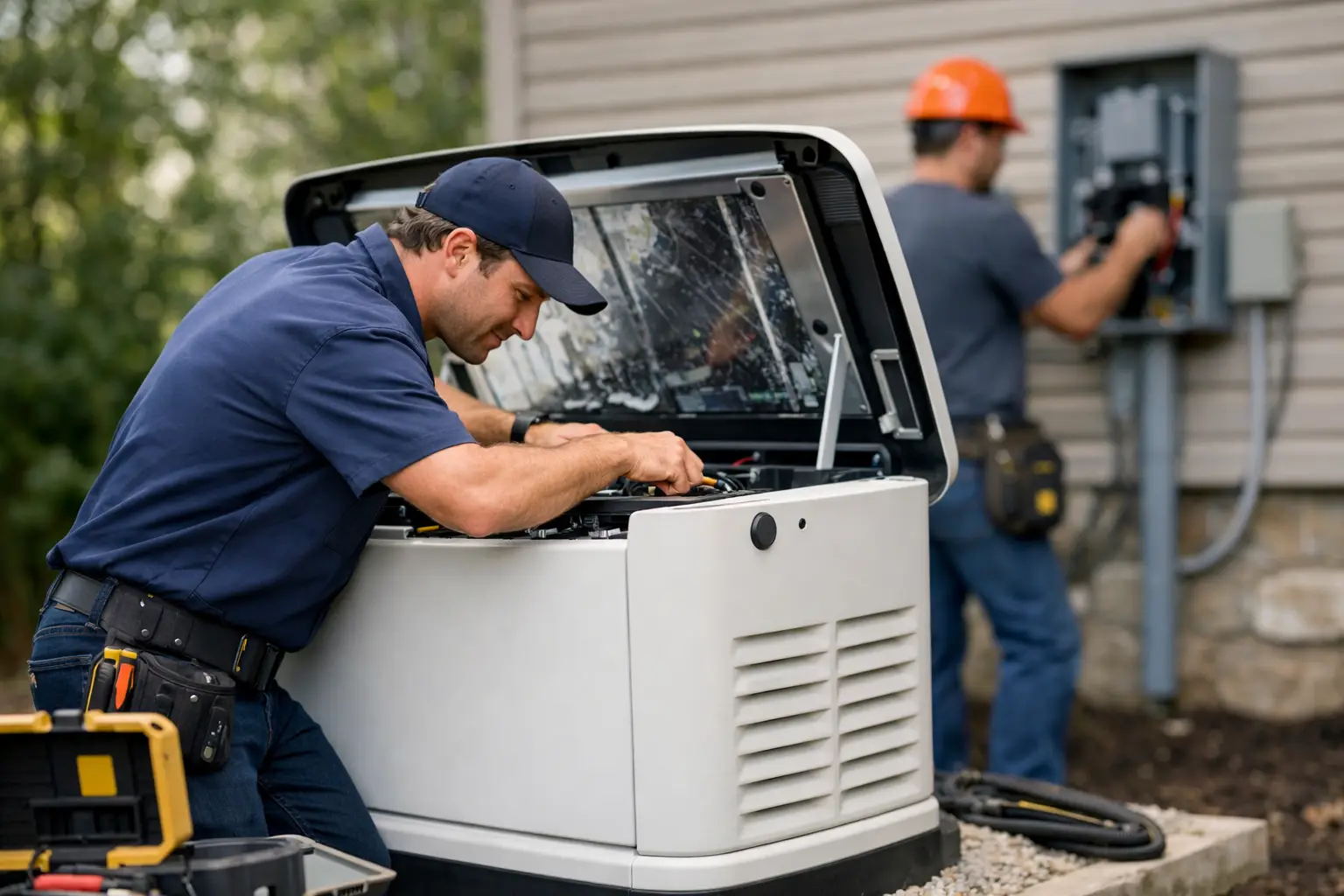
Standby generators are typically installed by a specialized backup power contractor or generator company that manages the full project with licensed trades. In most cases, that means a team that includes a licensed electrician, and often a licensed plumber or gas fitter depending on the fuel source and local code requirements.
For a residential system, the installer usually handles site evaluation, generator sizing, placement, electrical connection, automatic transfer switch installation, fuel connection, startup, and testing. For a commercial system, the process can be more involved because load requirements, permitting, and continuity needs are often more complex.
The key point is this: a standby generator should not be installed by a general handyman or a contractor treating it like a side job. It is a power system tied directly into critical infrastructure. That calls for experience, licensing, and accountability.
Why generator installation is not a one-trade job
A lot of confusion comes from the fact that people assume one person installs everything. In reality, a proper standby generator installation usually crosses several disciplines.
The electrical side includes the transfer switch, service integration, load management, grounding, wiring, and startup verification. The fuel side may involve natural gas or propane piping, regulator checks, pressure verification, and code-compliant connections. There can also be permitting, inspections, utility coordination, concrete or composite pad placement, and manufacturer commissioning requirements.
That is why the best installer is usually not just an electrician and not just a plumber. It is a generator specialist who coordinates every part of the job and makes sure nothing gets missed between trades.
What to look for in a company that installs standby generators
The safest answer to who installs standby generators is a company that owns the process from consultation through long-term service. That matters because the risks are not only about installation quality. They are also about what happens after the sale.
A qualified standby generator installer should be able to explain how they size the system, which loads it will support, how permits are handled, who performs the electrical and fuel work, how startup testing is completed, and what service support looks like after commissioning. If those answers are vague, the project usually gets vague too.
Experience matters, but relevant experience matters more. A contractor may have years in electrical work and still do very few standby generator installations. Another may sell generators but subcontract nearly everything and disappear once the unit starts for the first time. The better choice is a provider that regularly installs automatic standby systems and has a service model built around maintenance, repairs, and outage support.
Licensed trades are only part of the answer
Licensing is essential, but it is not the whole standard.
Yes, your installer should use licensed professionals for electrical and gas work as required by local code. But a permit on paper does not guarantee a reliable installation. The difference often comes down to planning, supervision, testing, and support.
A low-cost installer may technically complete the hookup, but still make costly mistakes. Common problems include undersized systems, poor placement, fuel supply issues, incomplete load calculations, weak communication with inspectors, and little to no owner education after startup. Those are the jobs that look finished until the first outage exposes what was rushed.
A professional generator company approaches installation differently. They look at how the property uses power, what needs to stay on, what the utility service can support, and what the fuel source can deliver under load. They also think beyond day one. Can the system be maintained easily? Is the brand supported locally? Is there a clear plan if the unit throws an alarm in the middle of a storm?
Who installs standby generators correctly? The process tells you
If you want to know whether a company installs standby generators the right way, look at their process.
A dependable installer starts with an on-site consultation, not a guess over the phone. They ask what matters during an outage. For a home, that may be HVAC, refrigeration, sump pumps, lighting, internet, security, and medical equipment. For a business, it may be servers, refrigeration, production equipment, access systems, or point-of-sale continuity.
Next comes system sizing. This is where many projects go wrong. Bigger is not always better, and smaller is definitely not cheaper if it cannot carry the loads you expected. Proper sizing balances actual demand, startup loads, fuel availability, and budget.
Then comes project planning. That includes equipment placement, code clearance requirements, noise considerations, fuel routing, electrical tie-in strategy, permit applications, and coordination with the utility or inspector if needed.
Installation itself should be organized and clean, with clear responsibility for each trade. Once the equipment is in place, startup and testing should verify automatic operation under real conditions. The owner should know how the system behaves, what alerts to watch for, and what maintenance schedule keeps the warranty and reliability intact.
That full process is what separates a standby system from a generator that merely exists on the side of the building.
The risk of choosing the cheapest installer
Price matters. It should. But with standby generators, the cheapest quote often leaves out the things that make the system dependable.
Sometimes the low number comes from weak sizing assumptions. Sometimes it comes from limited site work, minimal fuel upgrades, bare-bones electrical scope, or no real plan for service after installation. In other cases, it comes from sales-first companies that rely heavily on subcontractors and have little involvement once the final invoice is paid.
The trade-off is simple: a lower upfront price can create higher ownership risk. If the generator fails inspection, struggles under load, or becomes difficult to service later, the savings disappear quickly. For homeowners, that may mean a cold house, spoiled food, flooded basements, or lost connectivity during a storm. For businesses, it can mean operational downtime and lost revenue.
A stronger installation may cost more because more responsibility is built into it. That includes better planning, proper permitting, licensed execution, startup testing, and ongoing maintenance support. For most buyers, that is not an extra. That is the product.
Why ongoing service should be part of the installation decision
A standby generator is a long-term system. That means the company that installs it should also be prepared to maintain and support it.
This is one of the easiest ways to separate serious providers from one-time installers. Ask who performs annual maintenance, whether remote monitoring is available, how alarms are handled, and what happens if the generator fails to start during an outage. If the answer is unclear, the relationship probably ends at installation.
That is not ideal for a system you may depend on during freezing weather, summer heat, or a multi-day utility failure. The best installation partner is one you can call after the storm warning, not just before the sale.
Companies like GenTek Power are built around that full-service model because standby power only works as promised when the equipment, installation, and service relationship all hold together over time.
The bottom line for buyers
If you are asking who installs standby generators, the best answer is not a single trade title. It is a qualified standby generator company that manages the entire project with licensed professionals and stands behind the system after commissioning.
That means proper sizing, code-compliant installation, fuel and electrical coordination, real testing, and dependable service support. It also means choosing a partner that treats backup power like critical protection for your home or business, not just another equipment sale.
When you are trusting a generator to carry your heat, food, internet, security, or operations during an outage, the installer is not a small detail. They are a big part of whether the system earns that trust when the lights go out.