A standby generator should bring peace of mind, not a new set of problems. If you are researching how to avoid generator installation mistakes, the biggest thing to know is this: most failures do not start during a storm. They start months earlier with bad sizing, poor placement, skipped permits, rushed wiring, or an installer who treats backup power like a side job.
A generator is not just a box outside your home or business. It is part of a larger power system that has to be sized correctly, installed to code, coordinated with fuel supply, integrated with an automatic transfer switch, and tested under real operating conditions. When any one of those steps is handled poorly, the system may still look finished while being far less reliable than you were promised.
Why generator installation mistakes are so expensive
The cost of a bad installation usually shows up at the worst possible time – during an outage. That is when undersized equipment struggles under load, transfer switches fail to operate properly, fuel delivery issues shut the unit down, or voltage problems start affecting sensitive electronics.
There is also the hidden cost of fixing work that should have been done right the first time. Homeowners may end up paying for relocation, rewiring, code corrections, permit resolution, or warranty disputes. Business owners face another layer of risk because even a short interruption can mean lost productivity, spoiled inventory, or interrupted customer service.
The pattern is common. A low quote looks attractive up front, but the real price arrives later in callbacks, service issues, and uncertainty every time severe weather is in the forecast.
Start with sizing, not shopping
One of the most common mistakes is choosing a generator by headline wattage alone. People often assume bigger is always better or that a rough online estimate is close enough. In reality, proper sizing depends on what you need the system to power, how those loads start and run, and whether the goal is partial backup or whole-home or whole-building coverage.
Air conditioning, well pumps, medical devices, refrigeration, electric water heating, and business equipment all create different load demands. Some motors require a much higher surge at startup than their running numbers suggest. If those details are missed, the generator may trip, bog down, or force you to shed loads you thought were covered.
Oversizing has its own trade-offs. A unit that is too large can cost more than necessary to purchase and install, and in some applications it may not operate as efficiently as a properly matched system. Good sizing is not about selling the largest generator on the lot. It is about matching the equipment to the building, the fuel source, and the customer’s actual priorities.
Whole-home and essential-load planning are not the same
This is where many projects go off track. Some households want true whole-home backup, including HVAC and lifestyle loads. Others mainly need refrigeration, lighting, internet, sump pumps, and a few critical circuits. Commercial properties may need continuity for select systems rather than every panel in the building.
Those are different design paths. Clarity at this stage prevents disappointment later. If the installer cannot clearly explain what will and will not run during an outage, that is a warning sign.
Placement mistakes can affect safety and performance
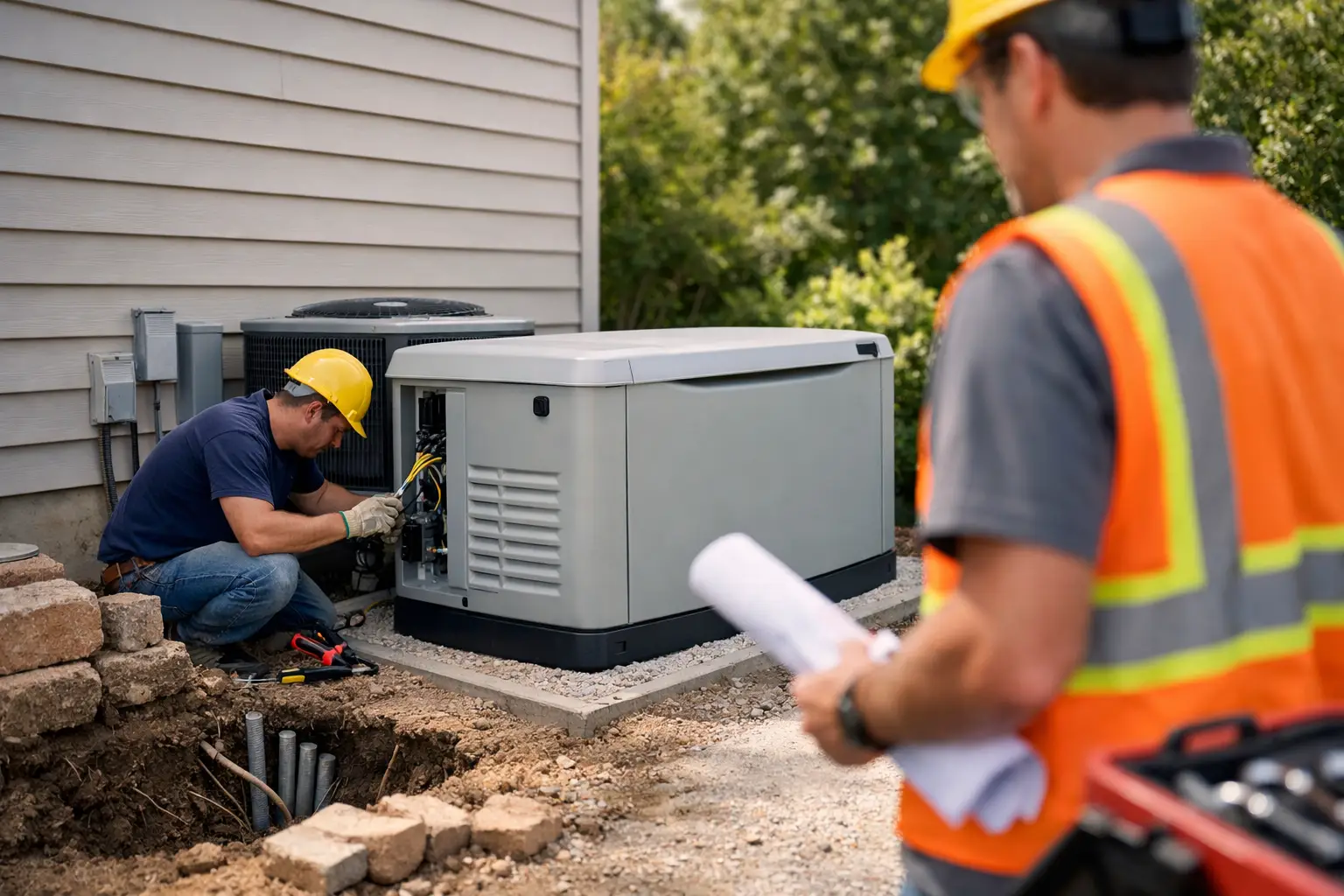
Generator location is not just about where it fits. Placement affects code compliance, service access, noise experience, ventilation, snow clearance, and long-term reliability. Units need proper clearances from windows, doors, vents, combustible materials, and property features. They also need a stable pad and a location that allows for maintenance without turning every service visit into a workaround.
Poor placement can create nuisance noise near bedrooms, expose the generator to drainage problems, or make it harder for exhaust to disperse safely. In colder climates, snow accumulation and ice management matter more than many buyers realize. A unit that is technically installed but difficult to access or vulnerable to winter conditions is not a dependable solution.
This is one reason generator installation should never be treated like a simple appliance drop. The site conditions matter just as much as the equipment itself.
Permits, code compliance, and utility coordination are not optional
If you want to know how to avoid generator installation mistakes, pay close attention here. Problems with permits and code compliance are often invisible until inspection, resale, insurance review, or a service event. Then they become expensive fast.
A standby generator installation may involve electrical permits, gas permits, inspections, local setback rules, and utility coordination. The exact requirements vary by municipality and site conditions, which is why cookie-cutter installs often create trouble. What worked at one property may not be acceptable at the next.
Code compliance is also about safety, not paperwork. Proper grounding, conductor sizing, overcurrent protection, transfer switch installation, disconnects, and fuel piping all have to be handled correctly. If an installer talks casually about skipping permits to save time, that should end the conversation.
Fuel supply mistakes are a common reason systems fail
Many generator problems are blamed on the unit when the real issue is fuel. Natural gas and propane systems each have design considerations that affect startup, runtime, and full-load performance. If the gas supply is undersized or poorly routed, the generator may not receive what it needs when demand rises.
That matters even more in cold weather or during major outages when conditions are already working against you. A generator that runs fine during a quick test but starves under sustained load is a system design problem, not bad luck.
For propane systems, tank sizing and refill planning also deserve serious attention. Runtime expectations should be discussed before installation, not after the first extended outage. For natural gas systems, utility coordination and pressure requirements need to be verified early. This is another area where experienced planning protects you from unpleasant surprises.
Transfer switch and electrical integration must be done right
The transfer switch is the piece that tells your system when to move from utility power to generator power and back again. If that part of the installation is rushed or poorly matched, the generator may never deliver the automatic protection you are paying for.
Electrical integration requires more than landing wires in the right place. The installer has to understand load management, panel configuration, startup sequencing, and how the system will behave with your building’s actual electrical demands. Homes with smart systems, larger HVAC loads, or multiple subpanels need especially careful planning. Commercial sites may have additional complexity depending on equipment sensitivity and operational priorities.
This is not the place for guesswork. Clean installation, accurate labeling, and thorough commissioning all matter because future service depends on it too.
Testing should prove the system, not just start it
A lot of installations are declared complete once the generator turns on. That is not enough. A proper handoff should include testing that confirms the transfer switch operates correctly, the generator carries intended loads, alarms and settings are checked, and the customer understands basic operation.
This is where weak installers often fall short. They install the unit, perform a quick startup, and leave before the full system has been verified under realistic conditions. Then the first true test happens during a storm.
A better approach is to treat commissioning as part of the installation, not a formality. When the system is tested thoroughly, small issues can be caught before they become outage-day failures.
The installer matters as much as the brand
Customers often spend a lot of time comparing generator manufacturers and not enough time evaluating who will install and support the system. That is backwards. Even a high-quality generator can become unreliable if it is installed by the wrong contractor.
Look for licensed, factory-trained professionals who manage sizing, permitting, coordination, installation, startup, and ongoing service as one process. Ask who handles warranty support, who you call during an outage, and whether routine maintenance is available after the install. If those answers are vague, you are probably dealing with a seller, not a long-term service partner.
This is where a full-service company like GenTek Power stands apart. The goal is not simply to place equipment on site. It is to deliver a backup power system that is safe, code-compliant, and ready to perform when the utility fails.
How to avoid generator installation mistakes before you sign
A good proposal should be clear about scope, not just price. You should understand what loads are being backed up, what equipment is included, where the generator will be placed, what permits are required, how fuel supply will be handled, and what testing is included before completion.
It should also be clear what happens after installation. Standby generators need maintenance, periodic testing, and service support over time. If an installer disappears after the final invoice, the system becomes your problem the moment it needs attention.
The safest path is to choose a contractor who takes ownership of the entire job from planning through long-term support. That reduces risk at every stage and gives you someone accountable when weather, utility interruptions, or equipment issues put the system to the test.
When backup power is meant to protect your family, your home, or your business, the right installation is not about cutting corners. It is about making sure the system you buy is the system that actually shows up for you when the lights go out.