The question usually comes up after the first long outage. The fridge is warming up, the sump pump matters more by the minute, and suddenly you are asking, can you power your whole house with a portable generator? The honest answer is sometimes, but not in the way most homeowners hope.
A portable generator can keep parts of your home running during an outage. In some cases, it can support a large share of essential loads. But powering an entire house the way normal utility service does is a different standard. That takes enough capacity, safe transfer equipment, careful load management, and a setup designed around how your home actually uses electricity.
For most households, a portable generator is best treated as a short-term, selective backup solution. If your goal is true whole-home backup with less guesswork and less risk, a permanently installed standby generator is usually the better fit.
Can you power your whole house with a portable generator in real life?
In real life, the answer depends on the size of the portable generator and the size of the home’s electrical demand. A smaller portable unit might run a refrigerator, some lights, internet equipment, a microwave, and maybe a sump pump. A larger portable model may handle more circuits if those loads are managed carefully.
What it usually cannot do is run everything at once without compromise. Central air conditioning, electric water heaters, electric dryers, ovens, well pumps, and other high-draw equipment can overwhelm a portable system quickly. Even when the generator has enough running wattage on paper, startup surges from motors and compressors can create problems the moment several systems call for power together.
That is why homeowners often feel disappointed after buying a portable unit based on marketing claims rather than a true load calculation. The machine may work fine, but the expectation was wrong. Whole-house power and partial-house backup are not the same thing.
What a portable generator can usually handle
A portable generator can be very useful when it is matched to the right job. For many homes, that means keeping critical systems online rather than trying to make the outage feel invisible.
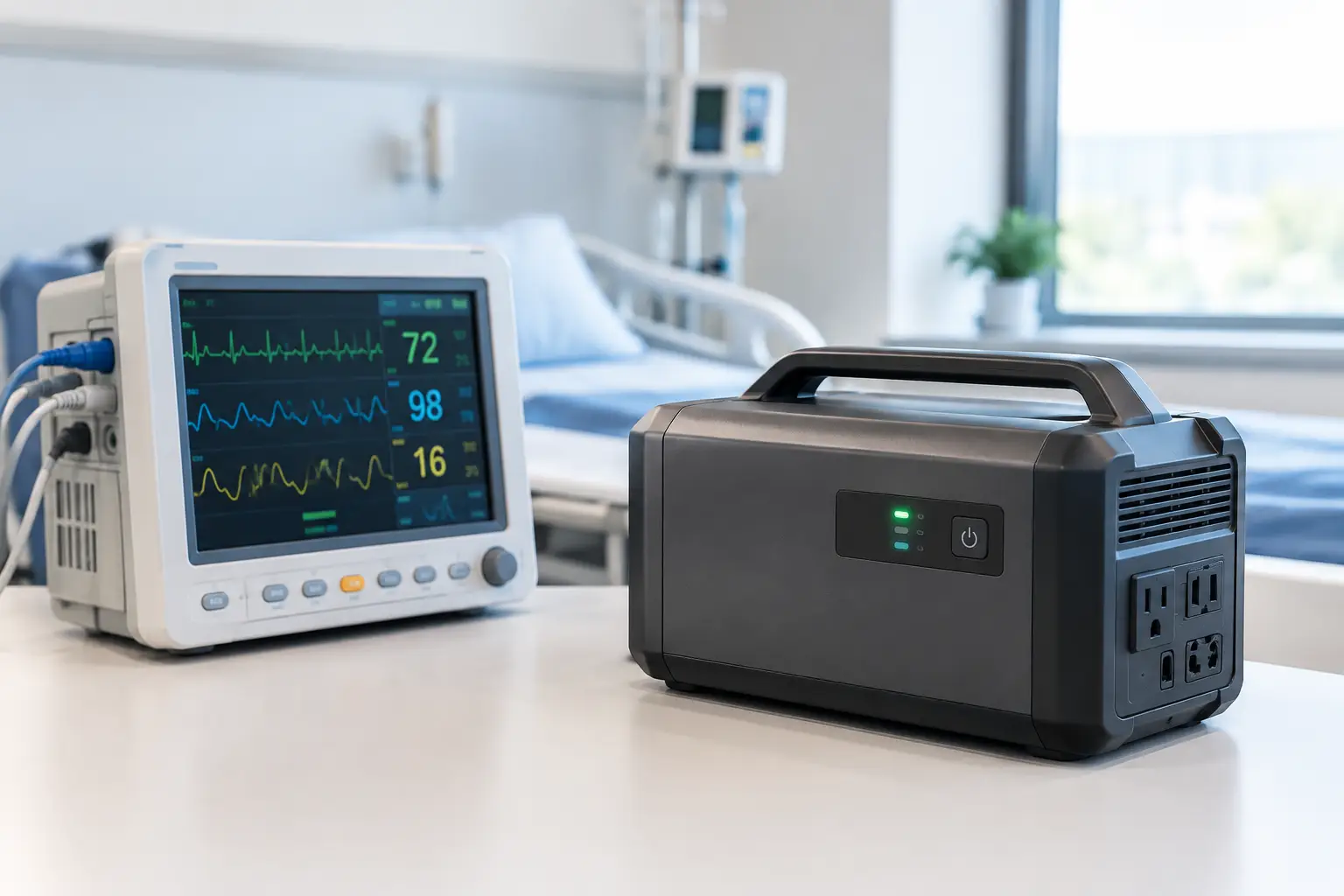
A properly connected portable unit may be able to support refrigeration, freezer loads, a few lighting circuits, charging devices, garage door operation, internet equipment, and selected receptacles. In some homes, it can also run a furnace blower or boiler controls. If the home has gas appliances for heating, hot water, and cooking, the electrical demand may be lower than people expect, which helps.
The challenge shows up when major electric loads stack on top of those basics. Air conditioners, heat pumps, electric ranges, baseboard heat, large well pumps, and hot tubs can push a portable generator past its limit fast. You may be able to run one of those loads temporarily, but not all of them together and not always without manual intervention.
Why whole-house backup is harder than it sounds
Homes do not use power evenly. Demand rises and falls throughout the day, and some equipment draws a lot more power when it starts than when it runs steadily. That matters because generators are sized around both continuous demand and peak demand.
A homeowner may look at a 10,000-watt portable generator and assume that sounds like a lot. In many cases, it is. But once you account for startup loads and simultaneous usage, that capacity can disappear quickly. If the AC starts while the fridge compressor cycles on and the sump pump kicks in, the margin gets thin.
There is also a practical issue. Portable generators need fuel, monitoring, and manual setup. During a storm, someone has to bring the unit out, place it safely outdoors, start it, connect it correctly, and keep it refueled. That is manageable for some families. For others, especially during overnight outages, extreme weather, or medical situations, it is a weak point in the plan.
The biggest mistake: unsafe connection methods
The most dangerous part of portable generator ownership is not always the generator itself. It is how people try to connect it.
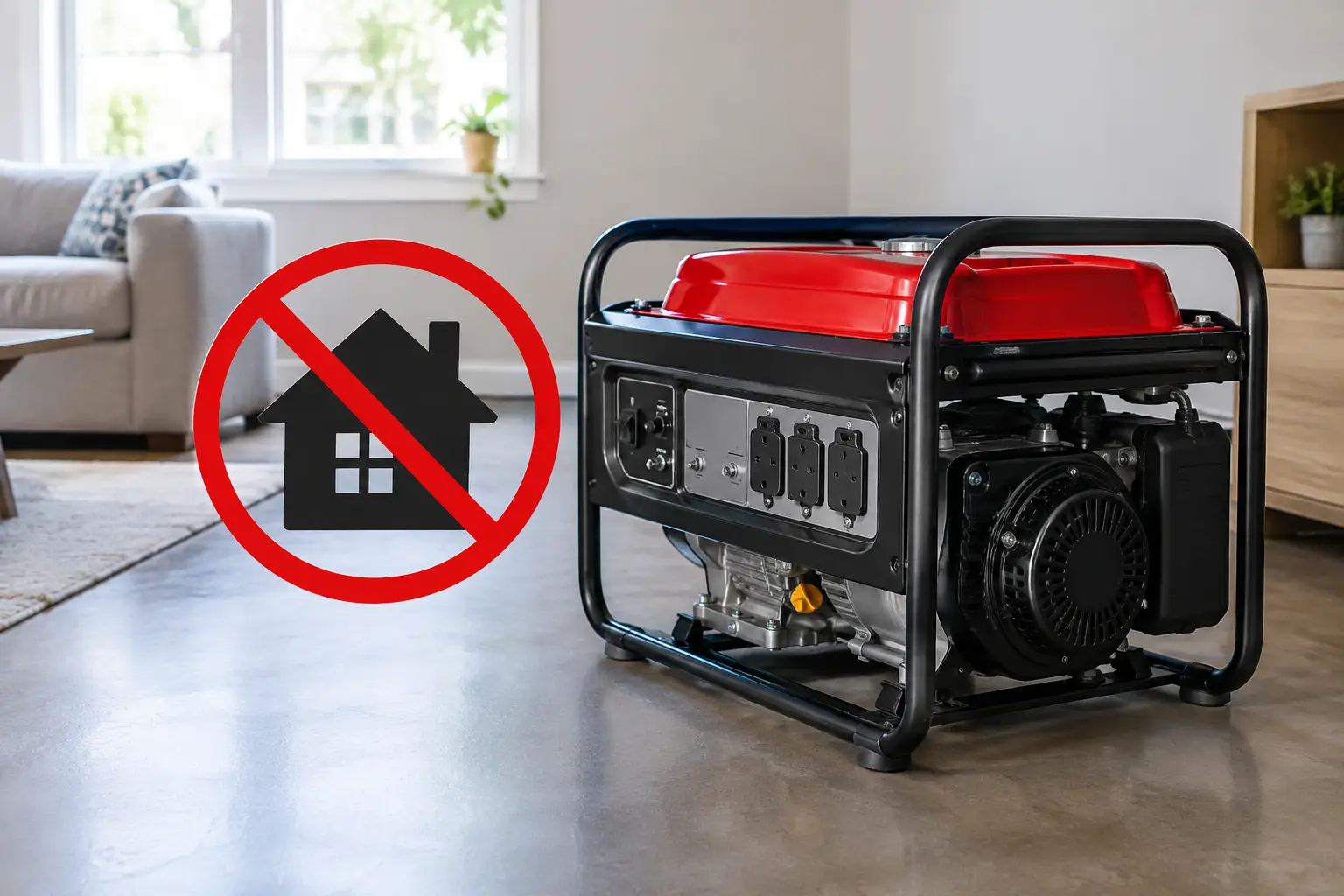
A portable generator should never be plugged into a wall outlet to feed the house. That kind of backfeeding is unsafe, can damage equipment, and creates serious risk for utility workers and anyone near the electrical system. It also violates code.
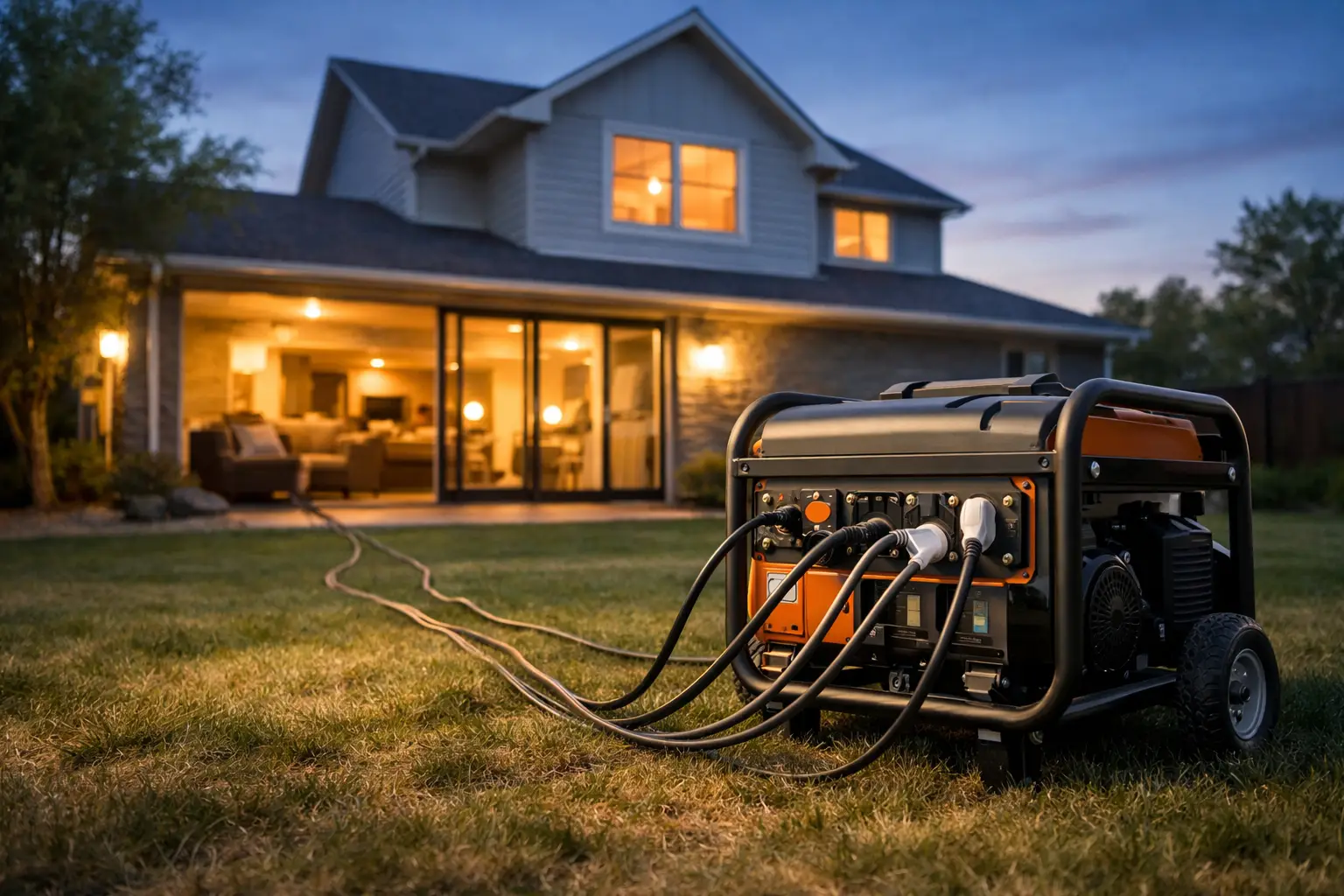
If you want to use a portable generator to energize home circuits, the house needs proper transfer equipment installed by a licensed electrician. That could be a manual transfer switch or an approved interlock setup where permitted by local code. The point is simple: the generator must be isolated from the utility before it feeds the home.
This is one of the clearest differences between an emergency workaround and a professionally planned backup system. Backup power should reduce risk, not introduce a new one.
Fuel, runtime, and storm reality
Even if a portable generator can support much of your home, the next question is how long it can keep doing it.
Most portable units rely on gasoline, though some use propane or dual-fuel configurations. Gasoline can be hard to store safely in large quantities, and during regional outages it may not be easy to replenish. Runtime depends on load and tank size, so the more circuits you try to power, the faster you burn fuel.
That becomes a real issue during multi-day outages. You are not just managing watts anymore. You are managing fuel supply, refueling schedules, weather exposure, noise, and the need to shut down the unit for service intervals. For homeowners who want backup power to be dependable when they are asleep, away from home, or focused on family safety, that level of manual involvement is often a deal breaker.
When a portable generator makes sense
A portable generator can be the right choice if your goal is to cover essentials, your budget is limited, and you are comfortable managing the system manually. It can also be a smart temporary step for homeowners who want some outage protection now while planning for a larger long-term solution later.
This approach works best when expectations are realistic. Think of it as protecting key needs, not reproducing normal life exactly. If you are willing to rotate loads, avoid heavy electric appliances, refuel regularly, and set the unit up safely each time, a portable generator can serve an important role.
For some properties, especially smaller homes with natural gas heat and fewer large electrical loads, a high-capacity portable generator with the right transfer equipment can cover a surprising amount. But that is still not the same as guaranteed whole-house operation under all conditions.
When standby power is the better answer
If your priority is to keep the entire home functional with minimal interruption, a portable generator usually stops being the best answer. That is especially true if you rely on central HVAC, a well pump, a home office, a sump pump, refrigerated medications, medical devices, or other loads that cannot be left to guesswork.
A standby generator is designed for this job. It starts automatically, connects through an automatic transfer switch, runs on a more practical fuel source such as natural gas or propane, and is sized around the home’s actual needs. It is also installed as part of a complete code-compliant system rather than treated like a storm accessory.
That matters because outages are stressful enough without adding extension cords, fuel runs, and constant load juggling. A professionally designed standby system gives you a clearer plan and a more dependable result. For many homeowners, that peace of mind is the real value.
How to decide what your home actually needs
If you are still weighing whether a portable unit will do the job, start with the loads that matter most. Not the loads you hope to run, but the ones you truly cannot be without. That usually includes refrigeration, heating equipment, cooling in some climates, water systems, internet, lighting, and critical medical or work-related equipment.
Then look at how those systems start, how long they run, and what else may operate at the same time. That is where real generator sizing begins. It is not just about adding up labels. It is about understanding demand, startup behavior, transfer equipment, fuel strategy, and how much manual involvement you are willing to accept during a storm.
That is also where professional guidance saves people from expensive mistakes. A good contractor does not just sell you a machine. They help determine whether selective backup is enough or whether whole-home standby power is the more reliable path.
For homeowners who are serious about protecting the house, the food, the comfort, and the systems that keep daily life moving, backup power should be planned around outcomes. If you want the lights on and a few basics covered, a portable generator may be enough. If you want the house to keep working when the grid does not, it is worth treating backup power like the permanent protection system it really is.
When the next outage hits, the right setup is the one you do not have to second-guess.