When the power goes out at 2 a.m., most people are not thinking about engine specs or enclosure ratings. They are thinking about whether the heat will stay on, whether the sump pump will run, whether the fridge full of food is safe, and whether work can continue in the morning. That is why the best standby generator features are not just about performance on paper. They are about what keeps your home or business protected when the outage is real.
A good standby generator should start automatically, carry the right load, and keep doing its job without drama. Just as important, it should be installed correctly, matched to the property, and supported by a company that will still answer the phone after the sale. Features matter, but so does how those features work together in the field.
What the best standby generator features really do
The right feature set reduces risk. It shortens the gap between utility failure and backup power, protects sensitive equipment, and helps the system run predictably through long outages. The wrong setup can leave you with nuisance shutdowns, overloaded circuits, or a generator that looked impressive in a brochure but does not fit the way your property actually uses power.
For homeowners, that usually means protecting essentials like HVAC, refrigeration, lighting, well pumps, home offices, and medical devices. For business owners, it often means keeping core operations online, avoiding revenue loss, and preserving security, communications, and critical systems. In both cases, reliability matters more than flashy extras.
1. Automatic transfer switching
If a standby generator does not transfer power automatically, it defeats much of the point. One of the best features to prioritize is an automatic transfer switch that detects a utility outage and starts the generator without manual intervention.
This matters because outages do not always happen when you are home, awake, or able to react quickly. Automatic transfer helps protect frozen pipes in winter, keeps alarms and network equipment powered, and restores electricity within seconds instead of waiting for someone to wheel out portable equipment or flip switches manually.
There is a trade-off here. A quality transfer switch and proper installation cost more than a patchwork backup setup. But for people who want dependable protection rather than a half measure, it is one of the core pieces that makes standby power work the way it should.
2. Proper sizing and load management
A larger generator is not always a better generator. One of the best standby generator features is actually smart load handling, which starts with correct sizing.
An undersized unit may struggle when the air conditioner, oven, and dryer all call for power at once. An oversized unit can increase project cost unnecessarily and may not operate as efficiently for the loads it actually serves. The goal is not maximum output for its own sake. The goal is matching the generator to the real electrical demand of the property.
Load management features can help by prioritizing high-importance circuits and delaying lower-priority loads until capacity is available. That can make whole-home coverage more realistic without jumping to a much larger machine. For many properties, this is the difference between a backup system that works well in practice and one that constantly operates at the edge of its capacity.
3. Reliable fuel supply and fuel type compatibility
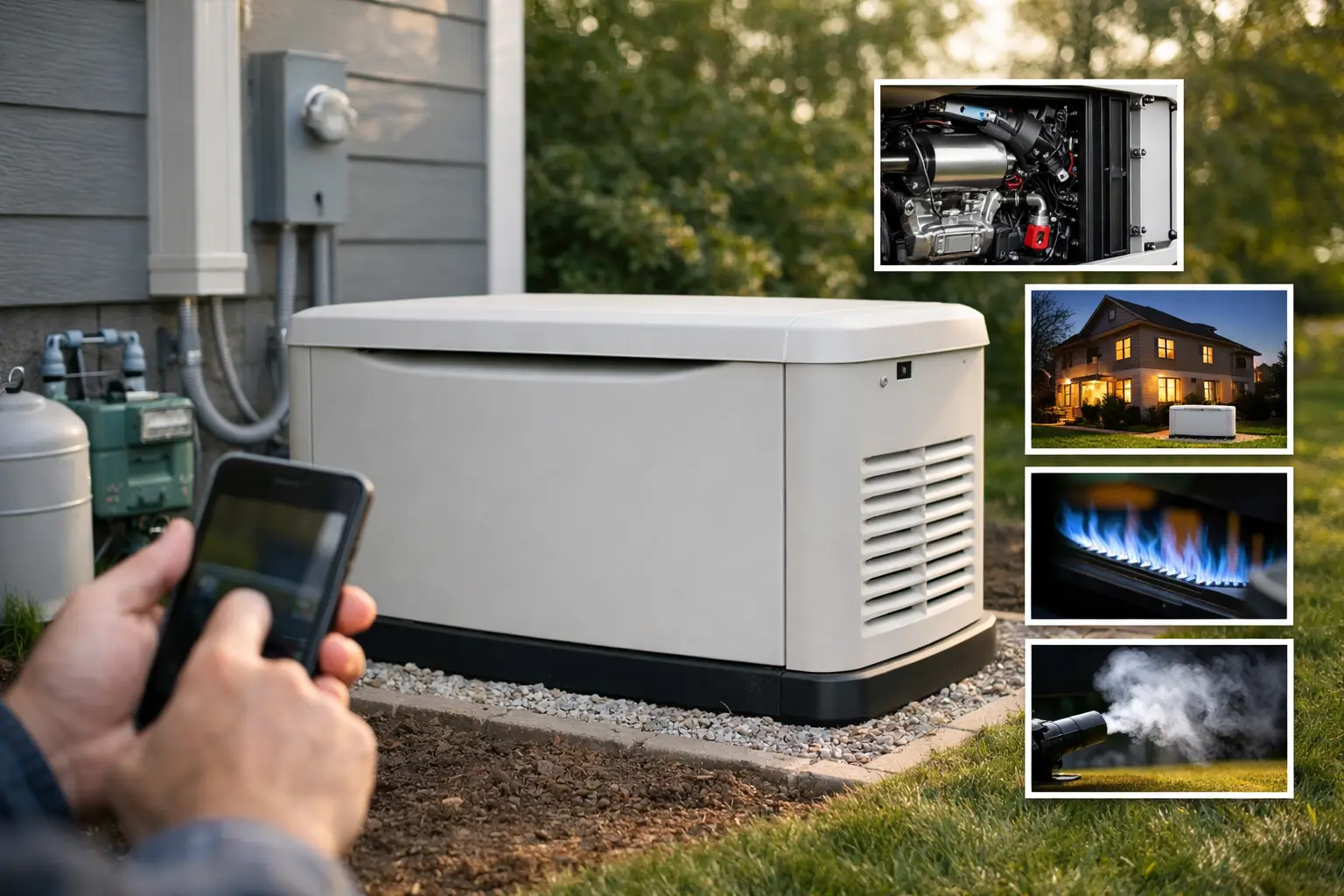
Fuel matters more than many buyers expect. Natural gas offers convenience because it is fed continuously by a utility line, which makes it attractive for long outages. Propane can be an excellent option where natural gas is unavailable, especially in rural areas, but it depends on tank sizing and refill planning.
So one of the best standby generator features to evaluate is not just the generator itself, but how well it integrates with a dependable fuel source. A unit with strong performance specs will not help much if fuel delivery becomes the weak point.
This is also where local conditions matter. In some areas, natural gas pressure can drop during widespread events. In others, propane is the more practical choice because of site access or utility limitations. The right answer depends on the property, the outage risks, and how much runtime you need to plan for.
4. Weather-resistant enclosure and quiet operation
Standby generators live outdoors year-round, so enclosure quality is not cosmetic. It affects longevity, corrosion resistance, noise control, and how well the unit stands up to snow, rain, debris, and temperature swings.
A durable, weather-resistant enclosure helps protect internal components and reduce maintenance headaches over time. Sound attenuation matters too. A quieter generator is easier to live with in a residential neighborhood and less disruptive at a commercial property where customer experience or tenant comfort matters.
That said, quieter is not the only goal. A very quiet unit installed in the wrong place can still create service access problems or fail clearance requirements. Good performance starts with the generator itself, but it also depends on correct placement and code-compliant installation.
5. Strong controller and clear system alerts
Modern standby generators should do more than start and stop. They should tell you what is happening.
A good controller provides clear status information, exercise scheduling, fault alerts, and service reminders. This is one of the best standby generator features because it turns the system from a black box into equipment you can actually monitor and maintain. If there is a battery issue, low voltage condition, or failed exercise cycle, you want to know before the next outage exposes it.
For business owners and homeowners who travel frequently, visibility matters. You do not want to find out your generator has been sitting in alarm mode only after the neighborhood loses power.
6. Remote monitoring capability
Remote monitoring has become one of the most useful standby generator features because it supports faster response and better long-term reliability. Instead of relying only on occasional visual checks, monitoring can show operating status, maintenance alerts, fault conditions, and exercise history.
That is especially valuable for second homes, busy households, and commercial sites where no one is standing next to the generator on a regular basis. It also supports a better service relationship. When technicians can see trends or alerts early, small problems are less likely to turn into outage-day failures.
This is one of those features that may seem optional until you need it. If continuous protection is the reason you are investing in standby power, remote visibility is worth serious consideration.
7. Serviceability and maintenance access
Some generator decisions look smart on installation day and become frustrating three years later. Service access is a good example.
One of the best standby generator features is straightforward maintenance access for oil changes, inspections, battery replacement, and repairs. If the layout is cramped, the unit is boxed in, or replacement parts are hard to source, routine service becomes slower and more expensive. That affects reliability over the long term.
This is where professional planning matters as much as product selection. A generator should not just fit on the property. It should be positioned so it can be maintained properly for years. Buyers often focus on the machine and overlook the service side, but long-term ownership is where the quality of the overall solution shows up.
8. Regular self-testing and exercise cycles
Standby generators need to prove they are ready before an outage happens. Built-in exercise cycles help by running the unit on a scheduled basis to keep internal components lubricated, check starting performance, and identify issues early.
This is one of the best standby generator features because backup systems fail most often when they sit ignored. Regular exercise helps reduce that risk. It also creates a maintenance record that makes troubleshooting easier if a problem appears.
Still, self-testing is not the same as professional maintenance. An exercise cycle can tell you a lot, but it does not replace inspection of fuel systems, electrical connections, transfer equipment, battery health, and software settings. The feature is valuable, but it works best when paired with ongoing service.
9. Warranty support backed by real service
A long warranty sounds reassuring, but warranty language and service execution are not always the same thing. One of the most important standby generator features is practical support after installation.
That includes manufacturer-backed coverage, qualified service technicians, and a company that takes responsibility for the system over time. If an installer disappears after commissioning, the written warranty does not solve the real problem. You still need someone who can diagnose faults, coordinate repairs, and keep the system ready.
This is where many buyers separate low-price offers from real value. A standby generator is not a one-day purchase. It is part of your protection plan for years to come. Companies like GenTek Power build trust by managing the details from sizing and permitting through maintenance and support, because reliability depends on more than the equipment alone.
Choosing features based on your actual risk
Not every property needs the same setup. A family with a finished basement and sump pump concerns may prioritize fast transfer, load management, and remote alerts. A remote worker may care most about HVAC, internet equipment, and stable power for office electronics. A business owner may need continuity for POS systems, refrigeration, security, or production equipment.
That is why the best standby generator features should be chosen based on what an outage would actually cost you. Comfort, safety, food loss, frozen pipes, lost work time, or business interruption all change the answer. The right system is the one that protects the loads that matter most without cutting corners on installation quality or long-term support.
If you are comparing options, look past the brochure highlights and ask a simpler question: when the grid fails, will this system start, carry the right load, and be backed by people who know how to keep it ready? That is the feature set that matters when the lights go out.