A standby generator project usually starts long before the equipment arrives. If you are wondering how to prepare for generator installation, the goal is simple: remove surprises. The right preparation helps your installer work efficiently, keeps the project on schedule, and reduces the risk of delays tied to permits, fuel connections, electrical upgrades, or poor site access.
For homeowners, that means less disruption and more confidence that your heat, cooling, refrigeration, internet, and essential devices will stay online when the grid fails. For business owners, it means protecting continuity instead of scrambling through an outage. Good preparation is not about handling technical work yourself. It is about making informed decisions early and choosing a contractor who manages the details correctly.
What to do before generator installation begins
The first step is getting clear on what the generator needs to power. Many people start with a rough idea – keep the lights on, run the fridge, protect the furnace – but that is not enough to size a system properly. A whole-home standby generator is different from a partial backup setup, and the cost, fuel demand, and electrical design will reflect that.
If you are a homeowner, think in terms of real daily use. HVAC, sump pumps, well pumps, kitchen appliances, home offices, EV chargers, and medical equipment all matter. If you are a business owner, identify the loads that must stay energized for operations, safety, refrigeration, communications, security, or compliance. This is where a professional load assessment matters. Oversizing can waste money. Undersizing can leave critical equipment offline when you need it most.
You should also decide what level of automation you expect. Most standby systems are designed to start automatically and transfer power within seconds of an outage. That requires the right transfer switch setup, proper electrical integration, and planning around your service panel. If your existing electrical service is older or already near capacity, installation may involve upgrades. That is not unusual, but it should be identified before the crew is on site.
Site planning matters more than most people expect
A generator cannot just be placed wherever there is open space. Local code requirements, manufacturer clearance rules, property lines, windows, doors, vents, and utility equipment all affect placement. That is one of the biggest reasons people run into delays after they have already committed to a project.
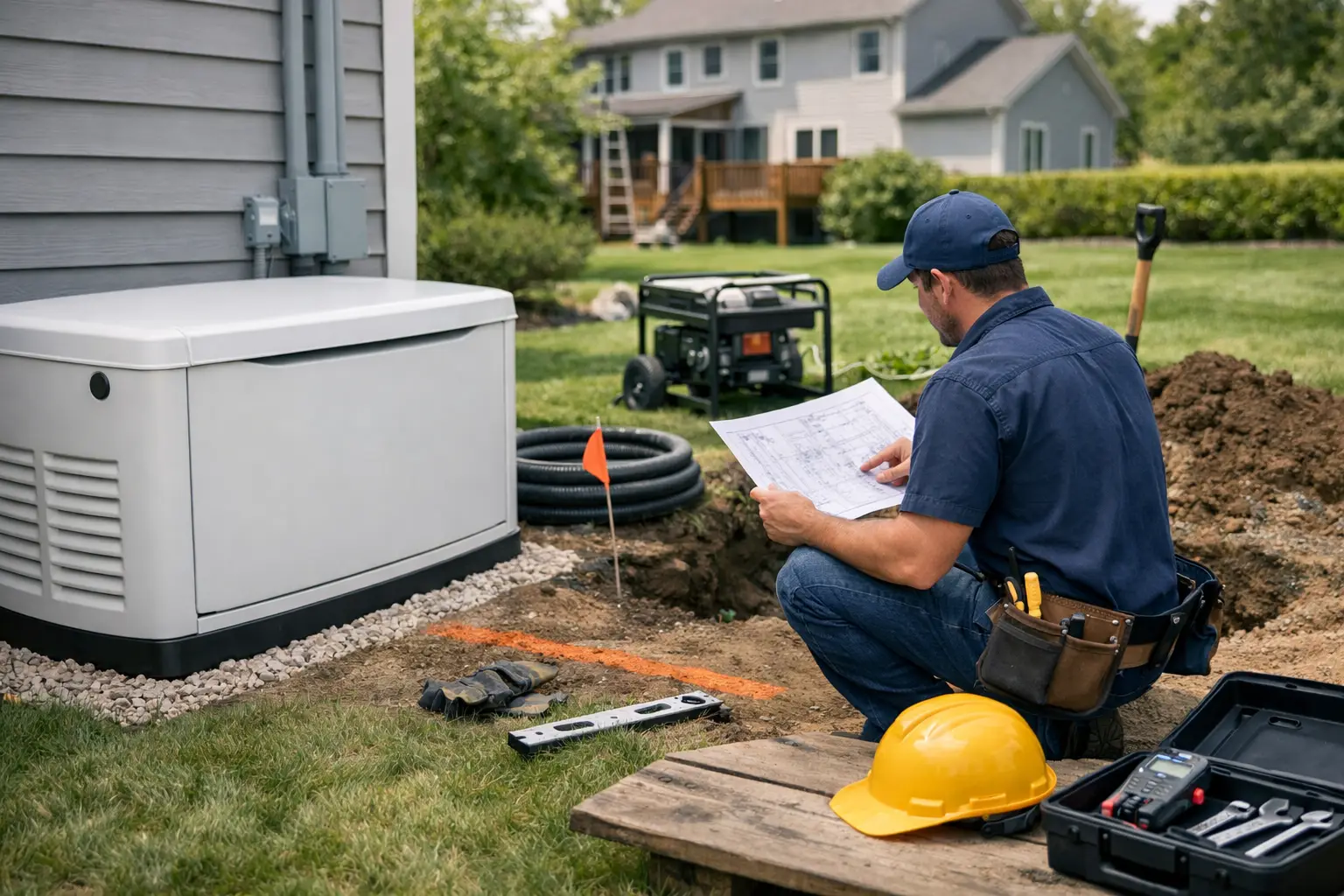
When preparing the site, start by making access easy. The installation crew may need a path for equipment, tools, trenching, or a small machine depending on the property. If the proposed location is behind a fence, through a gate, or across soft ground, that should be discussed early. Trim back vegetation, move outdoor furniture or storage items, and identify any obstacles such as irrigation lines, pool equipment, or decorative stonework that could complicate access.
You should also think about noise and appearance, but within reason. Standby generators are much quieter than many people assume, though they are not silent. Placement can sometimes balance code compliance, service access, and neighborhood considerations. The best location is not always the closest one, and it is not always the spot with the least visual impact. It depends on the property layout, fuel source, and electrical path.
Preparing the pad and surrounding area
Some installations require a concrete or composite pad, while others involve site grading or a stable base prepared by the contractor. Homeowners should not guess at this step or pour something in advance unless the installer has specified exact dimensions and requirements. An incorrectly placed pad can create expensive rework.
What you can do is make sure the area is clear and accessible. Remove movable items, keep pets secured, and let the installer know about drainage problems, frequent standing water, or snow accumulation in the proposed area. Long-term reliability starts with a location that stays serviceable in bad weather, not just one that works on a sunny install day.
Utility and fuel coordination should happen early
One of the most overlooked parts of how to prepare for generator installation is fuel planning. A standby generator typically runs on natural gas or propane, and each option affects installation scope, runtime expectations, and coordination with utility or fuel providers.
If you already have natural gas service, your gas meter and supply line may still need review. Not every existing gas service has enough capacity to support a generator along with your furnace, water heater, stove, or other appliances. If capacity is tight, upgrades may be needed. That is not a reason to avoid the project. It is simply a reason to involve the right professionals before installation day.
For propane systems, tank size and placement become part of the conversation. You need enough storage to support your outage goals, especially if you live in an area with longer utility interruptions or winter access challenges. A smaller tank may cost less upfront, but that decision can be frustrating if refill timing becomes a problem during storm season.
The same principle applies in commercial settings. If power continuity is mission-critical, fuel planning should reflect realistic outage scenarios, not best-case assumptions.
Permits, approvals, and inspections are part of the job
A professional generator installation is not just an equipment drop. It usually includes permits, inspections, and in some cases utility coordination or HOA review. That process varies by jurisdiction, which is why experienced installers matter.
As a customer, your role is to respond quickly when signatures, property information, or access approvals are needed. Delays often happen when paperwork sits unanswered or when site restrictions are disclosed too late. If your property has easements, shared access, gate codes, or neighborhood requirements, bring them up early.
This is also the stage where clear quoting matters. You want to understand what is included, what could change if site conditions differ, and who is responsible for each part of the project. Low-price proposals can look attractive until they leave out trenching, electrical upgrades, gas work, startup, testing, or post-install support. Preparation is not just physical. It is making sure the scope is complete before work begins.
How to prepare for generator installation day
As installation day approaches, a few practical steps make the process smoother. First, make sure the crew has access to the work area, electrical panels, and fuel connection points. If someone needs to be on site for entry or decisions, confirm that in advance. For businesses, notify staff if parking, walkways, or parts of the building will be temporarily affected.
Second, expect at least some disruption. Power may need to be shut off for portions of the electrical work. There may be noise from drilling, trenching, or equipment handling. A good installer will explain the sequence so you know what to expect and when service interruptions may occur.
Third, keep children and pets away from the work zone. That sounds obvious, but installation areas can change quickly as tools, wiring, and fuel work are underway. Safety is easier when the crew can work without preventable interruptions.
Finally, ask what happens after the unit is set. A proper installation should include startup, testing under load, transfer switch verification, and a walkthrough of basic operation. You should know how the system behaves during an outage, what maintenance is required, and who to call if there is a problem later. That after-install support is part of the purchase, not an extra detail to figure out on your own.
Choose a contractor who owns the full process
If there is one thing that makes preparation easier, it is working with a company that manages the project from consultation through commissioning. Generator installation crosses multiple trades – electrical, fuel, code compliance, and equipment startup – and weak coordination between them creates risk.
That is why many customers are less worried about the generator itself than they are about whether the installer will do the job right. Fair concern. A standby system is supposed to protect you during high-stress moments, not become another problem when the weather turns.
A full-service contractor will help define your load requirements, identify site constraints, handle permit steps, coordinate utility issues, install to code, test the system properly, and stay available for maintenance and support. That approach saves time, but more importantly, it protects reliability. GenTek Power is built around that model because backup power only works when every part of the process is handled correctly.
The best preparation is not trying to become your own project manager. It is asking the right questions early, clearing the path for good work, and choosing an installer who treats your backup power system like long-term protection, not a one-day sale. When the lights go out, that difference is easy to see.