When a generator starts on a quiet inspection day, that is not the same thing as proving it can carry your house, office, or critical equipment for hours when the grid is down. Generator load bank testing is the step that separates a machine that simply runs from one that is ready to perform when the pressure is real.
For homeowners and business owners, that difference matters more than most people realize. A standby generator can look fine during a routine startup and still have hidden problems that only show up under sustained electrical demand. If those issues stay buried until the next storm or outage, the cost is measured in more than inconvenience. It can mean lost heat, spoiled food, interrupted work, tenant complaints, or downtime that damages revenue and trust.
What generator load bank testing actually does
Generator load bank testing places an artificial electrical load on the generator so technicians can confirm how it performs under controlled, measurable conditions. Instead of waiting for your building to call for power during an outage, a load bank creates that demand on purpose.
This matters because standby systems often spend most of their life waiting. They may exercise regularly and start on command, but light use does not always tell the full story. Engines, alternators, cooling systems, and controls can behave very differently once the generator is asked to work at a meaningful percentage of its rated capacity.
A proper test helps verify that voltage remains stable, frequency stays within range, temperatures are managed correctly, and the generator can sustain load without alarms, shutdowns, or performance drift. It also gives technicians a chance to observe issues that are easy to miss during a no-load or low-load exercise.
Why no-load testing is not enough
Many owners assume a successful weekly or monthly exercise means the system is ready. That assumption causes problems.
A generator can start, idle, and even transfer power lightly without proving much about its real condition. Under low load, some diesel units are especially vulnerable to wet stacking, which happens when unburned fuel and carbon build up in the exhaust system because the engine is not getting hot enough to burn cleanly. Over time, that can reduce efficiency and create reliability concerns.
Even beyond diesel-specific issues, low-load operation may not reveal weak cooling performance, unstable voltage regulation, fuel delivery problems, or control faults that appear only after the generator has been working hard for an extended period. In other words, a light exercise confirms that the system wakes up. It does not always confirm that it can carry the load you are counting on.
When load bank testing makes the most sense
Not every generator needs the same testing schedule, and that is where experience matters. The right answer depends on the generator type, the building load profile, manufacturer guidance, maintenance history, and how critical the backup system is.
For some properties, load bank testing is especially valuable after installation or major repairs, before storm season, after long periods of light operation, or anytime there is reason to question performance. It is also common in facilities where reliability is not optional, such as medical offices, multifamily buildings, data-dependent businesses, and homes that rely on well pumps, HVAC, refrigeration, home offices, or medical devices.
If a generator rarely sees enough natural building load during exercise, periodic testing under an artificial load can provide the operating conditions needed to evaluate performance properly. That is not about overtesting. It is about making sure the machine is actually being proven, not just started.
How generator load bank testing is performed
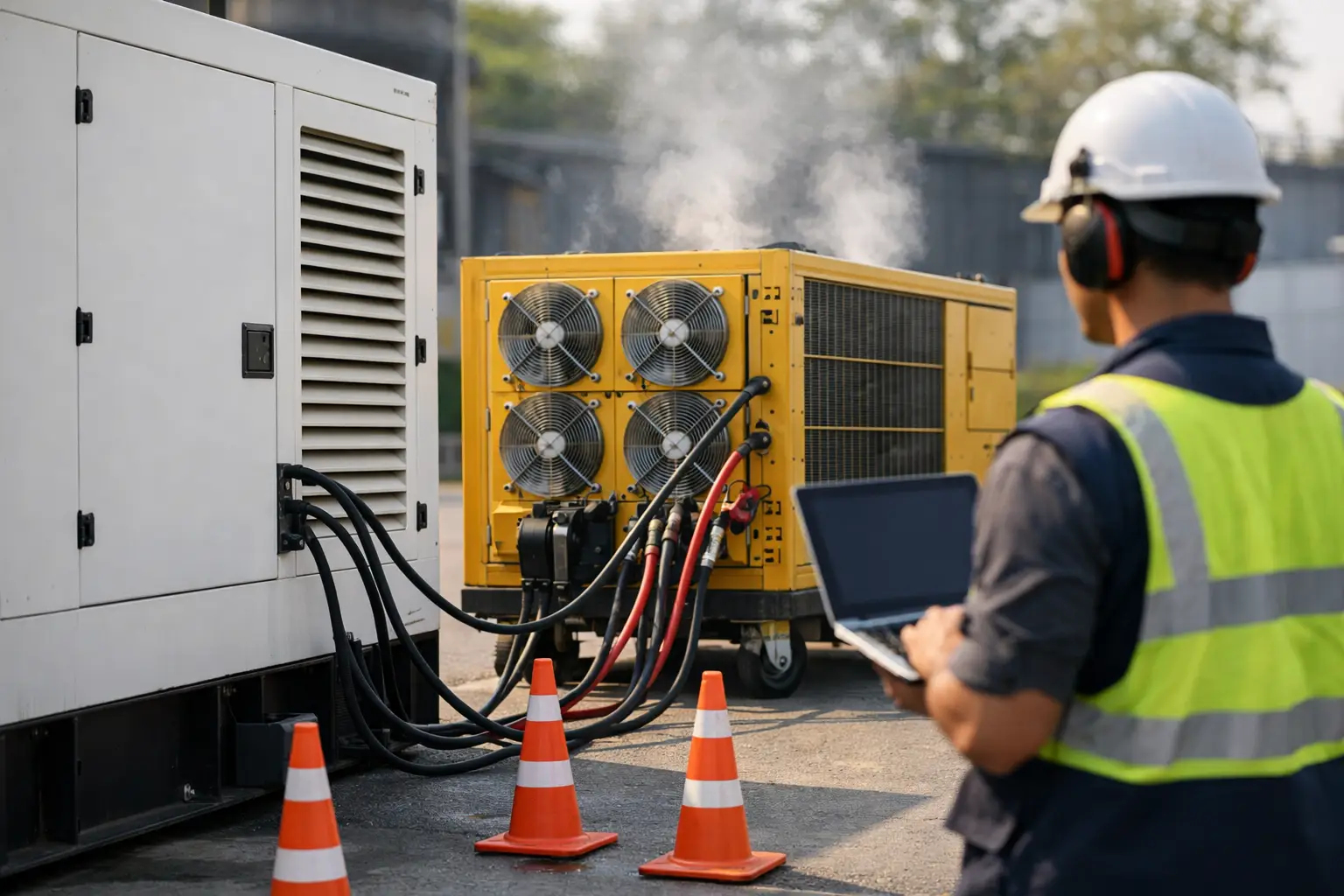
The process should be planned, controlled, and documented. A technician connects the generator to a load bank sized appropriately for the unit and then applies load in stages. Those stages may increase gradually to evaluate how the system responds as demand rises.
During the test, technicians monitor core performance readings such as voltage, amperage, frequency, oil pressure, coolant temperature, exhaust behavior, and overall runtime stability. They are looking for more than a pass or fail result. They are looking for trends, warning signs, and equipment behavior that can point to developing problems.
A thorough test also considers the transfer switch and the broader standby system, not just the engine itself. After all, backup power reliability depends on the full chain working together. A healthy generator does not help much if switching controls, sensors, or connected components are not performing correctly.
For the property owner, the value is simple. You get a clearer picture of whether your standby system can carry the job it was installed to do.
What problems load bank testing can uncover
One reason this testing matters is that it often reveals issues before they become emergency calls. Depending on the unit and site conditions, a load bank test may expose fuel system restrictions, weak batteries, cooling deficiencies, governor instability, voltage regulation problems, sensor faults, or carbon buildup linked to prolonged light loading.
Sometimes the problem is not dramatic. The generator may still run, but not cleanly or consistently enough to trust during a long outage. That is exactly the kind of issue owners want to catch early, when it can be corrected on a planned schedule instead of during a weather event.
There is also a sizing conversation that sometimes comes out of testing. In some cases, a generator may be technically operational but poorly matched to the actual demand profile of the property. Oversized units that spend too much time underloaded can create one set of problems, while undersized units may struggle when multiple systems call for power at once. Testing can help support smarter decisions about how the system is managed over time.
Residential and commercial needs are different
At a home, the goal is usually practical continuity. You want the essentials, and often the whole house, to stay comfortable, safe, and functional. That includes heating or cooling, refrigeration, lighting, internet, sump pumps, security systems, and medical equipment. Load bank testing helps confirm that the generator behind those expectations can actually perform when the outage lasts longer than a few minutes.
For commercial properties, the stakes can climb quickly. Lost refrigeration, interrupted operations, server downtime, tenant disruption, or failed life-safety support can create expensive consequences. In those settings, testing is not just about convenience. It is part of protecting operations, customers, staff, and business continuity.
The principle is the same in both cases. You do not want to discover a generator weakness during the very event it was purchased to handle.
Why professional oversight matters
Generator systems are not a place for guesswork. Load bank testing should be handled by qualified technicians who understand the generator, the electrical system, code requirements, and manufacturer expectations.
A rushed or poorly planned test can miss important warning signs or create unnecessary risk. A professional approach includes proper equipment, safe procedures, accurate readings, and a clear explanation of what the results actually mean. It should also lead to action if the test reveals maintenance needs, performance concerns, or changes worth making.
That long-term follow-through is where many owners get frustrated with low-cost installers and one-time contractors. They may install the unit, check a box, and disappear. But backup power is not a one-day purchase. It is an ongoing reliability system. If testing reveals a concern, you need a service partner who can diagnose it, fix it, document it, and stand behind the work.
That is why companies like GenTek Power build their service model around the full lifecycle of the generator, not just the sale. Testing, maintenance, repair, and support all work together to reduce risk when the weather turns and the grid does not hold.
The real value of generator load bank testing
The biggest benefit of generator load bank testing is confidence you can justify. Not blind confidence because the engine started once. Not false confidence because a status light looked normal. Real confidence based on measured performance under meaningful demand.
For some properties, testing should be part of a larger preventive maintenance plan. For others, it may be scheduled around usage patterns, age, or operational concerns. Either way, the goal stays the same: prove the system before the outage proves it for you.
If your generator protects comfort at home or continuity at work, it deserves more than a quick startup check. The right test, at the right time, can spare you a very expensive surprise later. And when backup power is part of how you protect your family, your property, or your business, that kind of certainty is worth planning for.