When the power goes out at 2 a.m., the question is not which backup option sounds cleaner on paper. The question is whether your heat stays on, your sump pump keeps running, your food stays cold, and your home or business can keep functioning until utility power returns. That is why the whole house generator vs battery backup decision deserves a clear, practical look.
For some properties, a battery system is a smart fit. For others, it leaves too many gaps once an outage stretches beyond a few hours or heavy electrical loads kick in. If you are trying to protect a full home, critical equipment, or business operations, the right answer depends on how much power you need, how long you need it, and how much risk you are willing to accept during a real outage.
Whole house generator vs battery backup: what is the difference?
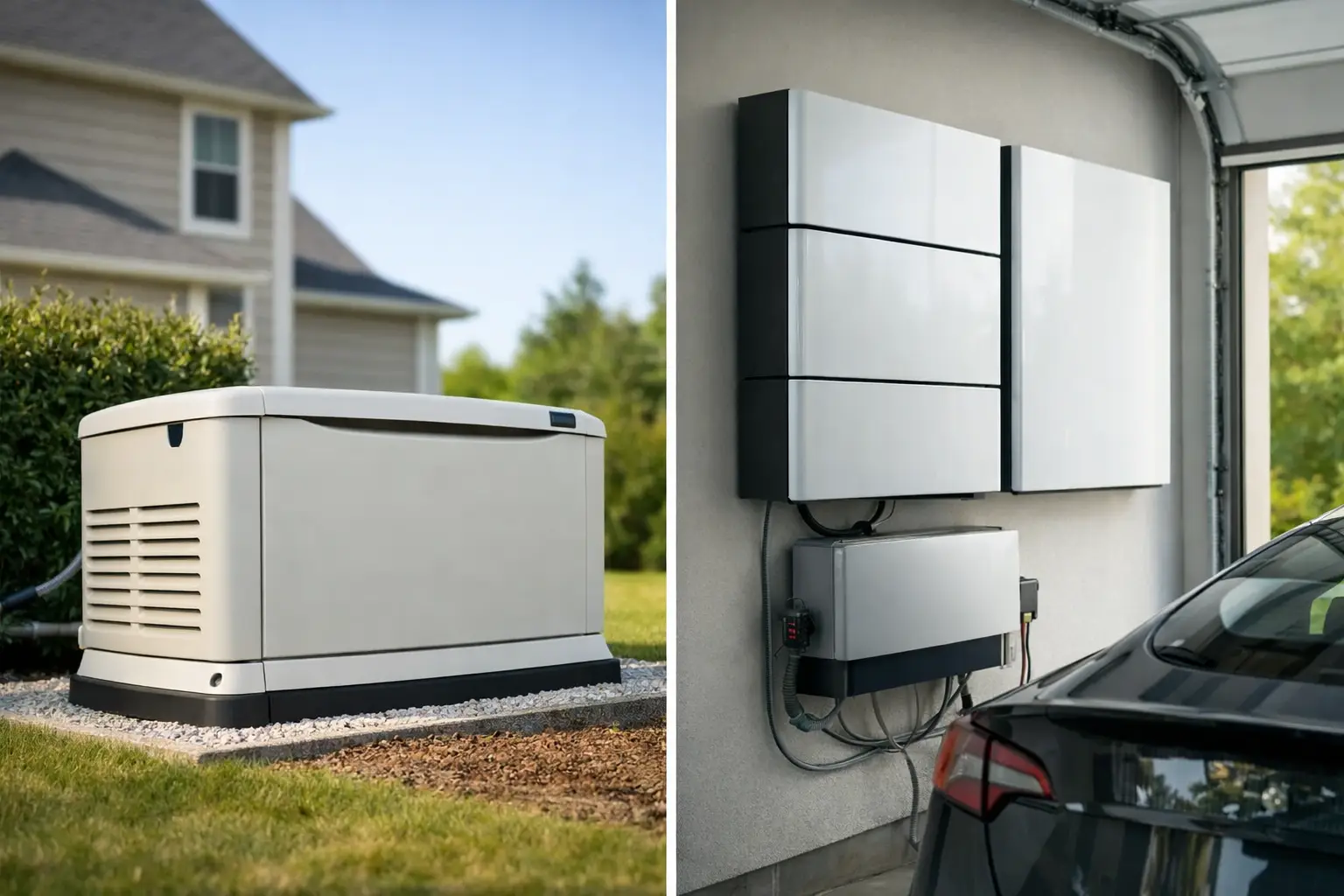
A whole house generator is a permanently installed standby system that automatically starts when utility power fails. It is typically connected to natural gas or propane and designed to power either the entire property or a carefully selected group of critical circuits. Once installed properly, it can run for as long as fuel is available.
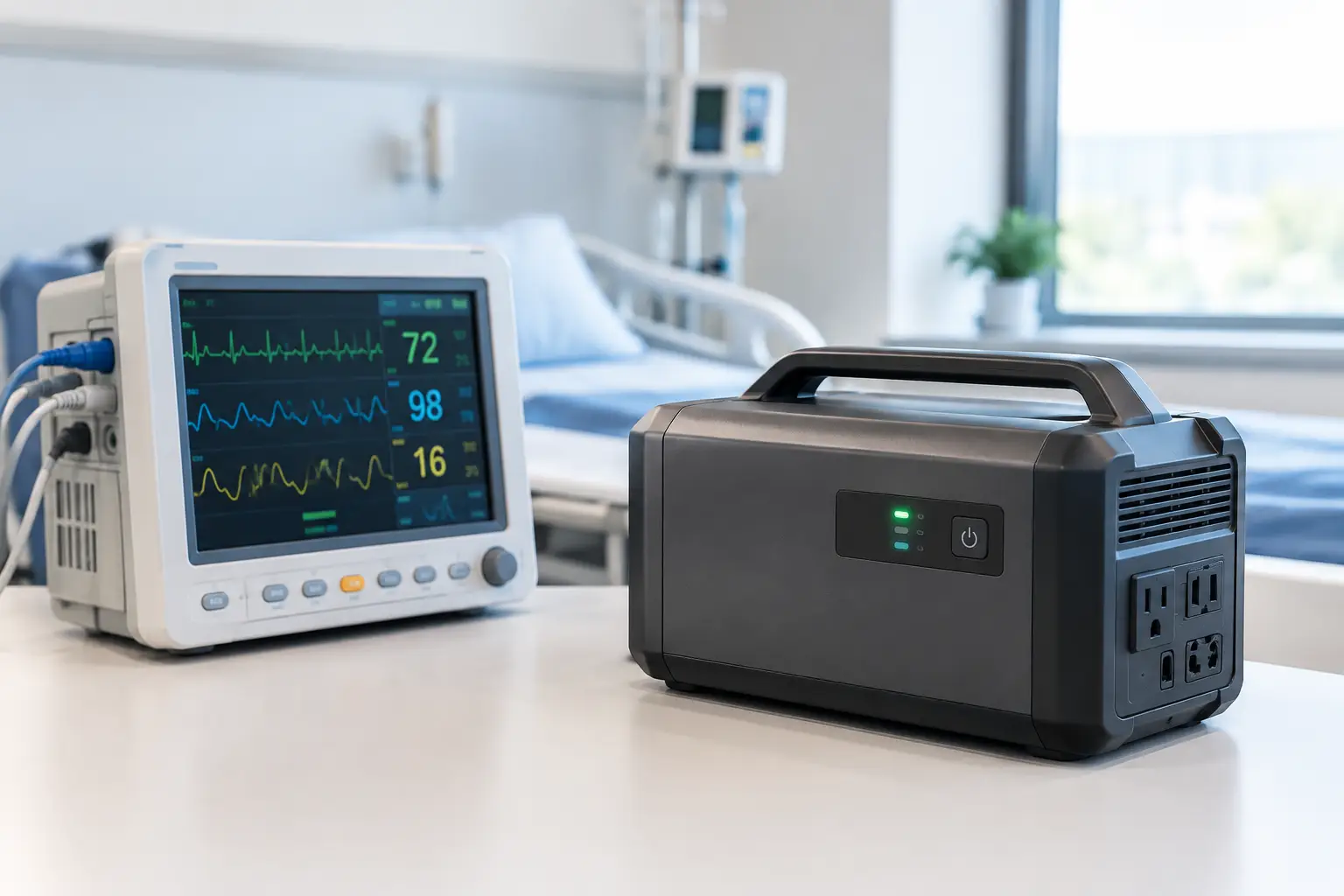
A battery backup system stores electricity for later use. During an outage, it supplies power from that stored energy through an inverter. Some battery systems are paired with solar, while others simply charge from the grid. They are quiet and can switch over quickly, but they have a fixed amount of stored power. Once the battery is depleted, the power is gone unless the grid returns or solar production can recharge it fast enough.
That difference matters more than any brochure comparison. A generator creates power on demand. A battery only delivers what it has already stored.
Where battery backup works well
Battery backup can be a strong option for smaller, more selective backup needs. If your main goal is to keep the internet up, run a few lights, charge devices, and support a refrigerator for a limited period, a properly sized battery system may do the job well.
It also appeals to homeowners who want quiet operation and no engine maintenance. There is no weekly exercise cycle, no fuel source to coordinate, and no generator noise outside the home. For short outages, that simplicity can be attractive.
Battery systems also make sense when the electrical loads are modest and carefully managed. A home that does not need central air conditioning, electric heat, a well pump, or other large loads during an outage has a much easier path with battery storage.
The key phrase is carefully managed. Battery backup usually performs best when expectations are realistic and the protected load is limited.
Where whole house generators pull ahead
If your priority is dependable, whole-property protection, standby generators usually have the advantage. They are built for longer outages, higher loads, and automatic operation under real-world conditions.
That shows up quickly in runtime. A generator connected to natural gas can often continue operating through multi-day outages without the homeowner doing much of anything. A propane system can also provide extended runtime when sized correctly. By contrast, battery runtime is tied directly to how much capacity you purchased and how aggressively power is being used.
It also shows up in load handling. Air conditioning, electric water heaters, deep well pumps, medical devices, refrigeration, home offices, and commercial equipment can add up fast. A whole house generator is generally better suited to those heavier demands, especially when multiple systems need to run at once.
For families worried about frozen pipes, flooded basements, food spoilage, remote work disruptions, or a house full of smart devices that all depend on power, the margin for error matters. A standby generator gives you more of that margin.
The biggest factor is not price. It is load.
Many backup power decisions go sideways because people start with sticker price instead of power requirements. That is understandable, but it leads to systems that look good until the outage actually happens.
If you only need to support a few low-draw essentials for a short time, battery backup may be enough. If you want your home to behave normally during an outage, including heating or cooling, kitchen use, laundry, pumps, and business-critical devices, the conversation changes fast.
This is where professional sizing matters. The right system is not based on guesswork or a rough square-foot estimate. It is based on an actual review of electrical loads, startup demands, fuel availability, transfer requirements, and how the property needs to function when the grid is down.
A low-cost installation that ignores those details is not really a bargain. It just shifts the risk to the day you need the system most.
Whole house generator vs battery backup on outage length
Short outages can make battery backup look very appealing. If your utility interruptions are usually brief, and your protected loads are limited, a battery may cover them comfortably.
Longer outages are where the trade-offs become harder to ignore. A battery can only run until stored energy runs out. If the weather is bad, solar input may be weak. If the outage continues overnight, recharge options may be limited. If your household starts using more power than planned, runtime drops quickly.
A standby generator is usually the more dependable answer for extended outages because it is not working from a fixed energy reserve. It continues producing power as long as it has fuel and the system has been installed and maintained correctly.
For customers in storm-prone areas or properties where outage duration is unpredictable, that distinction is often the deciding factor.
What about noise, maintenance, and daily ownership?
Battery systems are quieter. There is no debate there. For some buyers, especially those focused on minimal noise and simpler day-to-day ownership, that is a meaningful advantage.
Generators require maintenance because they are engines. Oil changes, inspections, testing, and long-term service support are part of responsible ownership. That is not a drawback when handled properly, but it is a real consideration.
The flip side is reliability under demand. A professionally installed standby generator that is maintained by qualified technicians is designed to be ready when conditions are worst. That service side matters. Backup power is not just about what gets installed. It is about who supports it after the install, who verifies performance, and who answers when something needs attention.
That is one reason many property owners prefer a turnkey standby solution. They are not just buying equipment. They are buying confidence that the system has been sized correctly, permitted correctly, installed to code, tested properly, and backed by ongoing service.
Cost is more complicated than generator vs battery
There is no universal winner on cost because system design drives the number. A smaller battery setup may cost less than a whole house generator. A larger battery system capable of supporting significant home loads for meaningful runtime can become expensive quickly.
Generators also vary widely depending on size, fuel source, electrical work, site conditions, and whether the goal is whole-home or selective backup. Permitting, gas work, transfer equipment, and installation quality all matter.
The better question is not which option is cheaper. It is which option protects the things you cannot afford to lose.
If a short outage is mostly an inconvenience, battery backup may be a practical answer. If losing HVAC, refrigeration, water, connectivity, or business continuity creates real financial or safety consequences, a standby generator often delivers better value because it protects more and lasts longer when conditions get serious.
Which system is right for your property?
If you want quiet backup for a few essentials and your outage expectations are modest, battery backup can be a solid fit. If you want your home or business to stay operational through longer outages with fewer compromises, a whole house generator is usually the stronger choice.
There is also an in-between reality. Some owners do not need every circuit backed up, but they need far more than a battery can comfortably support for long. In those cases, a properly sized standby generator protecting critical systems may be the best balance of performance and cost.
The right answer comes from planning, not assumptions. It comes from understanding your loads, your outage history, your fuel options, and your tolerance for disruption. That is where a company like GenTek Power brings real value – by handling the sizing, permitting, installation, testing, and long-term support so the system performs the way it should when the grid does not.
If you are weighing backup power options, think past the sales pitch and picture your next real outage. The best system is the one that keeps your property safe, functional, and predictable when everything outside is not.