When the power goes out at 2 a.m. and the house is dark, the HVAC is off, and the sump pump is one storm away from trouble, generator specs stop feeling abstract. The question of air cooled vs liquid cooled generators becomes very practical, very fast. For homeowners and business owners investing in standby power, the right choice is less about what sounds more advanced and more about what will reliably carry your real load, in your real conditions, for years.
This is where many buyers get steered wrong. They get sold on a price point, a brand name, or a single feature, without a clear conversation about how the cooling system affects performance, longevity, maintenance, noise, and overall fit. Cooling design is not a minor detail. It is tied directly to how the generator handles heat, how hard it can work, and what kind of installation makes sense for the property.
Air cooled vs liquid cooled generators: the core difference
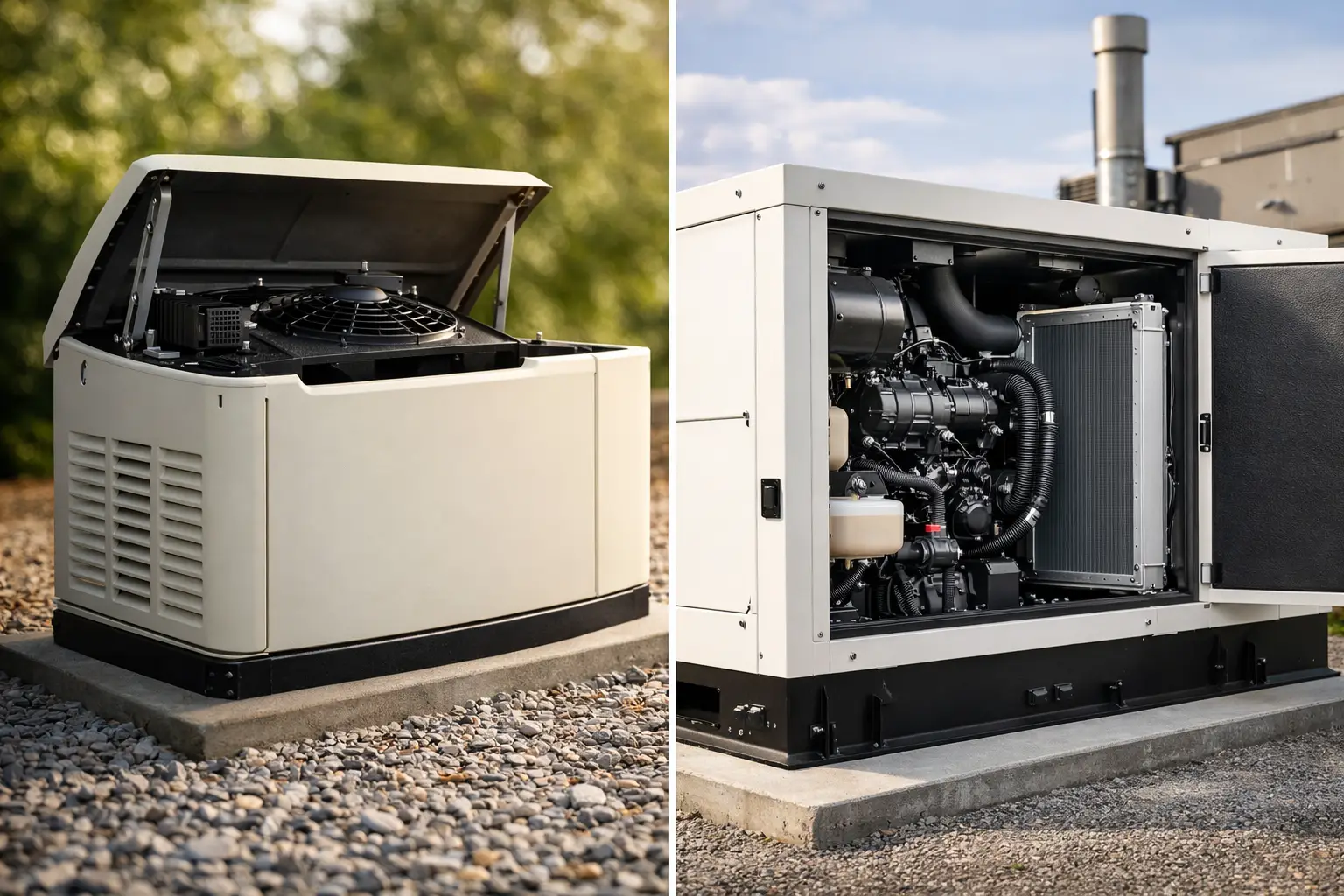
At the simplest level, air-cooled generators use fans and airflow over the engine to remove heat. Liquid-cooled generators circulate coolant through the engine and radiator, much like a car or truck engine. Both systems can provide dependable backup power, but they are built for different ranges of output, usage patterns, and expectations.
Air-cooled models are common in residential standby applications. They are generally smaller, less expensive, and well suited to homes that need backup for essential circuits or even many whole-home applications, depending on the electrical demand. Liquid-cooled units are typically larger and more capable. They are often selected for bigger homes, high-load properties, and commercial settings where long run times and heavier electrical demands are part of the job.
That does not mean liquid-cooled is always better. It means the stakes are higher if the generator is undersized, overworked, or mismatched to the property.
Why cooling type matters more than most buyers expect
Standby generators live or die by heat management. Heat affects engine wear, output stability, and how well the system performs during extended outages. If your area sees multi-day outages, summer heat waves, or winter storms that create repeated start-stop cycles, the cooling system plays a major role in how comfortably the generator handles that stress.
An air-cooled engine is simpler by design. That simplicity can be a real advantage when the application is appropriate. Fewer components can mean a lower upfront cost and a more compact footprint. For many homes, especially those with moderate electrical needs, that is enough.
A liquid-cooled engine is built for a different class of work. It manages heat more efficiently over long periods and under heavier loads. That matters when you are backing up large HVAC systems, multiple panels, extensive lighting, refrigeration, home automation, a pool system, or business-critical equipment. It also matters if power interruptions tend to last longer than a few hours.
Where air-cooled generators make sense
Air-cooled standby generators are often the right fit for standard residential backup needs. If the goal is to keep the refrigerator running, protect the furnace or air conditioner, maintain lighting, internet, garage doors, and a reasonable share of household circuits, an air-cooled unit may be the most practical solution.
They are especially attractive when budget matters, space is tight, and the home does not have unusually high startup loads or specialty equipment. Installation can also be more straightforward in some cases because the units are smaller and lighter.
That said, air-cooled generators do have limits. They are generally offered in lower output ranges than liquid-cooled units, and while many are marketed as whole-home generators, that depends entirely on the home. A modest house and a large custom home do not mean the same thing electrically. If a system is expected to carry multiple air conditioners, electric heat, large appliances, and every convenience load all at once, air-cooled may not be the right class of equipment.
Where liquid-cooled generators earn their keep
Air cooled vs liquid cooled generators for larger loads
Liquid-cooled generators are designed for higher capacity and heavier duty operation. They are often the better choice for large homes, homes with complex mechanical systems, and businesses that cannot tolerate extended downtime. If you need stronger motor starting capability, longer runtime resilience, and more headroom for expansion, liquid-cooled equipment deserves serious consideration.
These systems also tend to appeal to customers who view backup power as long-term infrastructure, not just emergency convenience. If the property includes sensitive electronics, server equipment, medical needs, multiple HVAC zones, or refrigerated inventory, the margin for error is small. In those cases, paying more for a generator that runs cooler under load and is built for sustained operation can be the smarter investment.
For commercial properties, liquid-cooled is often the natural fit. Offices, retail locations, mixed-use buildings, and service operations usually have load profiles and continuity requirements that push beyond what most air-cooled units are intended to do comfortably.
Noise, maintenance, and lifespan
Many buyers assume the choice comes down to power alone, but day-to-day ownership matters too.
Air-cooled generators can be noisier in some applications because they rely on higher airflow and often run in a lighter-duty platform. That does not mean every air-cooled unit is loud or every liquid-cooled unit is quiet. Enclosure design, load level, placement, and manufacturer all affect sound. Still, liquid-cooled units often have a more refined operating character, especially in larger premium systems.
Maintenance is a little more nuanced. Air-cooled systems are mechanically simpler, which can be appealing. Liquid-cooled systems add coolant, radiator-related components, and more complexity. But complexity alone does not determine service burden. The bigger issue is whether the generator is being asked to do work it was designed for. A properly sized liquid-cooled generator in a demanding application may age better than an air-cooled system pushed near its limit for years.
Lifespan follows the same pattern. In lighter residential use, an air-cooled generator can provide dependable service for a long time if it is installed correctly and maintained consistently. In heavier-use scenarios, liquid-cooled units generally have the advantage because they are built to manage heat and continuous duty more effectively.
Cost is not just the purchase price
Air-cooled generators usually win on upfront cost. The equipment itself is less expensive, and installation may be less involved depending on the project. For many homeowners, that makes air-cooled backup the obvious starting point.
But the better question is total value over time. If a lower-cost generator cannot support the load you actually need, or if it will spend years working at the edge of its comfort zone, those savings can disappear quickly. The same applies if future additions like electric vehicle charging, home office expansion, or HVAC upgrades increase the home’s demand.
Liquid-cooled systems cost more to buy and install. They are larger, heavier, and often require a more substantial site and electrical plan. Still, that higher investment can be justified when reliability expectations are higher, outage risks are greater, or the property simply demands more power.
The most common mistake: choosing by kilowatts alone
The wrong generator is often the result of a rushed sizing conversation. Buyers are told a certain kW rating should be enough, but no one takes the time to examine startup loads, duty cycles, future needs, fuel type, or how the home or business actually operates during an outage.
That is where professional load analysis matters. The right recommendation should account for more than square footage. It should reflect the air conditioning system, well pumps, sump pumps, electric water heating, kitchen loads, medical devices, internet needs, and whether the customer expects selective backup or true whole-property coverage.
Cooling type should come after that analysis, not before it. Once the load profile is clear, the right equipment class usually becomes much easier to identify.
Which one should you choose?
If your property has moderate power needs, your budget is a major factor, and your goal is reliable residential backup without overbuilding the system, an air-cooled generator may be the right choice. If your home is larger, your electrical demand is higher, your outages tend to last longer, or your business cannot afford interruption, liquid-cooled may be the better path.
For many buyers, the real answer is not air-cooled or liquid-cooled in the abstract. It is which system will start every time, carry the right loads without strain, meet code, fit the site, and be supported properly after installation. That is why companies like GenTek Power focus on the full process, not just the box sitting outside. A dependable generator is only dependable when it is correctly sized, properly installed, and backed by service that is still there after the sale.
If you are weighing air cooled vs liquid cooled generators, think beyond the brochure. Think about the next outage, what absolutely must stay running, and how much risk you are willing to carry when the grid fails. The right system should give you confidence before the storm shows up, not questions after the lights go out.