The power goes out at 2:14 a.m. Your generator starts, the house stays lit, and your business systems stay online – but that is not the moment anyone wants to wonder whether the unit is running properly, due for service, or quietly showing a fault code nobody can see. That is where standby generator remote monitoring benefits become very real. Remote monitoring does not replace a quality installation or proper maintenance, but it does give owners a clearer view of system health when reliability matters most.
For homeowners, that means less guesswork during storms, vacations, and winter cold snaps. For business owners, it means fewer surprises, faster service decisions, and better protection for operations that cannot afford downtime. If you are investing in backup power to remove risk, remote monitoring is one of the features that helps the system keep that promise.
What remote monitoring actually does
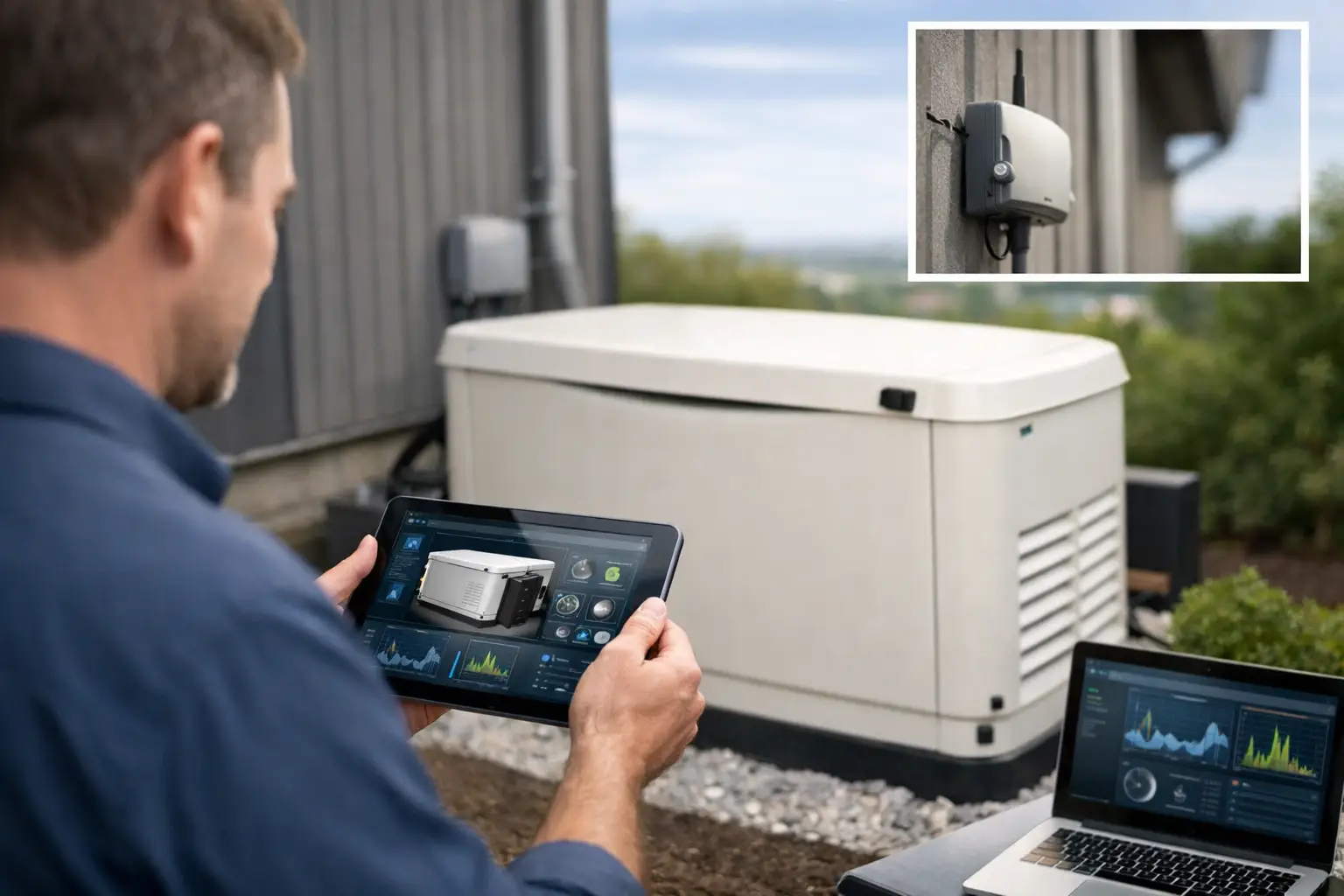
A standby generator is already designed to operate automatically. When utility power fails, the transfer switch signals the generator to start and carry the load. Remote monitoring adds another layer: it sends generator status information to an app, portal, or service team so someone can see what the system is doing without standing next to it.
Depending on the manufacturer and setup, that information may include run status, exercise history, battery condition, maintenance reminders, warnings, and fault alerts. Some systems are homeowner-facing, some are service-facing, and some do both. The exact feature set depends on the generator brand, controller, internet or cellular connection, and whether monitoring is set up as part of an ongoing service plan.
That last point matters. Remote monitoring is useful on its own, but it becomes far more valuable when there is a qualified service team paying attention to the information and acting on it.
The most important standby generator remote monitoring benefits
The biggest benefit is simple: you find out about problems sooner.
Without monitoring, many owners only learn there is an issue when the generator fails a weekly exercise cycle, refuses to start during an outage, or shows a warning light that goes unnoticed for days. With monitoring, an alert can flag a battery issue, communication problem, low exercise compliance, or fault condition before the next major weather event. That early visibility can turn an emergency call into a scheduled repair.
There is also peace of mind in being able to confirm operation during an outage. If you are away from home, remote monitoring lets you check whether the generator started and is running. If you manage a commercial property, it helps you verify status without dispatching someone to the site immediately. In many cases, that saves time, reduces stress, and helps owners make better decisions faster.
Another major advantage is more consistent maintenance timing. Standby generators should not be treated like appliances you install and forget. They need inspections, battery checks, oil and filter service, and periodic testing under proper procedures. Monitoring can help track run hours, exercise activity, and service intervals so maintenance is based on actual system use, not just memory or guesswork.
Better service response when something is wrong
A fault alert by itself is helpful. A fault alert tied to a responsive service company is where remote monitoring starts to earn its keep.
If a technician can review basic system status before arriving, the service visit is often more efficient. They may already know whether the issue points to a battery failure, controller fault, communication error, maintenance condition, or a shutdown event. That does not eliminate diagnostics on site, but it can shorten the path to the right fix.
For customers, that means less back-and-forth during a stressful outage situation. It also reduces the chance of waiting until the next storm to find out the generator has been sitting in alarm status for weeks. A professionally supported monitoring setup helps close that gap between system ownership and actual system readiness.
This is especially important for customers who want long-term accountability, not just an installation crew that disappears after the job is done. Ongoing visibility supports ongoing service.
Why remote monitoring matters even when the generator seems fine
One of the most common misconceptions is that if the generator exercised last week, everything must be fine. Not always.
A brief exercise cycle does not guarantee full readiness under real outage conditions. A generator can still have developing battery issues, fuel delivery concerns, overdue maintenance, or warning conditions that deserve attention before they become failures. Remote monitoring helps surface those smaller issues earlier.
It also adds confidence for homes with higher backup power stakes. If your household depends on refrigeration, sump pumps, medical devices, HVAC during severe weather, or reliable internet for remote work, you do not want to rely on assumptions. The same goes for businesses protecting POS systems, server rooms, security equipment, or temperature-sensitive inventory.
In other words, remote monitoring is not just about convenience. It supports preparedness.
Standby generator remote monitoring benefits for homeowners
For residential customers, the value is often emotional as much as practical. You bought standby power so your family is not left in the dark, the basement does not flood, and the house stays safe and livable during an outage. Monitoring supports that goal by reducing uncertainty.
If you travel often, it lets you check on the system while away. If you own a second home, it provides another layer of oversight when weather turns bad. If you simply want fewer surprises, it helps confirm the generator is exercising and reporting normally between service visits.
There is also a protection angle many people overlook. Catching a service need early can help prevent more serious problems later. A neglected battery, overdue oil change, or persistent alarm condition can lead to failed starts or unnecessary wear. Monitoring does not fix those issues by itself, but it increases the odds that someone notices them before they affect performance.
Standby generator remote monitoring benefits for businesses
For commercial customers, the conversation usually comes down to continuity and response time.
When power loss affects operations, every minute counts. Remote monitoring gives owners, managers, and service partners faster visibility into whether the generator started, whether it is carrying the site as expected, and whether a fault needs immediate attention. That helps businesses make decisions around staffing, tenant communication, equipment protection, and emergency response.
It can also support better planning after repeated outage events. If a unit is accumulating significant run time, or if alerts point to recurring problems, that information becomes useful for maintenance scheduling and long-term reliability strategy. Businesses that depend on backup power should not be operating blind.
That said, not every small commercial site needs the same level of monitoring or escalation. A retail storefront, medical office, warehouse, and multi-tenant building may all use standby power differently. The right setup depends on what is at risk when utility power fails.
What remote monitoring does not do
Remote monitoring is valuable, but it is not a substitute for the fundamentals.
It does not make up for poor system sizing, bad installation practices, skipped permits, sloppy wiring, or neglected maintenance. It does not guarantee every outage will be problem-free. And it does not eliminate the need for licensed technicians who understand the equipment, the transfer switch, the fuel system, and the code requirements behind the installation.
It also depends on communication. If the monitoring platform relies on home internet and the network equipment loses power or connectivity, data updates may be limited until connection is restored. Some systems use cellular communication to reduce that risk, but that may involve additional hardware or subscription cost.
So yes, there are trade-offs. Monitoring adds value, but only when it is paired with the right equipment, a dependable communication path, and a service team prepared to act on the information.
Choosing a monitoring setup that actually helps
If you are considering a standby generator, ask how monitoring fits into the full ownership experience, not just the sale. Who receives alerts? What kind of alerts are available? Is the homeowner or business owner expected to interpret everything alone, or does the service provider review issues proactively? Is monitoring included, optional, or part of a maintenance agreement?
Those questions matter because the best outcome is not just seeing data on a phone. The best outcome is knowing someone can help when the system needs attention.
That is why professionally managed backup power providers often build monitoring into a broader support model. Installation quality gets the system started on the right foot. Maintenance keeps it ready. Monitoring adds visibility between visits. Together, those pieces create the reliability customers are actually paying for.
When backup power protects your home, your work, or both, confidence comes from more than owning a generator. It comes from knowing how the system is performing and having the right team behind it when conditions get difficult.