When you search for generator repair near me, you are usually not casually browsing. The power may already be out, the storm may be on the way, or your standby system may have failed its weekly exercise and left you wondering whether it will start when your home or business really needs it. That moment is not the time to gamble on the cheapest name in the results.
A generator is not just another appliance. It is a backup system that protects refrigeration, heating and cooling, sump pumps, security systems, internet connectivity, medical equipment, and business operations. If it fails during an outage, the cost is measured in more than inconvenience. That is why the right repair company matters as much as the repair itself.
Why a local generator repair company matters
There is a reason so many people start with generator repair near me instead of a broad search. Response time matters. Local service providers can often diagnose issues faster, understand regional weather demands, and support your system before, during, and after major outages.
But location alone is not enough. A nearby contractor who treats generator service like a side job is not the same as a company built around standby power systems. You want a provider that understands automatic transfer switches, fuel delivery, load behavior, code requirements, and manufacturer service procedures. A generator may look simple from the outside, but the system behind it is not.
For homeowners, that means protecting comfort and safety when utility power drops. For businesses, it means avoiding downtime, lost revenue, and disruptions that ripple into the next day or week. Repair work has to solve the real issue, not just reset an alarm and hope for the best.
What a dependable repair visit should include
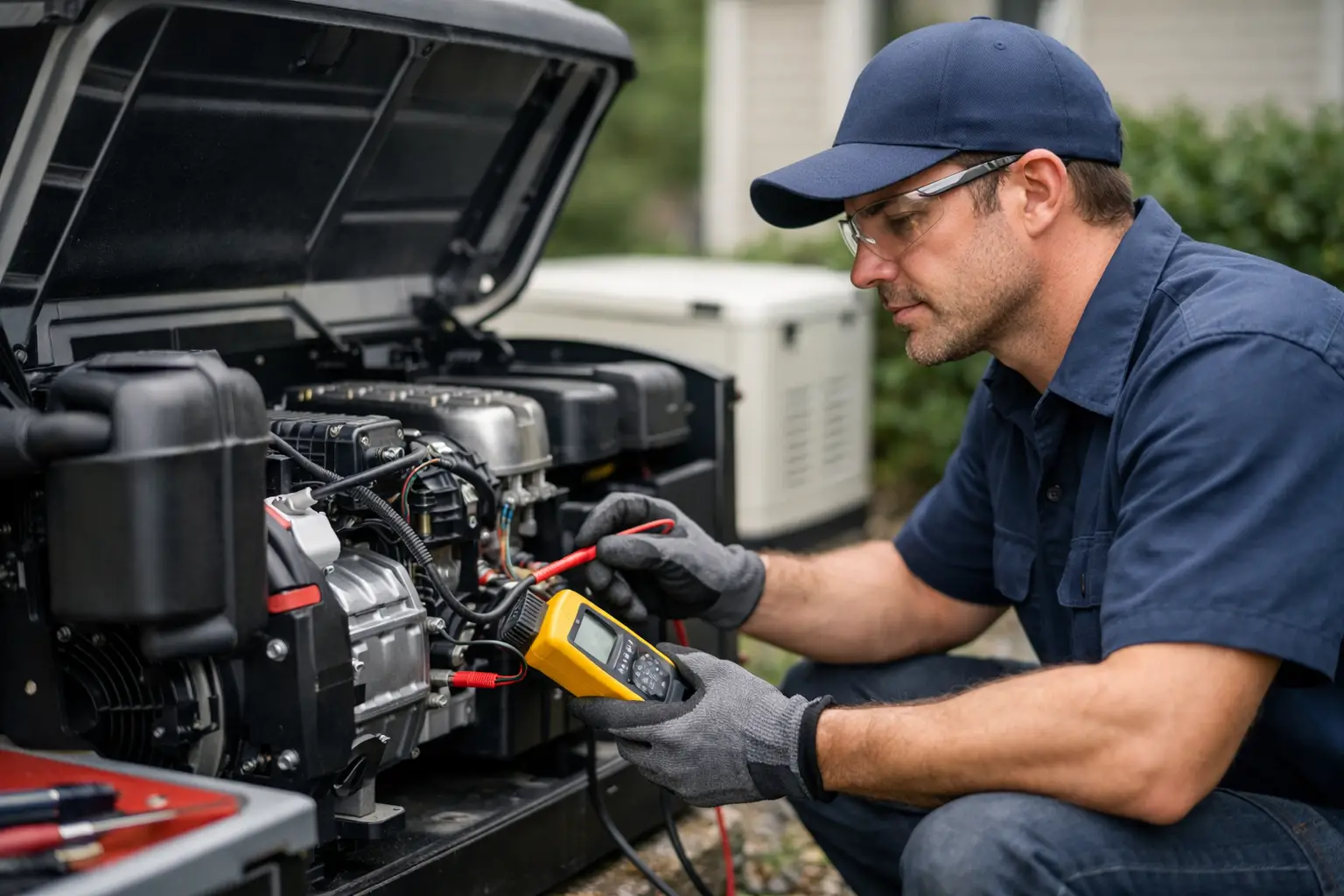
A proper service call starts with diagnosis, not guesswork. If a technician shows up ready to swap parts before testing the battery, checking fuel pressure, reviewing fault codes, and confirming transfer operation, that is a red flag.
Good generator repair follows a process. The technician should inspect the system as a whole, identify the failure point, explain what happened in plain language, and tell you whether the repair is straightforward or whether there may be related issues that need attention. That kind of clarity matters, especially when you are trying to make a decision under pressure.
For many standby systems, problems come down to a handful of common causes. A weak battery can prevent startup. Old oil or overdue maintenance can trigger shutdowns. Fuel supply issues can interrupt operation even when the engine itself is fine. Sensors, controllers, and transfer switches can also fail, and those issues require more than basic mechanical skills.
What you want is not just someone who can get the unit running for the moment. You want someone who can tell you whether it will stay reliable through the next outage.
Common signs your generator needs repair
Some warning signs are obvious, like a unit that will not start or a generator that shuts down under load. Others are easier to miss. Unusual noises, repeated alarm codes, rough running during exercise cycles, visible fluid leaks, delayed transfer to backup power, and inconsistent performance are all reasons to schedule service.
If your system has not been professionally maintained in a long time, even a generator that appears to run may still be at risk. Standby units can hide problems until the exact moment they are needed most. That is one reason preventive service and repair go hand in hand.
How to judge a company when searching for generator repair near me
Not every contractor advertising generator service has the right training or scope. Some are electricians who occasionally handle generators. Some are small installers who do not have the staff or systems to support long-term service. Some focus on fast sales and disappear when warranty questions or emergency calls come up.
A stronger choice is a company that treats generator ownership as an ongoing responsibility. That means licensed, trained technicians, clear scheduling, documented inspections, proper testing, and support that continues after the repair invoice is paid.
Ask direct questions. Do they service the brand you own? Do they work on residential and commercial standby systems regularly? Can they inspect the transfer switch and fuel system, not just the generator cabinet? Do they offer maintenance after the repair so you are not back in the same situation next season?
Transparent quoting also matters. Generator repairs are not always one-price-fits-all because some faults are simple and others require deeper diagnostics or parts replacement. Still, you should get a clear explanation of what is known, what needs testing, and what the next step will cost. Vague pricing usually leads to frustration.
Repair versus replacement
Sometimes a repair is the right move. Sometimes it is not.
If your generator is relatively new, properly sized, and the issue is isolated to a battery, starter, sensor, controller, or fuel-related component, repair often makes sense. If the unit has a history of faults, has been neglected for years, is undersized for the property, or has major wear after heavy use, replacement may be the better investment.
This is where honesty matters. A trustworthy provider will not push replacement every time a repair becomes complicated, and they will not recommend patching an aging system when reliability is already in doubt. The right answer depends on the age of the equipment, availability of parts, service history, and how critical backup power is for your home or business.
For a family with medical equipment or a business that cannot afford interruption, reliability carries more weight than squeezing one more season out of a failing unit.
Why maintenance and repair should not be separated
Many generator failures are repair calls that started as missed maintenance. Oil changes, battery testing, filter replacement, software checks, exercise review, and load testing all help catch problems before they become emergency outages.
That is why one-time repair companies often leave a gap. They may fix the immediate issue, but if there is no plan to monitor the system over time, the same vulnerabilities remain. Ongoing service creates accountability. It also gives you a service record that helps with warranty support, future diagnostics, and long-term planning.
A company like GenTek Power is built around that full-service model. The goal is not just to restore operation for today. It is to keep your standby system dependable through the next storm, the next utility failure, and the years that follow.
What homeowners and business owners should do next
If your generator is showing fault codes, failing to exercise, struggling under load, or simply overdue for professional attention, do not wait for the next outage to test your luck. Search results can give you names, but they do not tell you who will actually stand behind the work.
Choose a company that specializes in standby power, not one that treats generator service as occasional side work. Look for professional diagnosis, clear communication, code-aware service, and support that continues after the immediate repair. The cheapest callout is rarely the lowest-cost decision if the system fails again when conditions are worst.
Backup power is supposed to remove uncertainty. The repair process should do the same. When you find the right service partner, you are not just fixing a machine. You are protecting your home, your business, and your ability to keep going when the grid does not.