The problem usually shows up at the worst possible time. The power drops, the house goes quiet, and instead of hearing your standby unit come to life, you get nothing – or a failed start cycle that leaves you wondering why standby generator won’t start when you need it most.
That moment is frustrating, but it is also a warning sign. A standby generator is supposed to remove uncertainty during an outage. When it does not start automatically, the issue is often something specific and diagnosable, not random bad luck. The key is knowing what can be checked safely and when the right move is to bring in a qualified technician before a small issue turns into a no-start event during the next storm.
Why standby generator won’t start: the most common causes
Most no-start problems come down to one of a handful of issues: battery trouble, fuel supply problems, controller faults, maintenance neglect, or a shutdown triggered by the generator protecting itself.
The battery is one of the most common culprits. Standby generators rely on a healthy starting battery, just like a vehicle, but many owners assume that because the unit is permanently installed, it will always be ready. Batteries age, terminals corrode, and chargers can fail. A generator may still show signs of life at the controller while lacking enough cranking power to actually start the engine.
Fuel problems are another major category. On natural gas or propane systems, the issue might be low fuel pressure, a closed valve, regulator trouble, or an interruption upstream. On diesel systems, fuel quality, contamination, or delivery issues can prevent starting. In cold conditions, fuel-related problems can become even more noticeable.
Sometimes the generator is stopping itself on purpose. Modern standby systems monitor oil pressure, coolant temperature, overspeed conditions, and other operating parameters. If the unit detects something unsafe, it may lock out and refuse to start until the underlying problem is corrected and the fault is cleared.
Then there is the simple reality of deferred maintenance. Spark plugs wear out. Air filters clog. Oil levels drop. Connections loosen. A generator that has not been serviced on schedule can pass a visual glance and still fail when the load transfer sequence actually matters.
Start with the basics before assuming the worst
If you are asking why standby generator won’t start, begin with the checks that do not expose you to electrical or fuel-system risk. That means observing the unit, not taking it apart.
First, look at the controller display. Many standby generators will show an alarm code, warning message, or shutdown reason. That information matters. It can point toward low battery, overcrank, low oil pressure, overspeed, or another specific fault. Even if you do not interpret the code yourself, take a photo of it before resetting anything.
Next, confirm that the generator is actually set to automatic mode. It sounds obvious, but it is a common service call. A unit left in off or manual mode after maintenance or testing will not respond correctly during an outage.
Check whether the emergency stop has been activated. Some systems have a visible emergency stop switch that may have been bumped during service or nearby work. Also verify that any exterior disconnects or shutoff switches are in the correct position.
After that, look for signs of battery trouble. If the starter sounds weak, clicks, or does not engage at all, a failing battery or charging issue moves high on the list. Corroded terminals, loose connections, and battery age are all common reasons a generator cannot crank properly.
Fuel supply issues are more common than many owners realize
A standby generator can be perfectly installed and still fail to start if fuel is not reaching the engine correctly. This is especially important because fuel problems are not always obvious from the outside.
For natural gas systems, there may be a utility-side interruption, inadequate gas pressure under load, a regulator issue, or a valve that is partially or fully closed. In some cases, homeowners have had gas work done elsewhere on the property and the generator fuel path was never fully restored.
For propane systems, tank level matters, but so does vaporization and regulator performance. A tank that is technically not empty can still create start or run issues under certain conditions. Cold weather can make marginal propane supply conditions more noticeable.
For diesel units, old fuel, contamination, air in the fuel system, or filter restriction can prevent startup. Commercial properties that depend on diesel standby power should treat fuel quality as part of ongoing reliability, not a one-time installation concern.
If there is any question about fuel availability or gas piping integrity, this is not the place for trial-and-error troubleshooting. Fuel system work should be handled by trained professionals who can test pressures, verify code compliance, and confirm safe operation.
Battery and charger problems often build slowly
One reason battery issues catch owners off guard is that they rarely fail all at once. The generator may complete exercise cycles for a while, crank a little slower over time, or show intermittent warnings before it finally refuses to start during an outage.
A standby generator battery has a hard life. It sits for long periods, remains connected continuously, and must perform instantly when called upon. If the battery charger is not maintaining proper voltage, the battery can degrade without drawing much attention.
In some cases, the battery itself is not the real problem. The charger may have failed, wiring connections may be compromised, or parasitic drain may be present. Replacing the battery without diagnosing the charging system can solve the symptom temporarily and leave the root cause in place.
This is one reason scheduled service matters. Battery testing under load, charger verification, and terminal inspection are basic maintenance tasks, but they are also some of the best insurance against a no-start event.
Maintenance neglect shows up when the grid fails
A standby generator can look clean from the outside and still be overdue for service. That gap between appearance and actual readiness is where many no-start problems begin.
Old oil, low oil level, fouled spark plugs, dirty air filters, and worn ignition components can all affect starting. So can rodent damage, moisture intrusion, and corrosion inside the enclosure. Infrequent exercise or ignored warning lights only add to the risk.
What makes this tricky is that a neglected generator may not fail during a casual glance or a quick homeowner test. It fails when the system is asked to perform automatically, transfer load, and keep running under real outage conditions.
For homeowners, that can mean loss of heating or cooling, spoiled food, disconnected internet, and added risk for anyone relying on medical equipment. For businesses, it can mean lost revenue, operational shutdowns, and preventable disruption. Reliability is not just about having a generator installed. It is about keeping that generator truly service-ready.
When not to troubleshoot it yourself
There is a difference between checking status and attempting repair. That line matters.
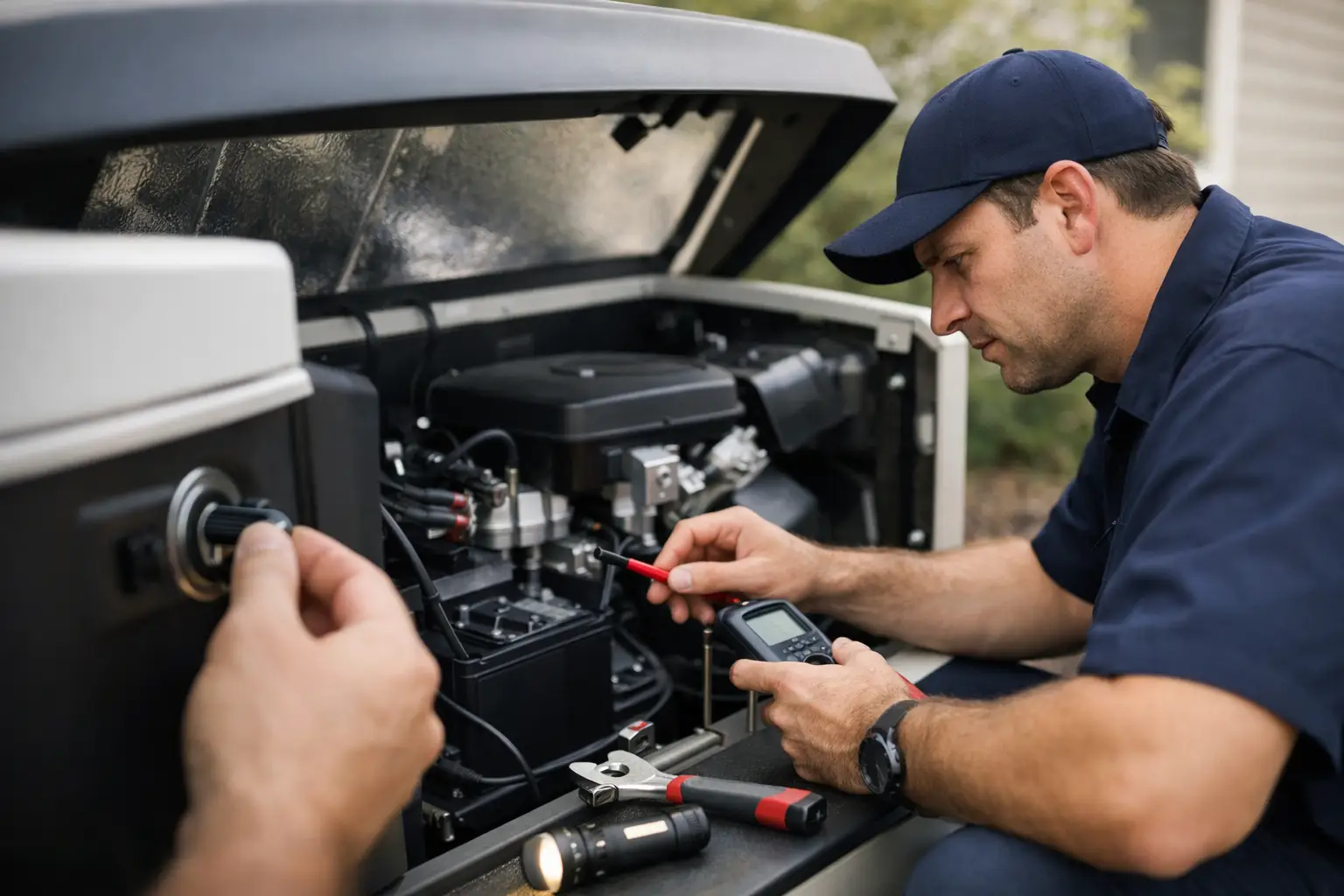
If you smell gas, see damaged wiring, notice fluid leaks, hear repeated failed cranking, or find a persistent fault code, stop there. The safest move is to call for service. The same goes for anything involving the transfer switch, internal electrical components, fuel regulators, or engine sensors.
Standby generators are integrated systems, not standalone engines. A no-start issue may involve the generator, battery charger, controller, fuel supply, or transfer sequence. Guessing can waste time, create safety risks, and sometimes make the eventual repair more expensive.
Professional service is not just about fixing what is wrong today. It is about confirming the entire standby system will respond correctly the next time utility power is lost.
The value of a professional standby generator service plan
If your first question is why standby generator won’t start, the better long-term question is how to keep it from happening again.
A proper service plan does more than change oil. It includes inspection, testing, battery evaluation, alarm review, exercise verification, fuel-system checks, and confirmation that automatic operation still works as designed. It also creates a service history, which helps identify recurring issues before they become outage failures.
That is especially important for customers who chose standby power to avoid uncertainty in the first place. Whether the priority is protecting a family home, preserving comfort during winter and summer outages, or keeping a business operating, dependable backup power requires follow-through after installation.
At GenTek Power, that long-term support mindset is a big part of what separates professional generator ownership from a one-time install. The equipment matters, but so does who stands behind it when weather, utility problems, or wear and tear put the system to the test.
If your generator failed to start once, do not treat it like a fluke. Treat it like a chance to get ahead of the next outage while the lights are still on.